
Factory Fans Direct Supports Transparent AI Data Center Development & Community Engagement
A large AI data center can introduce a major new electrical and thermal load long before the first server rack is energized. That is why Factory Fans Direct believes in total transparency and community support for AI data center development. Communities deserve clear answers about power demand, water use, noise, construction impacts, job commitments, and the engineered cooling systems that keep high-density computing equipment operating within design limits.
For developers, transparency is not simply a public-relations exercise. It is a practical way to identify infrastructure constraints early, avoid expensive redesigns, and build an operating plan that can stand up to scrutiny from utilities, local officials, nearby businesses, and residents. For facility operators, it creates a better path to reliable uptime because expectations for electrical service, heat rejection, backup generation, airflow, and maintenance are addressed before they become emergency issues.
AI data center growth needs honest project conversations
AI workloads are changing the conversation around data center development. Traditional enterprise rooms and lower-density server deployments still require careful heat management, but high-performance GPU clusters can concentrate substantially more heat in a smaller footprint. The result is a project that may need more power distribution capacity, more cooling infrastructure, and more deliberate planning than the public expects when it hears the phrase “data center.”
A responsible project team should explain what is actually being built. Is the facility a modest edge site, a large cloud campus, a crypto mining operation, or a high-density AI compute installation? Those uses have different load profiles, cooling requirements, hours of operation, and potential local impacts. Treating them as identical creates confusion for both the developer and the community.
Project information should also distinguish between planned capacity and day-one operation. A campus designed for future expansion may not draw its full electrical load immediately. Conversely, a site with rapid customer deployment can ramp much faster than projected. Clear phasing information helps utilities plan generation, transmission, substations, and interconnection work without relying on guesswork.
Transparency starts with measurable operating data
The best community discussions are based on design conditions and operating data, not broad promises. A developer does not need to disclose customer-sensitive information or proprietary server configurations. It does need to provide enough detail for stakeholders to understand the project’s resource demands and mitigation plan.
Electrical demand should be discussed in terms the utility and local planning agencies can evaluate, including initial demand, expected expansion, peak demand assumptions, redundancy strategy, and timing. A site that relies on a new substation, feeder upgrades, or standby generation should explain how those assets fit into the local power plan.
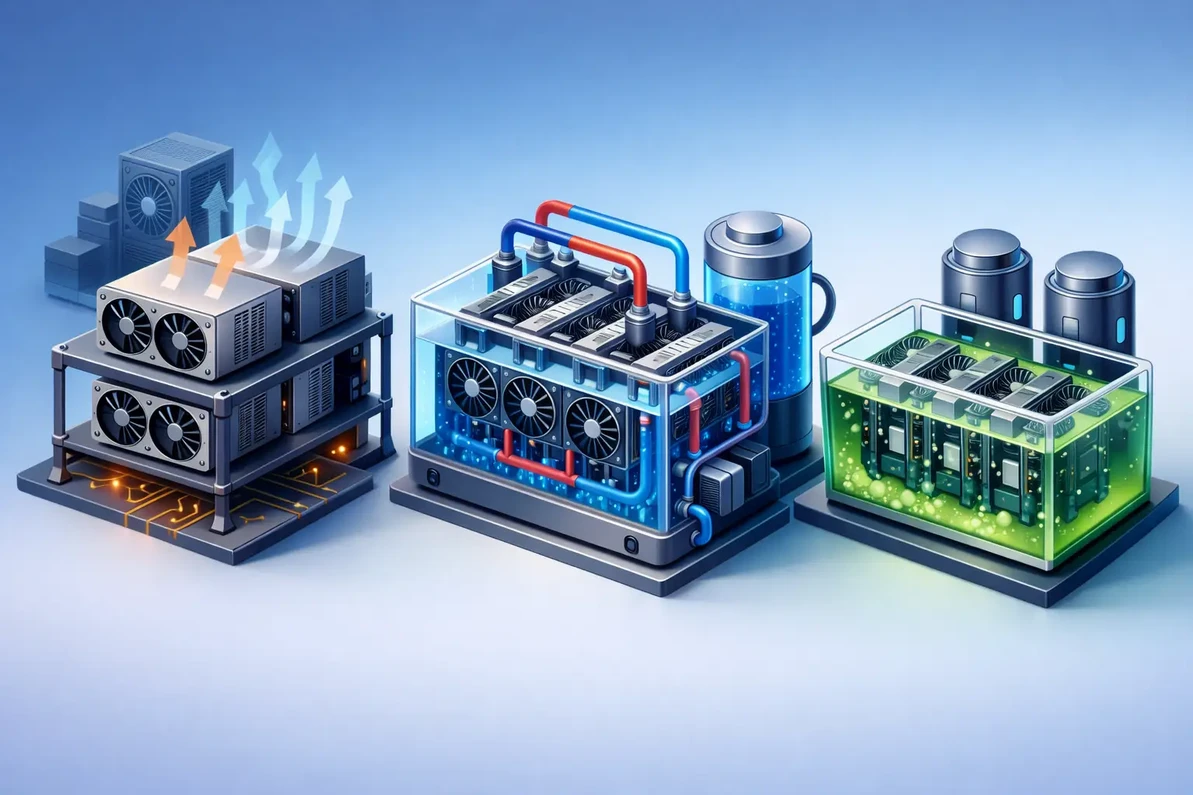
Water is another area where precision matters. Some facilities use air-cooled heat rejection that minimizes process water use but can require more fan energy and outdoor equipment area. Others use evaporative or water-based systems that may reduce certain energy demands while creating a more direct water-management question. Direct-to-chip liquid cooling and immersion cooling can reduce the need to move high volumes of room air around hot IT equipment, but they do not eliminate the need to reject heat from the building. The heat still has to go somewhere.
Noise planning deserves the same level of engineering discipline. Roof fans, cooling towers, dry coolers, air-cooled condensers, generators, transformers, and exhaust systems can all affect the sound profile at property lines. Fan selection, motor controls, vibration isolation, discharge orientation, equipment screening, and nighttime operating schedules can materially change the outcome. Communities should be shown the expected sound approach, especially where a site borders homes, schools, or mixed-use development.
Community support is earned before construction begins
Public support cannot be assumed because a project creates tax revenue or announces future jobs. Neighboring property owners and local leaders will reasonably ask about construction traffic, road wear, visual impacts, emergency response, backup-power testing, and whether infrastructure improvements will benefit the broader area.
The strongest approach is early, specific communication. Developers should meet with local stakeholders before finalizing a plan that leaves no room for useful feedback. That does not mean every objection can determine the design. It means concerns should receive a factual response and, where practical, an engineered solution.
For example, a concern about generator testing may be addressed through scheduled daylight testing, acoustical controls, and advance notification. Concerns about equipment visibility may lead to revised rooftop screening or site layout. Questions about power demand may require a utility representative to explain the interconnection and capacity plan. When a legitimate issue cannot be changed, the project team should state why directly rather than burying the answer in vague language.
Local workforce commitments should also be realistic. Construction creates one type of employment, while long-term facility operations create another. A transparent plan identifies the anticipated roles, training opportunities, vendor needs, and the qualifications required for permanent positions. Overstating headcount damages credibility. Specific partnerships with local contractors, technical schools, and service providers are more meaningful than generic job claims.
Cooling design must match the actual heat load
Data center cooling is not a catalog selection exercise. A fan that looks adequate by free-air CFM may fail to perform once it encounters louvers, filters, sound attenuators, duct turns, containment systems, heat exchangers, or pressure differences across the building. Static pressure, motor duty, fan curve, drive type, controls, and redundancy all matter.
Airflow systems are often required around electrical rooms, battery spaces, transformer areas, mechanical galleries, network rooms, and support buildings even where liquid cooling handles a portion of the rack-level thermal load. High-temperature exhaust applications may require equipment rated for the expected airstream temperature and continuous duty cycle. Make-up air must be considered at the same time as exhaust. Pulling hot air from a space without providing a controlled replacement-air path can create negative pressure, infiltration problems, door issues, and unpredictable airflow patterns.
For crypto mining and certain data center deployments, the challenge is especially direct: equipment produces continuous heat, and throughput depends on holding equipment within a workable operating envelope. Depending on the design, the answer may involve filtered supply air, high-temperature exhaust fans, hot-aisle or cold-aisle containment, variable frequency drives, direct liquid cooling, or immersion systems. No single approach is correct for every facility.
Variable frequency drives and intelligent controls are valuable because the heat load is not always constant. Fan speed can be matched to temperature, differential pressure, or equipment demand rather than operating at full output around the clock. However, controls are only as good as the sensors, programming, commissioning, and maintenance behind them. A poorly located sensor or an untested control sequence can waste energy or leave a heat event undetected.
Resiliency requires more than backup equipment
Redundancy is commonly described with terms such as N+1 or 2N, but the real question is whether the full operating system can maintain acceptable conditions when a component fails or maintenance is underway. That includes power, controls, air paths, cooling loops, louvers, dampers, motors, and the ability to isolate equipment without creating a new thermal bottleneck.
A ventilation review should identify the required CFM at the actual system static pressure, the expected temperature rise, motor horsepower, voltage, control method, discharge arrangement, weather exposure, and service access. It should also evaluate what happens in abnormal conditions. If one exhaust fan is down, where does the heat go? If a louver is blocked by wind-driven rain, how does the control sequence respond? If utility power is lost, which ventilation and cooling components are supported by emergency power?
This level of planning supports community confidence, too. A well-engineered facility is less likely to create avoidable noise, hot-air discharge problems, equipment failures, or emergency maintenance activity that disrupts neighbors. Design quality and public accountability are not competing priorities. They reinforce each other.
A practical standard for responsible development
AI data center development should be judged by more than speed to market. The projects most likely to earn durable support are clear about their demand on local infrastructure, honest about trade-offs, and prepared to invest in the mechanical and electrical systems needed for dependable operation.
At Factory Fans Direct, we believe sustainable AI Data Center and Crypto Mining development requires total transparency and active community support. Public support and trust is an ongoing operational commitment.
Factory Fans Direct - Crypto Mining & Data Center Cooling Experts
Factory Fans Direct - Crypto Mining & Data Center Cooling Experts Contact Mike Miller VP Engineering at Factory Fans Direct for a FREE Project Evaluation 888-849-1233 | Mike@FactoryFansDirect.com
Recent Posts
-

Factory Fans Direct Supports Transparent AI Data Center Development & Community Engagement
A large AI data center can introduce a major new electrical and thermal load long before the first s …13th Aug 2026 -
AI Data Center Developers Must be Transparent and Benefit Communities
A proposed AI data center can bring major capital investment to a community, but the project also co …13th Aug 2026 -
Crypto Mining Options: Air-Cooled, Hydro-Cooling & Immersion
A mining facility does not fail because an ASIC is difficult to purchase. It fails when heat removal …13th Aug 2026