
Will a Blue Wave Restore US Capex Confidence?
Capital spending does not move on election headlines alone. A plant manager approving a $600,000 ventilation retrofit, a data center operator adding heat-rejection capacity, or a greenhouse owner expanding cultivation bays must make decisions around utilization, power cost, financing, labor, permits, and the cost of waiting. Will the Blue Wave Restore US Business Confidence for Capital Expenditures? It could improve confidence in some sectors, but no election outcome removes the engineering and operating math behind a major project.
For facilities with deferred ventilation, cooling, electrification, or building-envelope work, the more useful question is not whether sentiment will rise. It is whether policy visibility will make a sound project easier to approve, finance, and schedule.
Why Political Certainty Can Move Capital Budgets
Business confidence is partly about expectations. When companies cannot estimate future tax treatment, energy rules, labor availability, trade costs, or environmental compliance requirements, they often preserve cash and delay equipment purchases. That delay can be rational, particularly for multi-site operators managing thin margins or volatile demand.
A decisive Democratic sweep - commonly called a blue wave - could reduce uncertainty if it produces clearer federal priorities and a more predictable legislative path. Companies may anticipate continued support for domestic manufacturing, grid modernization, energy efficiency, semiconductor production, infrastructure, and lower-carbon building upgrades. Projects tied to those areas could receive more internal attention because executives can model a more stable policy environment.
That does not mean confidence rises evenly across the economy. Some businesses may expect higher corporate taxes, stricter enforcement, increased labor costs, or more reporting requirements. For them, a blue wave can accelerate capital expenditures before rules change, or it can cause management to hold spending until the details are known. The result depends on the industry, the balance sheet, and whether the proposed investment reduces operating risk.
Will a Blue Wave Restore US Business Confidence for Capital Expenditures?
The short answer is: potentially, but not by itself. Capital expenditure plans recover when management sees acceptable returns, manageable execution risk, and enough demand to justify added capacity. Political alignment can help provide visibility, yet interest rates, utility pricing, supply chains, and customer orders usually carry more weight in an equipment approval meeting.
For commercial and industrial ventilation projects, confidence is often created at the facility level. A warehouse that regularly exceeds safe summer temperatures has a measurable productivity and worker-retention problem. A manufacturing process with high heat load, fumes, moisture, or dust has an air-quality and equipment-reliability problem. A crypto mining or AI computing operation with insufficient exhaust capacity has a revenue and uptime problem. Those conditions do not disappear while the market waits for Washington.
A well-defined project can move forward in almost any political cycle when its operational case is clear. The strongest proposals quantify heat load, required air changes, static pressure, make-up air requirements, electrical demand, controls strategy, installation constraints, and projected maintenance. They also identify the cost of not acting: lost production, thermal throttling, employee discomfort, spoilage, code exposure, or emergency equipment replacement.
Sectors Most Likely to See Capex Momentum
A blue-wave policy environment could be especially constructive for projects connected to domestic production, energy performance, and critical infrastructure. Manufacturing facilities may continue to invest in plant upgrades, particularly where automation, reshoring, or process expansion increases internal heat loads. Warehouses and distribution centers may prioritize destratification, exhaust, make-up air, and high-volume low-speed fan systems that improve usable working conditions without relying solely on expensive mechanical cooling.
Data centers, AI facilities, and high-density compute operations are another important case. Their growth is driven less by election sentiment than by compute demand and power availability. Still, policy support for grid expansion, domestic technology investment, energy efficiency, and infrastructure permitting can influence where projects are built and how quickly supporting systems are deployed. Cooling and ventilation designs must be matched to the actual thermal profile, whether the site uses air cooling, containment, liquid cooling, immersion systems, or a hybrid approach.
Agricultural, greenhouse, cannabis, and hemp operations may also benefit when energy programs, rural development incentives, or controlled-environment agriculture investment receive emphasis. Yet growers should not purchase fans based on incentives alone. Fan selection must account for greenhouse volume, solar gain, crop transpiration, pad-and-fan configuration, shutter losses, inlet area, and seasonal operating conditions. CFM without static-pressure performance is not a complete design specification.
Commercial building owners face a similar calculation. Higher energy costs and tenant expectations can make roof exhaust, heat recovery, controls upgrades, and efficient ventilation equipment attractive even when broader confidence remains mixed. Systems designed around measured airflow requirements can reduce unnecessary runtime, avoid undersized equipment, and improve comfort in hard-to-condition zones.
Rates, Power, and Permitting Still Set the Pace
Interest rates remain a major constraint on capital spending. A project with a compelling lifecycle return can still be delayed if debt service is expensive or if corporate finance requires a higher hurdle rate. As rates ease, companies may release projects that have been waiting in the planning queue. That effect could matter more than election results for equipment categories financed through leases, construction loans, or larger facility modernization programs.
Electricity availability and cost are equally important. For energy-intensive facilities, the question is not only whether a fan motor is efficient. It is whether the complete airflow strategy lowers total cooling demand, reduces peak load, and supports reliable operation during extreme weather. Variable frequency drives, EC motors, staged controls, temperature sensing, and properly sequenced make-up air can materially change the economics.
Permitting can either support or stall confidence. Clearer standards for energy, emissions, building upgrades, and industrial development may allow engineering teams to design with fewer assumptions. However, new requirements can add review time and documentation. Facility owners should involve ventilation design support early, before roof penetrations, electrical capacity, duct routing, controls integration, and structural requirements become costly field changes.
Do Not Confuse Sentiment With a Project Justification
The risk in any politically driven capex cycle is buying equipment because optimism is high, rather than because the system is properly engineered. An oversized exhaust fan can create excessive negative pressure, interfere with combustion appliances, pull unconditioned air through openings, and increase heating or cooling costs. An undersized system leaves heat, humidity, contaminants, and process losses in place.
The practical approach is to develop a project package that survives changing political conditions. Start with the facility problem and establish a baseline: indoor temperatures, heat sources, current CFM, operating hours, utility costs, employee or equipment complaints, and production limitations. Then model the required solution, including exhaust, supply, make-up air, fan curve performance, control sequence, and expected electrical load.
Procurement teams should also distinguish first cost from installed and operating cost. A low-priced fan with the wrong motor type, poor weather protection, insufficient static-pressure capability, or no meaningful controls strategy can become the expensive choice. Equipment selection should be based on duty point, not catalog headline CFM.
Turning Uncertainty Into an Actionable Equipment Plan
Whether a blue wave materializes or not, the best time to evaluate ventilation is before summer loads, expansion deadlines, or equipment failures force a rushed decision. A free project evaluation can identify whether the existing challenge calls for basic exhaust, balanced ventilation, high-volume air movement, roof-mounted equipment, hybrid ventilation, automation, or a combined cooling strategy.
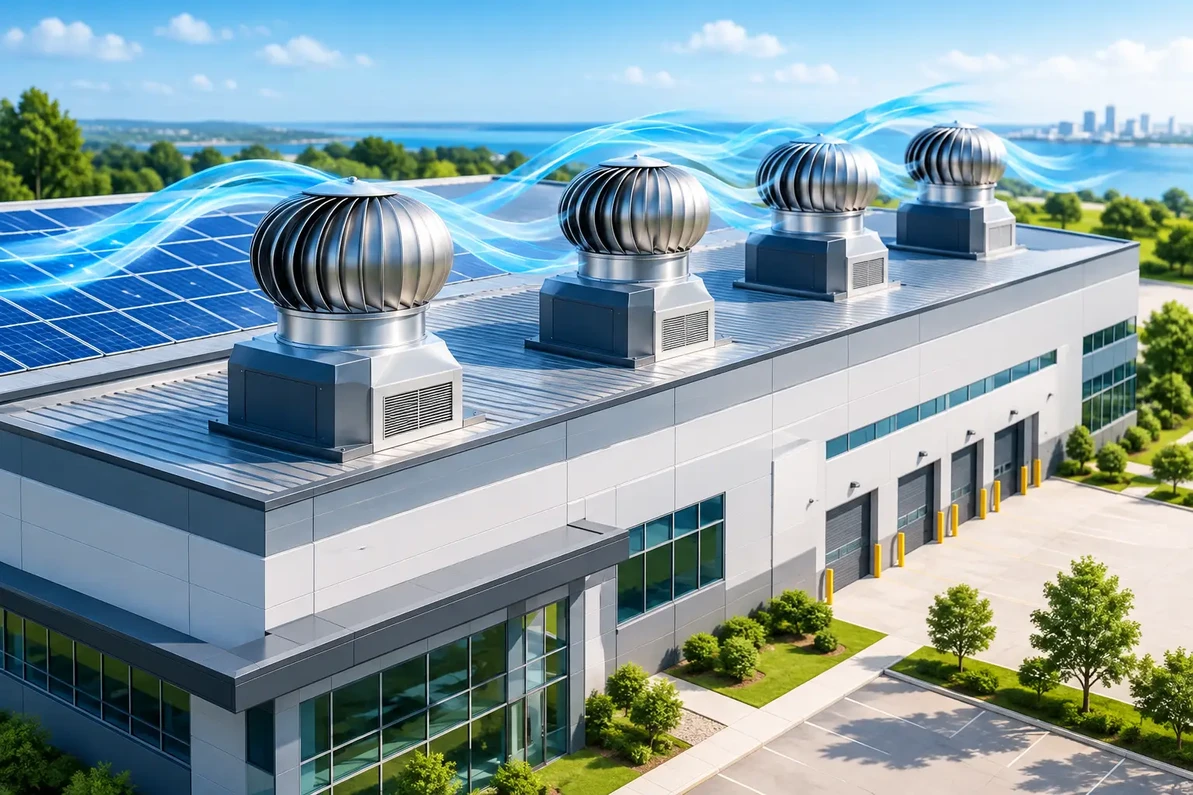
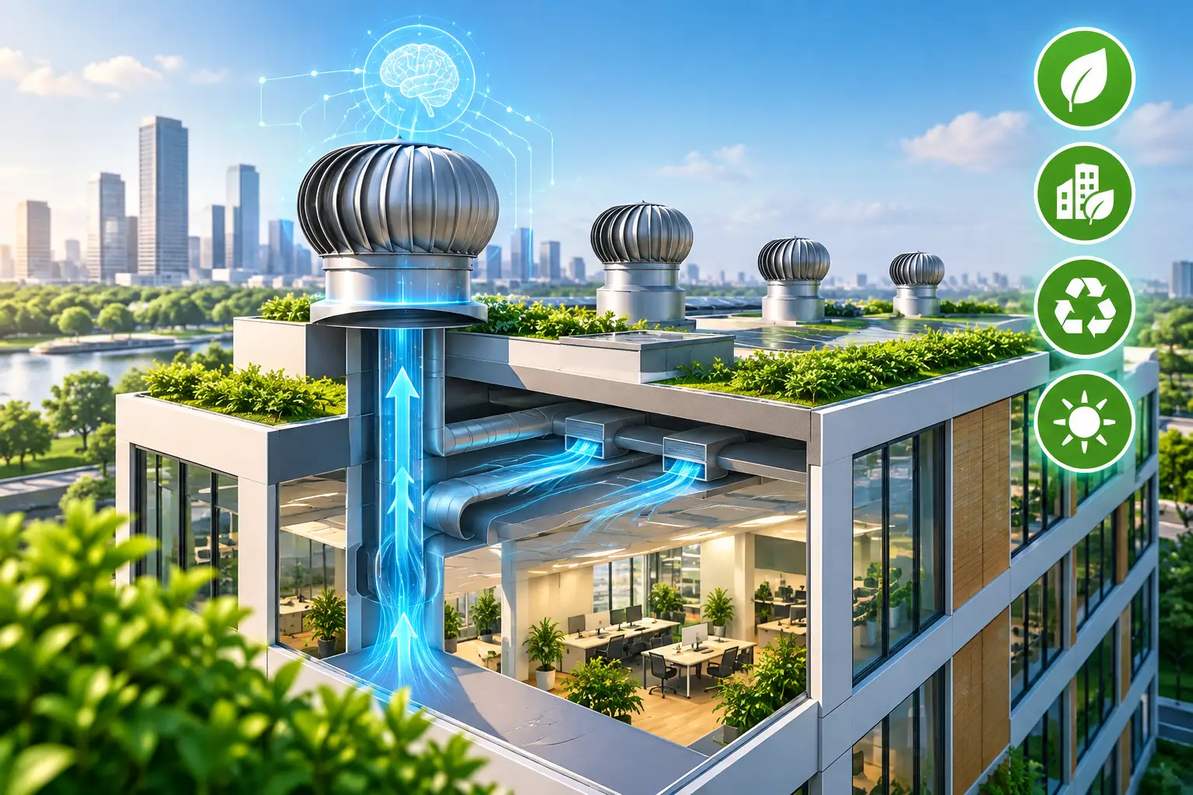
For net-zero and energy-conscious projects, hybrid rooftop ventilation deserves careful review. Edmonds ecoPOWER Hybrid ventilators combine wind operation with a high-performance EC brushless DC motor for continuous powered operation when conditions require it. They are not solar-powered units. The value is in combining natural wind-driven ventilation with controlled mechanical performance, helping facilities maintain airflow while reducing unnecessary energy use.
A capital plan gains credibility when it connects engineering data to business results. Show decision-makers the operating condition, the selected duty point, the controls logic, the expected impact on energy and uptime, and the consequence of continued deferral. That is a far stronger approval case than a prediction about the next election.
The political climate may influence the timing of capital budgets, but a correctly sized ventilation or cooling system should earn its place through measurable performance, lower operating risk, and a design that works under real facility conditions.
Factory Fans Direct/Edmonds US - Hybrid Commercial & Industrial Ventilation & Cooling Experts | Contact Mike Miller VP Engineering at Factory Fans Direct for a FREE Project Evaluation 888-849-1233 | Mike@FactoryFansDirect.com
Factory Fans Direct provides Commercial & Industrial Ventilation & Cooling expertise, including a FREE Project Evaluation for facilities that need CFM, static pressure, make-up air, and equipment selection reviewed together. Contact Mike Miller, VP Engineering, at 888-849-1233 or Mike@FactoryFansDirect.com before committing to a fan package. A correct airflow number is valuable; a correctly engineered air path is what makes that number perform in the field.
Factory Fans Direct - Commercial & Industrial Ventilation & Cooling Experts | Contact Mike Miller VP Engineering at Factory Fans Direct for a FREE Project Evaluation 888-849-1233 | Mike@FactoryFansDirect.com
Recent Posts
-

Will a Blue Wave Restore US Capex Confidence?
Capital spending does not move on election headlines alone. A plant manager approving a $600,000 ven …9th Nov 2026 -
The BLUE WAVE Supports Commercial & Industrial ecoPOWER Hybrid Turbine Ventilation
A hot production floor, warehouse, or agricultural building rarely has one ventilation problem. Heat …8th Nov 2026 -
AI Smart ecoPOWER Hybrid Turbine Ventilation for LEED Projects
A LEED ventilation strategy cannot be built around a brochure claim or a fan wattage number alone. A …8th Nov 2026