Data Center Ventilation vs Mining Ventilation
A room full of servers and a room full of ASIC miners can both hit you with the same first impression - serious heat, nonstop operation, and no margin for airflow mistakes. But data center ventilation vs mining ventilation is not a small design distinction. It changes fan selection, pressure strategy, filtration approach, controls, redundancy, and even the economics of the entire facility.
The reason is simple. A traditional data center is usually built to protect uptime, equipment stability, and tightly managed environmental conditions. A mining operation is usually built to reject extreme heat as efficiently and cost-effectively as possible, often in rougher conditions and at much higher sensible heat density. If you treat one like the other, you can overspend, undersize, or create hot spots that shorten equipment life.
Why data center ventilation vs mining ventilation matters
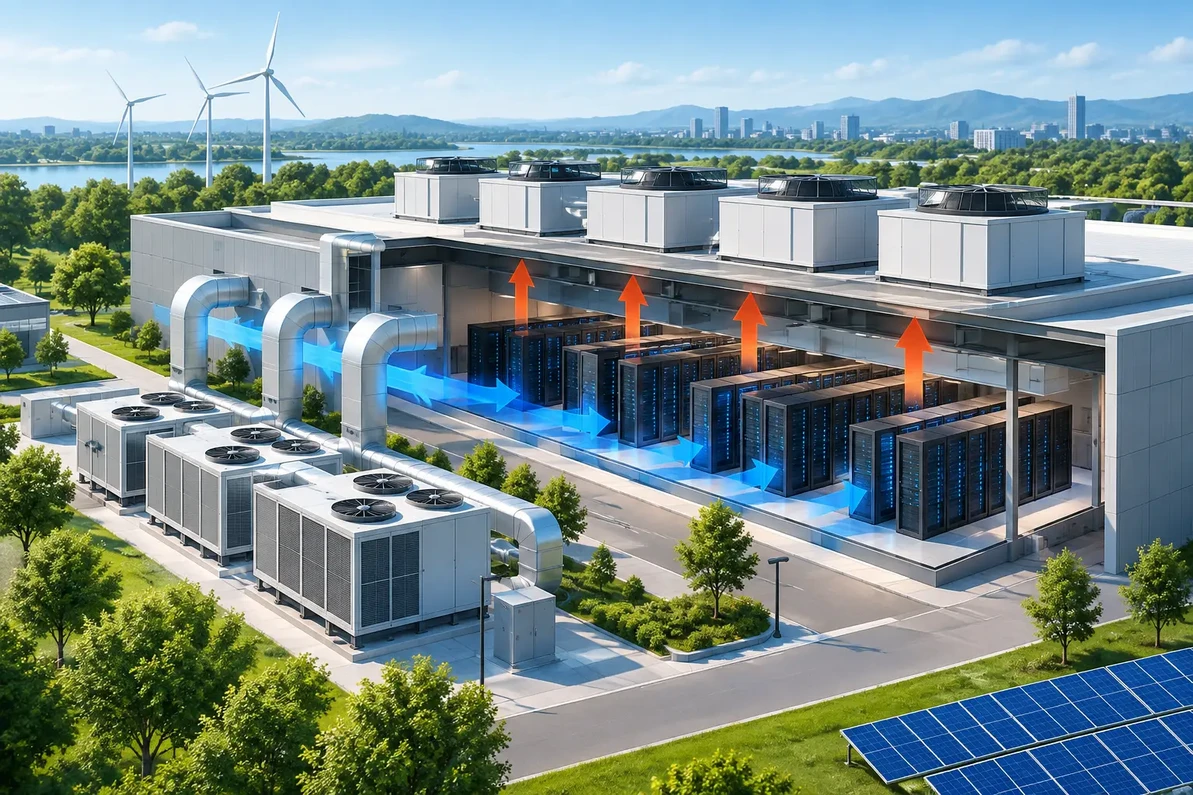
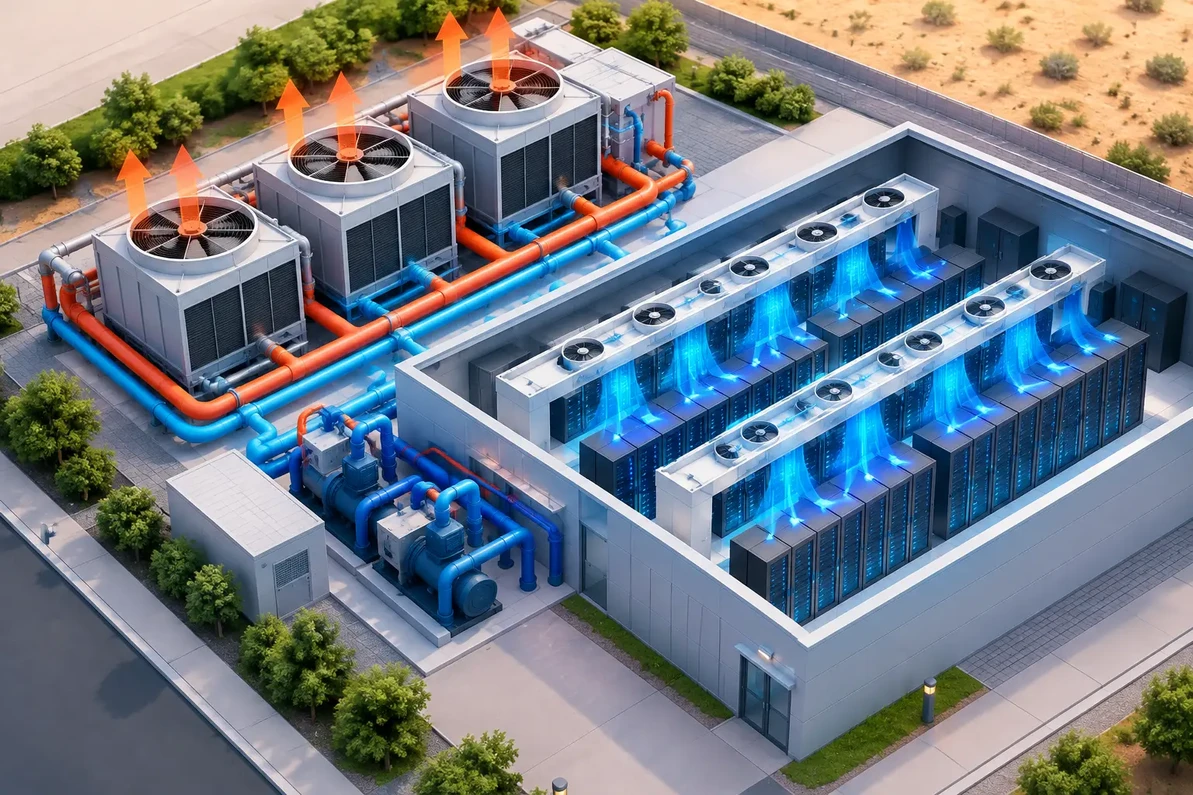
At a glance, both spaces are high-BTU environments. In practice, the operating goals are different. Most data centers are designed around predictable IT loads, controlled intake conditions, hot aisle and cold aisle separation, filtration, humidity considerations, and redundancy. The ventilation system is only one piece of a broader thermal management strategy that may also include CRAC units, CRAH units, in-row cooling, rear-door heat exchangers, chilled water, or liquid cooling.
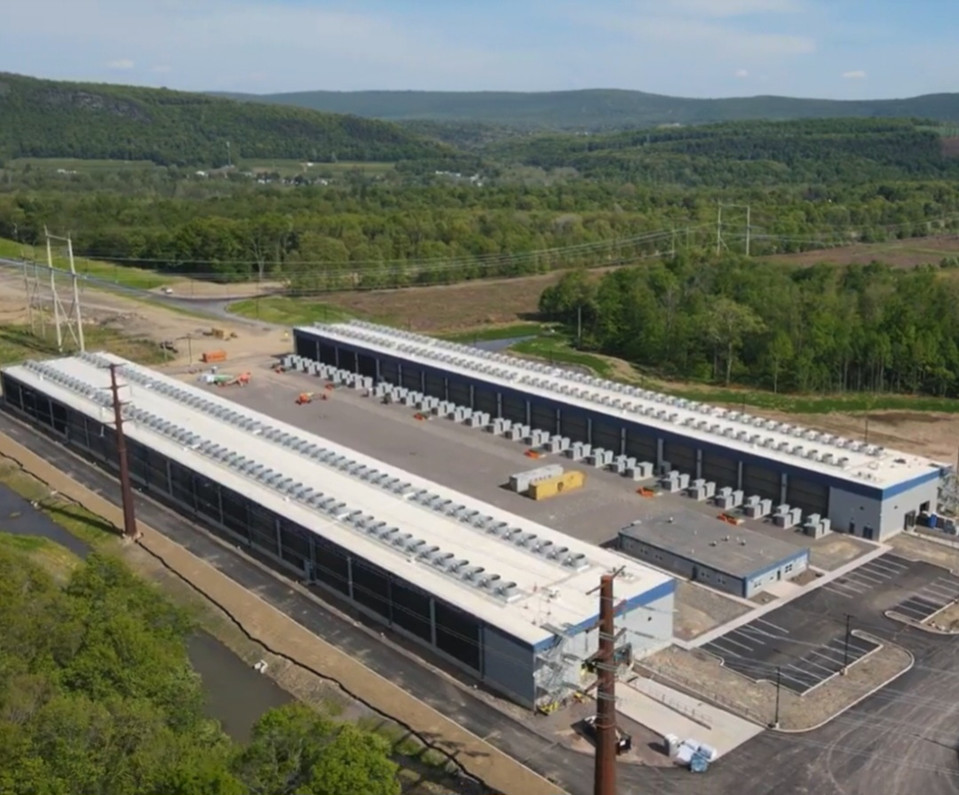
Mining facilities, especially crypto mining sites using ASIC hardware, are often much more air-driven. Their priority is moving very large volumes of air across heat-producing equipment and exhausting that heat with the lowest possible operating cost per kilowatt processed. In many cases, the question is not how to maintain a narrow room condition for people and IT policy. It is how to keep inlet temperatures acceptable at the miner face while pulling heat out fast enough to protect hash rate and hardware reliability.
That difference affects every engineering decision downstream.
Heat load profile and airflow volume
Data centers typically manage precision
Data centers often need a more controlled thermal envelope. Even when the total heat load is high, airflow must be distributed accurately. The challenge is not just total CFM. It is where the air goes, how evenly it reaches server intakes, and how effectively hot exhaust is isolated from supply air.
This is why many data center designs focus on containment, pressure relationships between aisles, and minimizing bypass air. High airflow with poor control can still fail if recirculation lets hot exhaust return to the front of the racks.
Mining operations typically manage brute heat rejection
Mining ventilation usually demands far more raw air movement per dollar spent. ASIC miners generate heavy sensible heat, and many facilities are built in warehouses, containers, retrofitted industrial buildings, or remote sites where traditional precision cooling would be cost-prohibitive.
In these applications, fan performance under static pressure becomes critical. Louvers, wall housings, intake filters, evaporative sections, acoustic treatment, and duct transitions all add resistance. A fan that looks adequate at free air can fail badly once installed. That is where proper fan curves, system effect review, and actual pressure calculations matter.
Air quality and filtration are not handled the same way
Data centers usually need tighter particulate control
Most data centers cannot tolerate uncontrolled dust loading. Fine particulates can foul electronics, reduce heat sink effectiveness, and increase maintenance risk. Because of that, filtration strategy is a much bigger design driver. Intake air often needs to be filtered to a higher standard, and that filtration adds static pressure that must be accounted for from day one.
The trade-off is straightforward. Better filtration protects equipment, but it also increases fan energy and maintenance if filter banks are undersized or neglected. Filter loading should never be treated as a fixed number only on paper. The dirty filter condition is what the fan must survive.
Mining ventilation often accepts harsher environments
Mining sites are often located where power is available and economics make sense, not where outside air is clean and mild. That means dust, seasonal temperature swings, and corrosive conditions can all become part of the operating reality. Some operators use aggressive filtration. Others accept lighter filtration to reduce pressure drop and fan energy, while planning for more frequent cleaning and hardware turnover.
That is one of the biggest it depends decisions in mining ventilation. More filtration can improve equipment cleanliness, but too much pressure drop can starve airflow and raise miner inlet temperatures. The right balance depends on site conditions, equipment density, maintenance labor, and the value of uptime.
Pressure strategy and airflow path
Data center ventilation vs mining ventilation in layout
A data center often depends on disciplined airflow paths. Cold air must get to server intakes without short-circuiting, and hot air must return to exhaust or cooling equipment without mixing. Positive pressure in certain areas may help limit infiltration, but overall performance depends more on containment discipline than just adding bigger fans.
Mining layouts are usually more direct. Bring air in low resistance, force it through miners, and get it out fast. The key risk is recirculation. If exhaust air wraps around the building, leaks through partitions, or gets pulled back into the intake side, temperatures can spike fast. Large wall exhaust fans, intake plenums, weather hoods, and clear hot-side and cold-side separation become essential.
In both environments, leakage matters. The difference is that in data centers, leakage often hurts precision. In mining, leakage often destroys capacity.
Redundancy, controls, and tolerance for failure
Data centers are built around uptime discipline
Traditional data center clients usually expect redundancy. Fan arrays, backup power, alarms, environmental monitoring, and control integration are part of the conversation early. A ventilation component is not judged only on CFM. It is judged on maintainability, failure mode, control compatibility, and how it behaves during partial outage conditions.
This is why a lower first-cost fan can become the wrong choice quickly. If it lacks the control range, motor quality, or reliability profile required for mission-critical service, the operating risk outweighs the savings.
Mining operations are more cost-performance driven
Mining ventilation is still critical, but the economics are different. Operators often weigh capital cost against revenue per machine and tolerance for downtime. Some sites are engineered with strong redundancy. Others accept simpler systems with fewer layers of backup because the financial model favors lower installed cost.
That does not mean mining ventilation should be casual. It means the design target is different. Variable frequency drives, staged fan control, temperature-based automation, and power-loss planning can still add major value, especially in climates where outside conditions shift sharply through the year.
When evaporative, hybrid, or liquid approaches enter the picture
Not every project should rely on basic ventilation alone. In hot climates, outside-air ventilation may be enough during part of the year and inadequate during summer peak periods. That is where evaporative cooling, hybrid rooftop exhaust, make-up air systems, or immersion and hydro cooling can change the equation.
For data centers, these options are usually evaluated carefully because humidity control, equipment compatibility, and operational consistency matter. For mining, evaporative or hybrid systems may offer strong cost advantages if they are matched properly to climate, intake design, and hardware tolerances.
This is also where engineering support matters most. A fan-only concept that works in Colorado may fail in Texas, Arizona, or the Southeast if ambient conditions, wet-bulb performance, building leakage, and motor sizing are not modeled realistically.
Fan selection mistakes that show up in both markets
Some errors are universal. Buyers focus on fan diameter instead of delivered CFM at static pressure. They underestimate intake restriction. They ignore dirty filter conditions. They forget that shutters, guards, weather hoods, and silencers all affect performance. They also assume that if the room feels hot, adding exhaust alone will fix it.
It may not. Without adequate make-up air, exhaust fans can pull the building into negative pressure hard enough to reduce actual airflow, slam doors, pull in dirt through gaps, and create uneven cooling across the equipment line. Good ventilation design is not just exhaust. It is a complete air path from intake to discharge.
Which approach is right for your facility
If you are operating a conventional data center, your ventilation strategy usually needs tighter environmental control, stronger filtration planning, better containment discipline, and more attention to redundancy and controls. If you are operating a mining facility, your design usually needs maximum heat rejection, low-resistance airflow, fan performance matched to real static pressure, and a practical balance between filtration, energy use, and equipment maintenance.
The mistake is assuming these are interchangeable categories. They are not. Data center ventilation vs mining ventilation comes down to different thermal priorities, different tolerance for environmental variation, and different financial models for uptime and operating cost.
A well-designed system starts with the actual load, building geometry, intake and exhaust path, local climate, and the pressure losses that will exist after installation, not just in a catalog. That is where a free project evaluation can prevent expensive oversizing, undersizing, or selecting the wrong ventilation method entirely.
Factory Fans Direct - Crypto Mining & Data Center Cooling Experts Contact Mike Miller VP Engineering at Factory Fans Direct for a FREE Project Evaluation 888-849-1233 | Mike@FactoryFansDirect.com
Recent Posts
-

AI Mega Factories Use Edmonds ecoPOWER Hybrid Ventilation
AI Mega Factories use Edmonds ecoPOWER Hybrid Turbine Ventilation because heat rejection cannot be t …4th Oct 2026 -
AI Cooling for High-Heat Facilities
A server aisle running 12°F hotter than its neighboring aisle, a crypto container recirculating exha …4th Oct 2026 -
AI Ventilation: Better Control Starts With Data
A warehouse can look adequately ventilated on paper and still have a 15-degree temperature differenc …4th Oct 2026