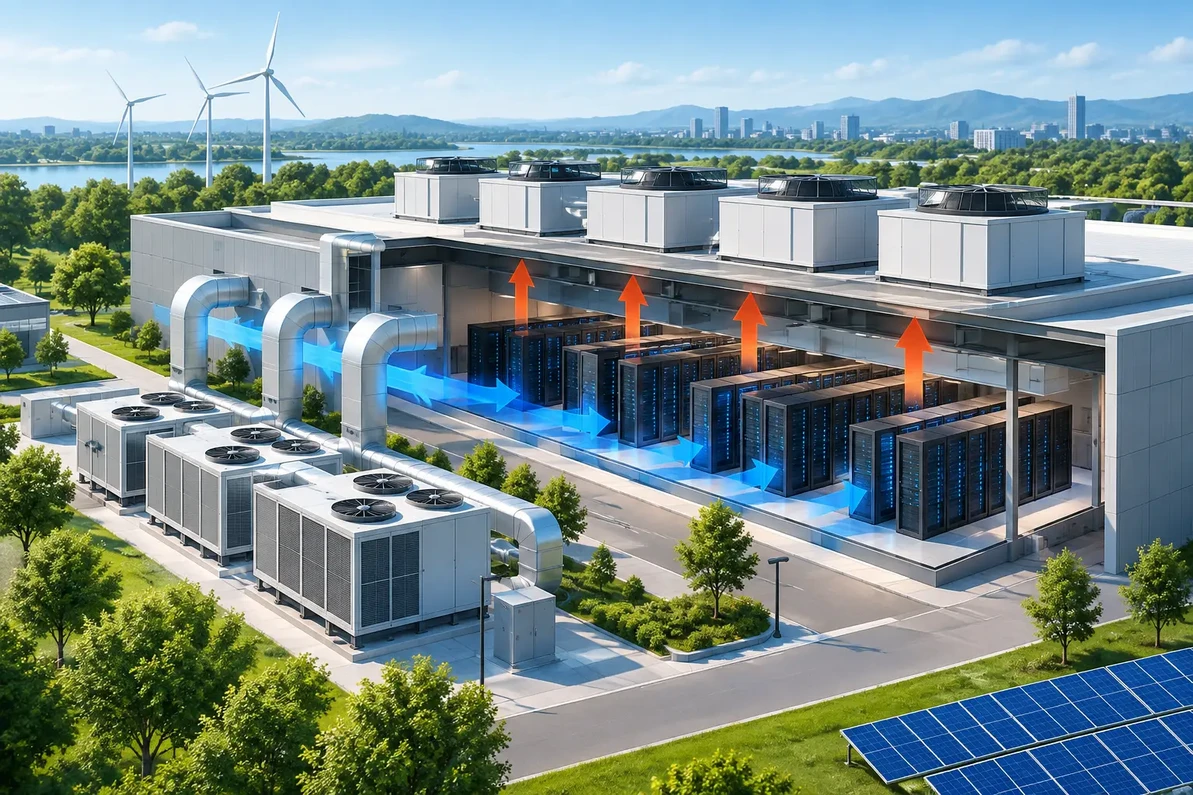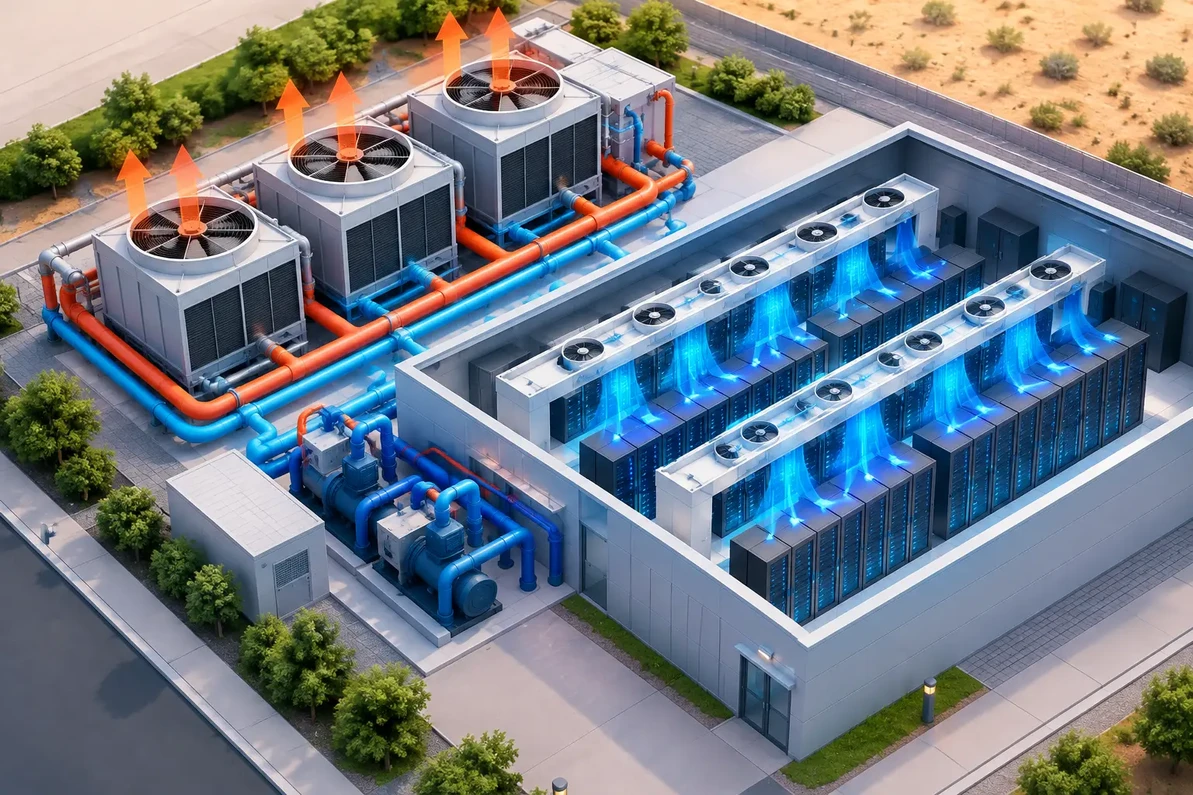

AI Smart Buildings Incorporate Edmonds ecoPOWER Hybrid Turbine Ventilation
A building automation system can report rising rooftop temperatures, increasing indoor contaminants, or a growing pressure imbalance. The real test is whether the ventilation equipment can respond efficiently when those conditions change. AI Smart Buildings Incorporate Edmonds ecoPOWER Hybrid Turbine Ventilation because it gives exhaust design a practical dual operating mode: wind-driven ventilation when conditions allow it and high-performance EC motor assistance when controlled exhaust is required.
For facility teams, this is not a discussion about adding artificial intelligence for its own sake. It is about matching a building's measured heat load, occupancy, process conditions, and pressure requirements to a rooftop exhaust strategy that does not waste electrical energy when natural wind energy is available. The Edmonds ecoPOWER is the world's first true hybrid ventilator. It is not solar powered. Its design combines non-powered wind operation with a brushless DC EC motor for continuous powered operation when needed.
Why AI Smart Buildings Need Hybrid Rooftop Exhaust
A conventional powered roof exhaust fan is simple to model: when the motor runs, it draws power and produces airflow against a stated static pressure. A conventional wind turbine ventilator is equally simple: it can provide useful air movement in favorable wind, but its performance varies with weather and cannot be counted on for continuous duty. Neither approach alone is ideal for every smart-building objective.
AI-enabled building management systems work best when they have useful equipment choices. Temperature sensors, indoor air quality sensors, weather stations, occupancy data, utility-rate signals, and differential-pressure readings can identify a need for more or less exhaust. A hybrid rooftop ventilator gives the controls strategy more flexibility than a single-mode device.
When outside wind supports ventilation, the ecoPOWER can operate as a wind ventilator without motor energy. When wind is light, the building needs scheduled air exchange, or a process area requires a defined exhaust response, its EC brushless DC motor can maintain operation. This matters in warehouses, manufacturing facilities, agricultural buildings, sports complexes, light industrial properties, and technical spaces where heat gain is not constant from one hour to the next.
The energy case is only part of the calculation. A facility with no dependable exhaust path can accumulate roof-level heat, moisture, fumes, odors, and stratified air. Sensors may accurately identify the problem, but data alone does not remove heat. Properly selected exhaust capacity, correctly located intake air, and a control sequence that accounts for actual operating conditions do.
Edmonds ecoPOWER Hybrid Turbine Ventilation and Control Logic
The strongest application is not simply placing a hybrid turbine wherever an old roof fan once sat. Smart ventilation requires an engineered sequence of operation. The control system should define what triggers powered assistance, what conditions allow low-energy wind operation, and how make-up air enters the building.
A basic sequence might use indoor temperature and roof-space temperature as primary inputs. If temperatures remain below the facility setpoint and wind ventilation is providing acceptable relief, the system can allow the hybrid ventilator to operate naturally. If the temperature rises above the setpoint, if a production schedule begins, or if differential pressure indicates inadequate exhaust, the EC motor can be called on to provide controlled airflow.
More advanced AI building platforms can use trend data rather than waiting for a single threshold. For example, if the system recognizes a repeated afternoon heat rise in a west-facing warehouse, it can begin mechanical assistance before workers experience the full heat buildup. If utility demand charges are a concern, it can prioritize wind-assisted ventilation during suitable weather and reserve powered operation for conditions where the ventilation load is genuinely critical.
That said, the controls package must be matched to the project. Integration options, voltage requirements, motor control method, sensors, VFDs where applicable, and building automation interfaces should be confirmed from current cut sheets and project specifications. “Smart” does not mean a fan should be commanded on and off without considering roof area, duct losses, louvers, intake capacity, pressure relationships, and local code requirements.
EC Motors Make Variable Ventilation More Practical
The ecoPOWER's high-performance EC brushless DC motor is central to its hybrid value. EC motors are well suited to efficient, continuous operation and control-oriented ventilation strategies. In a smart-building environment, that can support a more measured response than operating a conventional fixed-speed exhaust fan at full output whenever a thermostat calls.
Actual airflow still depends on system resistance. A fan's published CFM is meaningful only at the relevant static pressure. If exhaust air must pass through ductwork, filtration, dampers, sound attenuation, louvers, or restrictive roof curbs, the selected equipment must be evaluated against the resistance curve. Facility managers should avoid assuming that a nominal fan size automatically delivers the required air changes or process exhaust volume.
Design Around the Air, Not Just the Roof Opening
Hybrid exhaust can be highly effective, but only when replacement air has a path into the building. Every cubic foot exhausted must be replaced. Without adequate make-up air, the building can pull excessive negative pressure, reduce actual fan airflow, make doors difficult to open, draw in unconditioned air through unintended gaps, or interfere with combustion equipment.
For a warehouse, that may mean properly sized wall louvers or powered make-up air coordinated with rooftop exhaust. For a manufacturing process, it may require localized capture and a defined pressure relationship between work zones. For agricultural and cultivation applications, intake filtration, light control, humidity management, and odor containment can change the complete ventilation design.
AI can help identify these interactions. Pressure sensors can reveal whether an exhaust command is creating more negative pressure than intended. Temperature mapping can show whether warm air is trapped at the ceiling despite substantial total CFM. Historical data can distinguish a recurring process-related heat load from a weather-driven event. But the physical design remains decisive: intake placement, exhaust location, roof penetrations, and fan selection determine whether the control data produces useful action.
Where Hybrid Ventilation Fits Best
ecoPOWER hybrid rooftop ventilation is particularly compelling where a building has frequent ventilation demand but variable conditions. Large floor plates with roof-level heat accumulation are a natural fit. Warehouses with changing occupancy, manufacturing plants with intermittent process heat, barns and agricultural structures, recreation facilities, and commercial buildings pursuing LEED or Net-Zero objectives may all benefit from reviewing the application.
It may be less appropriate where the project requires tightly guaranteed exhaust volume at all times, high static-pressure ducted exhaust, corrosive chemical fume extraction, grease-laden kitchen exhaust, or specialized hazardous-location equipment. Those applications can require dedicated mechanical exhaust systems designed to specific codes, materials, motor classifications, and capture requirements. Hybrid ventilation is not a substitute for source capture or a code-required life-safety exhaust system.
The decision also depends on climate and roof exposure. A site with useful prevailing winds can gain more non-powered operating value than a heavily sheltered location. A roof surrounded by taller structures, parapets, or adjacent equipment may experience turbulence that affects wind performance. A project evaluation should account for these practical conditions rather than relying on a generic rooftop layout.
Build a Measurable Ventilation Plan
Before specifying hybrid units, establish the ventilation target. Is the goal heat relief, occupant comfort, moisture removal, odor control, smoke control, general air exchange, or equipment cooling? Each objective uses different inputs. Engineers and facility teams should identify the required CFM, operating hours, anticipated static pressure, desired indoor conditions, available make-up air, electrical service, roof curb details, and controls expectations.
Then establish how performance will be verified. Trend indoor and outdoor temperatures, rooftop heat, power consumption, run time, differential pressure, and, where relevant, humidity or air quality readings. This creates a baseline for refining control sequences after commissioning. An AI platform can produce impressive dashboards, but the valuable result is a building that stays within operating targets using less unnecessary fan energy.
For Net-Zero and LEED-oriented projects, document the operating logic and equipment performance assumptions clearly. The ecoPOWER advantage is its ability to use wind energy when available while retaining powered EC motor capability for dependable ventilation. Claims should be based on the actual building schedule, climate, fan configuration, and control sequence, not a one-size-fits-all energy estimate.
Factory Fans Direct/Edmonds US provides commercial and industrial ventilation design support for projects where CFM, heat load, static pressure, make-up air, and controls coordination need to work together. Contact Mike Miller, VP Engineering, for a FREE Project Evaluation at 888-849-1233. A sound hybrid ventilation design starts by measuring what the building must remove, then selecting equipment that can respond when the building actually needs it.
Factory Fans Direct/Edmonds US - Hybrid Commercial & Industrial Ventilation & Cooling Experts | Contact Mike Miller VP Engineering at Factory Fans Direct for a FREE Project Evaluation 888-849-1233 | Mike@FactoryFansDirect.com
Recent Posts
-

AI Mega Factories Use Edmonds ecoPOWER Hybrid Ventilation
AI Mega Factories use Edmonds ecoPOWER Hybrid Turbine Ventilation because heat rejection cannot be t …4th Oct 2026 -
AI Cooling for High-Heat Facilities
A server aisle running 12°F hotter than its neighboring aisle, a crypto container recirculating exha …4th Oct 2026 -
AI Ventilation: Better Control Starts With Data
A warehouse can look adequately ventilated on paper and still have a 15-degree temperature differenc …4th Oct 2026