AI Boom Causes Massive Power Infrastructure Demand
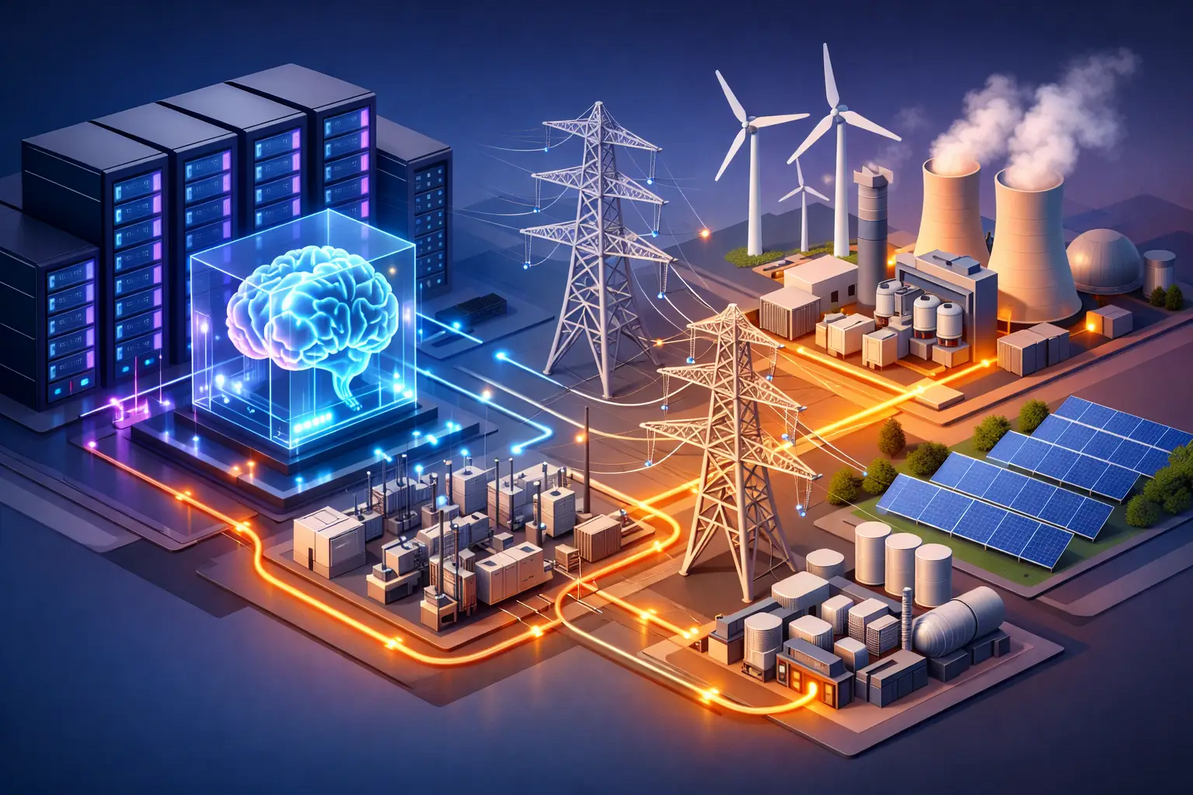
A few years ago, a data center project could be planned around available utility capacity and a conventional mechanical design. That assumption is changing quickly. The AI Boom Causes Massive Power Infrastructure Demand because high-density compute racks consume more electricity, reject more heat, and place far greater pressure on the electrical and cooling systems behind the server floor.
For data center operators, crypto mining facilities, engineers, and owners of high-heat industrial operations, the real issue is not only obtaining more megawatts. It is managing the heat created by every megawatt without creating hot spots, excessive static pressure, equipment derating, or avoidable operating cost. Power availability, air movement, exhaust capacity, make-up air, filtration, and controls now have to be designed as one operating system.
Why AI Loads Change the Facility Design Equation
Traditional enterprise data centers often operated with rack densities that allowed conventional raised-floor air delivery, computer room air handlers, and relatively predictable cooling loads. AI training and inference clusters change that profile. GPU-heavy racks can draw substantially more power than conventional server racks, and nearly all of that electrical input ultimately becomes heat that must be removed.
That relationship is straightforward: 1 kilowatt of electrical load produces approximately 3,412 BTU per hour of heat. A 1-megawatt IT load therefore creates about 3.4 million BTU per hour. At 10 megawatts, the facility is managing more than 34 million BTU per hour before accounting for losses from power distribution equipment, lighting, and support systems.
The challenge becomes even more severe when capacity is added in phases. A building may have adequate cooling for its current server population while its electrical service, transformer capacity, switchgear, generator plant, roof openings, or exhaust pathways are not prepared for the next deployment. Adding servers without evaluating the full heat-rejection path is how facilities end up with localized thermal alarms and costly retrofit work.
AI Boom Power Infrastructure Demand Extends Beyond the Grid
Utility interconnection and generation capacity receive most of the attention, and for good reason. Large AI campuses can require power levels comparable to small cities. Yet the power system is only one side of the calculation. Once electricity reaches the servers, the facility must move heat continuously and reliably under peak conditions.
This creates demand for more cooling plant capacity, larger electrical rooms, higher-capacity UPS systems, standby generation, and upgraded distribution. It also raises the importance of ventilation engineering in ancillary spaces that are easy to underestimate: battery rooms, transformer areas, electrical galleries, generator enclosures, network rooms, mining containers, and equipment staging zones.
In some projects, the limiting factor is not the utility service but the ability to reject heat from the site. Water availability may restrict cooling tower expansion. Noise limits may constrain outdoor equipment. Roof loading can limit large mechanical additions. Local permitting can affect generator and exhaust design. A practical plan identifies these constraints before equipment is ordered, not after the room temperature climbs.
Air Cooling, Liquid Cooling, and Hybrid Designs
Air cooling remains a major part of the equation, even as direct-to-chip liquid cooling and immersion cooling expand. Liquid cooling can move high heat loads efficiently from GPUs and other components, but it does not eliminate heat rejection. It transfers the heat to a coolant loop, heat exchanger, dry cooler, cooling tower, or other final rejection method.
For many facilities, the answer is a hybrid approach. Liquid cooling handles the highest-density compute equipment, while air systems manage remaining server components, power electronics, room heat, and general ventilation. This requires careful coordination. If the liquid loop removes more heat from the rack, airflow requirements may decrease at the rack level, but electrical and mechanical support spaces can still require substantial air exchange.
Crypto mining operations illustrate this clearly. Air-cooled mining equipment can create extremely high sensible heat loads and often operates in locations where traditional chilled-water infrastructure is impractical. High-temperature exhaust fans, properly sized intake openings, filtration strategy, and controlled negative pressure can make the difference between a stable operation and recurring shutdowns. Immersion and hydro cooling reduce some airborne heat at the miner, but the heat still has to leave the facility through a properly engineered cooling system.
Ventilation Design Must Start With the Heat Load
Selecting a fan based only on the size of a wall opening or an estimated building volume is not sufficient for a high-heat facility. The starting point should be the actual heat load, desired temperature rise, equipment layout, outdoor design conditions, and the resistance created by louvers, screens, ductwork, filters, dampers, and sound controls.
A basic sensible-heat airflow calculation uses the relationship between BTU per hour, airflow, and allowable temperature rise. In general, a larger permitted temperature rise requires less CFM, while a tighter temperature target requires more CFM. But that simplified calculation is only the beginning. It does not account for fan performance loss at static pressure, recirculation caused by poor intake placement, uneven air distribution, or the effect of high ambient temperatures.
For example, an exhaust system that delivers its published free-air CFM may produce far less airflow once it is installed behind bird screen, motorized dampers, weather hoods, and duct transitions. A fan curve and cut sheet matter. So do motor ratings, voltage, horsepower, control compatibility, and continuous-duty operation at the actual installed static pressure.
Intake Air Is Not Optional
Every exhaust strategy requires a planned intake strategy. If a facility exhausts large volumes of air without sufficient intake area, negative pressure rises and airflow falls. Doors become difficult to open, outside air enters through unintended gaps, and fans operate at an unfavorable point on the curve.
Adequate intake free area, low-resistance louvers, filtered air paths where needed, and separation between intake and exhaust locations are essential. In dusty mining, manufacturing, and agricultural environments, filtration must be balanced against pressure drop. Better filtration can protect equipment, but an undersized filter bank can starve the fan system and reduce cooling performance.
Controls Protect Both Equipment and Energy Use
Fixed-speed ventilation may be appropriate for a simple, constant-load application. AI and data center loads, however, can change rapidly. Variable frequency drives, temperature sensors, pressure controls, and staged fan operation allow the system to respond to real conditions instead of operating at full capacity every hour of the year.
Controls should be designed around the operating objective. Some applications need to maintain a room temperature. Others need a specific pressure relationship, such as maintaining a slight negative pressure in a heat-generating enclosure or a positive pressure in a cleaner electrical room. The control sequence should also account for fan failure, alarm conditions, generator operation, smoke control requirements where applicable, and restart behavior after a power event.
Common Failure Points in High-Heat Buildouts
The most expensive ventilation problems are usually not caused by a defective fan. They are caused by an incomplete system design. Four recurring issues deserve attention:
- Free-air fan sizing: Equipment is selected by catalog CFM without calculating installed static pressure from guards, louvers, ductwork, and filters.
- Short-circuit airflow: Exhaust air is pulled back toward intake openings, especially when roof and wall equipment are placed without considering prevailing wind and building geometry.
- No redundancy plan: A single fan, pump, control panel, or power feed becomes a critical point of failure for expensive computing equipment.
- Late-stage mechanical planning: The electrical load is approved before roof penetrations, make-up air paths, structural support, noise controls, and service access are evaluated.
There is no universal cooling recipe. A modular container deployment in West Texas has different requirements than an enclosed AI suite in Northern Virginia, a hydro-cooled mining operation, or a warehouse retrofitted for high-density compute. Outdoor temperature, humidity, particulate levels, utility constraints, local codes, water availability, and uptime requirements all affect the right solution.
What to Evaluate Before Adding More Compute Capacity
Before expanding a data hall, mining operation, or high-heat equipment room, document the current and future electrical load in kilowatts or megawatts. Convert that load into heat rejection requirements, then evaluate whether the existing cooling and ventilation equipment can meet the requirement at peak ambient conditions.
Review actual fan performance at installed static pressure, not just nameplate airflow. Confirm that intake and exhaust openings have enough net free area. Check whether hot discharge air can recirculate into the facility. Verify available electrical capacity for new fans, pumps, VFDs, and controls. Finally, identify what happens if one major cooling component fails. For high-value computing equipment, the answer cannot be guesswork.
The AI buildout is accelerating electrical demand, but heat management will determine whether that new capacity performs as planned.
Factory Fans Direct - Crypto Mining & Data Center Cooling Experts Contact Mike Miller VP Engineering at Factory Fans Direct for a FREE Project Evaluation 888-849-1233 | Mike@FactoryFansDirect.com
Recent Posts
-

AI Smart Buildings Incorporate Edmonds ecoPOWER Hybrid Turbine Ventilation
A building automation system can report rising rooftop temperatures, increasing indoor contaminants, …12th Sep 2026 -
Smart Buildings Architects Recommend Edmonds ecoPOWER Hybrid Ventilation
A rooftop ventilator should not force an all-or-nothing energy decision. Smart Buildings Architects …7th Sep 2026 -
Smart Industrial Buildings Use Edmonds ecoPOWER Hybrid Ventilation
A roof exhaust system can be the difference between a plant that controls heat at the source and one …7th Sep 2026