What Is a Light Trap Greenhouse?
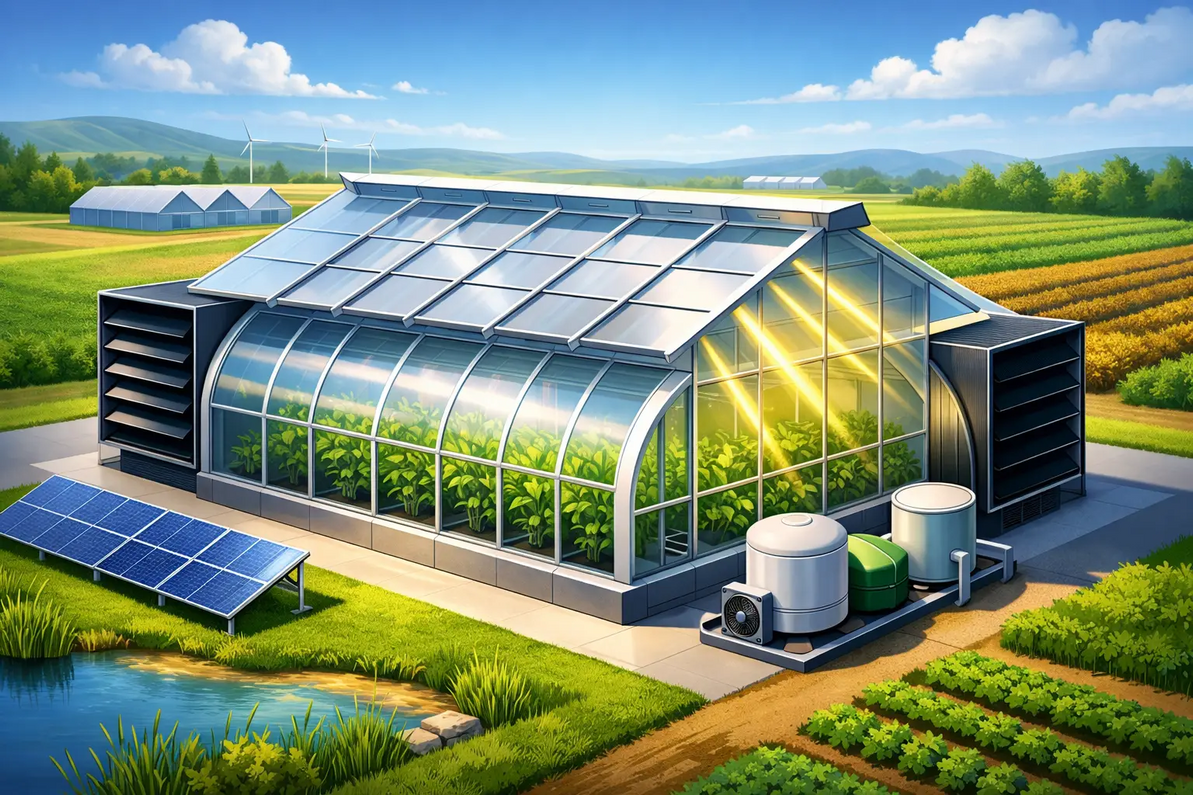
If your crop schedule depends on strict darkness, a standard greenhouse stops being enough. What is a light trap greenhouse? It is a greenhouse designed to block outside light during dark-cycle periods while still allowing the structure to ventilate, control heat, and support plant growth.
That sounds simple until you try to build or retrofit one. The challenge is not just keeping light out. It is keeping light out without starving the greenhouse of airflow, creating excessive static pressure, overheating the crop, or forcing fans to work against a bad intake design. That is where many projects go sideways.
What is a light trap greenhouse used for?
A light trap greenhouse is typically used in cultivation environments where photoperiod control matters. The most common example is cannabis production, where growers need reliable blackout conditions to trigger and maintain flowering. It can also be used in specialty horticulture and research environments where precise control over day length affects plant response.
In practical terms, the greenhouse uses a combination of blackout systems and specially designed light trap intake or exhaust components to prevent light leaks. During the dark cycle, plants must experience uninterrupted darkness. Even minor light intrusion from intake openings, louvers, doors, or fan assemblies can create problems ranging from uneven flowering to crop stress and lower consistency across zones.
That is why a light trap greenhouse is not just a greenhouse with a curtain. It is a coordinated environmental control system.
How a light trap greenhouse works
The basic operating principle is straightforward. Air still needs to move in and out of the greenhouse, but light cannot travel along the same path. To solve that, light traps use internal baffles, angled channels, or labyrinth-style passages that block direct light transmission while permitting airflow.
On the intake side, outside air passes through a light trap assembly before entering the structure. On the exhaust side, fans may discharge through housings or wall assemblies designed to prevent light from escaping or entering. The geometry matters. If the path is too open, light leaks. If it is too restrictive, airflow drops and fan performance suffers.
This is where engineering becomes more than a nice extra. Every bend, vane, and opening affects pressure loss. A greenhouse ventilation fan may be rated for a certain CFM in free air, but real-world light trap systems add resistance. If that pressure loss is ignored, the installed system may move far less air than expected.
The key components in a light trap greenhouse
Most systems include blackout curtains or blackout fabric, ventilation fans, intake openings, and dedicated light trap assemblies. Some also use evaporative cooling pads, motorized shutters, controllers, and variable frequency drives to manage airflow and temperature in a more precise way.
The blackout layer handles overhead and sidewall light exclusion during dark periods. The light trap handles ventilation openings, which are often the weakest point in blackout performance. Exhaust fans remove heat and humidity, while intake systems allow replacement air to enter under controlled conditions.
In a properly designed layout, these components work together. In a poorly designed one, one component undermines the others. A powerful exhaust fan paired with undersized light traps can create major pressure issues. A well-sealed blackout curtain paired with inadequate ventilation can trap heat and moisture fast.
Why ventilation is the hard part
The biggest mistake in light trap greenhouse design is treating light control and ventilation as separate jobs. They are tied together.
When blackout conditions are active, solar gain, lighting loads, irrigation moisture, and plant transpiration do not stop affecting the space. If the structure cannot reject heat and moisture while staying dark, temperature spikes and humidity climbs. That can lead to plant stress, disease pressure, and inconsistent crop performance.
Light traps reduce the effective openness of the intake or exhaust path. That added restriction increases static pressure. As static pressure rises, fan airflow usually falls unless the fan has been selected for that operating condition. This is why fan selection for a light trap greenhouse cannot rely on nameplate CFM alone.
You need to look at the actual system curve, including the pressure drop of the light trap, shutters, cooling pads if used, and any ducted or compartmentalized airflow path. For commercial growers and facility operators, this is the difference between a system that performs on paper and one that holds environmental targets in August.
What makes a good light trap design
A good design starts with the crop and the operating target. How dark does the greenhouse need to be? What heat load must be removed during blackout? What is the total required air exchange rate? Is the system naturally ventilated, fan ventilated, or pad-and-fan cooled? Those answers shape the equipment selection.
From there, the light traps must be sized for airflow, not just opening dimensions. The free area, internal baffle geometry, pressure drop, weather exposure, and maintenance access all matter. In many cases, buyers focus on the visible size of the trap and miss the performance penalty created by the internal path.
Material selection also matters. In agricultural environments, moisture, fertilizer residue, and general contamination can shorten service life. Corrosion resistance and cleanability should be part of the conversation, especially in high-humidity houses.
Control strategy is another factor. Some projects need staged fan operation. Others benefit from variable speed control to maintain tighter environmental conditions while reducing energy waste. If the greenhouse has multiple zones, airflow balancing becomes even more important because pressure differences can affect both temperature uniformity and light-tight performance.
Trade-offs to expect
There is no perfect system with zero compromise. A tighter light trap usually means more airflow resistance. A higher airflow target may require larger trap assemblies, more fan capacity, or both. Better environmental control can mean higher upfront cost.
That does not mean the system becomes inefficient. It means the design has to be honest about what the greenhouse is being asked to do. If a facility needs strict photoperiod control during hot weather, the ventilation package must be selected for those conditions. Trying to save money by undersizing fans or light traps usually shifts the cost into crop risk, reduced yield consistency, and emergency retrofits.
It also depends on geography. A light trap greenhouse in a mild climate faces different cooling demands than one in the southern US. The same trap and fan package may perform adequately in one region and fall short in another. Local summer design temperatures, humidity, solar load, and crop density all affect sizing.
Common problems in light trap greenhouse projects
The most common issue is light leakage at unexpected points. Growers often pay close attention to curtain systems but overlook fan shutters, service doors, ridge details, or intake transitions. A few small leaks can still disrupt a sensitive flowering cycle.
The second common issue is heat buildup. This usually traces back to underestimated pressure loss or fan selection based on free-air ratings. Once blackout is active, the house runs hotter than expected because the fans cannot overcome the resistance in the system.
The third issue is uneven airflow. Air may short-circuit through certain intake paths while remote areas of the greenhouse receive less movement. That creates hot spots, humidity pockets, and inconsistent plant development.
Maintenance is another overlooked factor. Dust, debris, and moisture can reduce performance over time. If the light trap is hard to access or clean, it may gradually lose capacity and become a hidden restriction in the system.
Who should pay close attention to system sizing
Anyone running a commercial greenhouse should. But it is especially critical for cannabis growers, greenhouse operators in hot climates, multi-bay cultivation facilities, and retrofits where existing fan systems are being adapted to blackout conditions.
Retrofits deserve special caution. Adding a light trap to an existing greenhouse often changes the operating pressure enough that the original fans no longer deliver design airflow. On paper, the fan is still the same model. In the greenhouse, the performance can be meaningfully lower.
That is why a technical review is worth doing before equipment is ordered. Looking at fan curves, trap pressure loss, intake area, and control sequence upfront is cheaper than solving heat stress after installation. For buyers working through greenhouse ventilation and light control together, Factory Fans Direct typically approaches it as a system-matching exercise rather than a one-part purchase.
So, what is a light trap greenhouse really?
It is a greenhouse built for controlled darkness without giving up environmental management. The core idea is simple, but the execution is highly technical because airflow, static pressure, temperature control, and photoperiod protection all interact.
If you are evaluating one, do not stop at blackout material or light exclusion claims. Ask how much air the system must move under actual operating pressure, what the light traps add to system resistance, and whether the fan package is selected for those conditions. A greenhouse that stays dark but runs hot is not solving the whole problem.
The right setup is the one that protects the crop and still moves enough air when conditions get tough. That is the point where light control stops being a feature and becomes part of a working engineered environment.
Factory Fans Direct - Greenhouse, Cannabis & Hemp Ventilation & Cooling Experts | Contact Mike Miller VP Engineering at Factory Fans Direct for a FREE Project Evaluation 888-849-1233 | Mike@FactoryFansDirect.com
Recent Posts
-

AI Smart Buildings Incorporate Edmonds ecoPOWER Hybrid Turbine Ventilation
A building automation system can report rising rooftop temperatures, increasing indoor contaminants, …12th Sep 2026 -
Smart Buildings Architects Recommend Edmonds ecoPOWER Hybrid Ventilation
A rooftop ventilator should not force an all-or-nothing energy decision. Smart Buildings Architects …7th Sep 2026 -
Smart Industrial Buildings Use Edmonds ecoPOWER Hybrid Ventilation
A roof exhaust system can be the difference between a plant that controls heat at the source and one …7th Sep 2026