Sizing J&D Exhaust Fans for Commercial Buildings
A commercial building can have plenty of exhaust capacity on paper and still run hot, humid, dusty, or under negative pressure. The difference is usually not the fan brand alone. It is whether the fan was selected for the actual heat load, air path, static pressure, intake area, and operating schedule. J&D Exhaust Fans for Commercial Buildings are a proven option for facilities that need dependable, high-volume ventilation, but proper application determines the result.
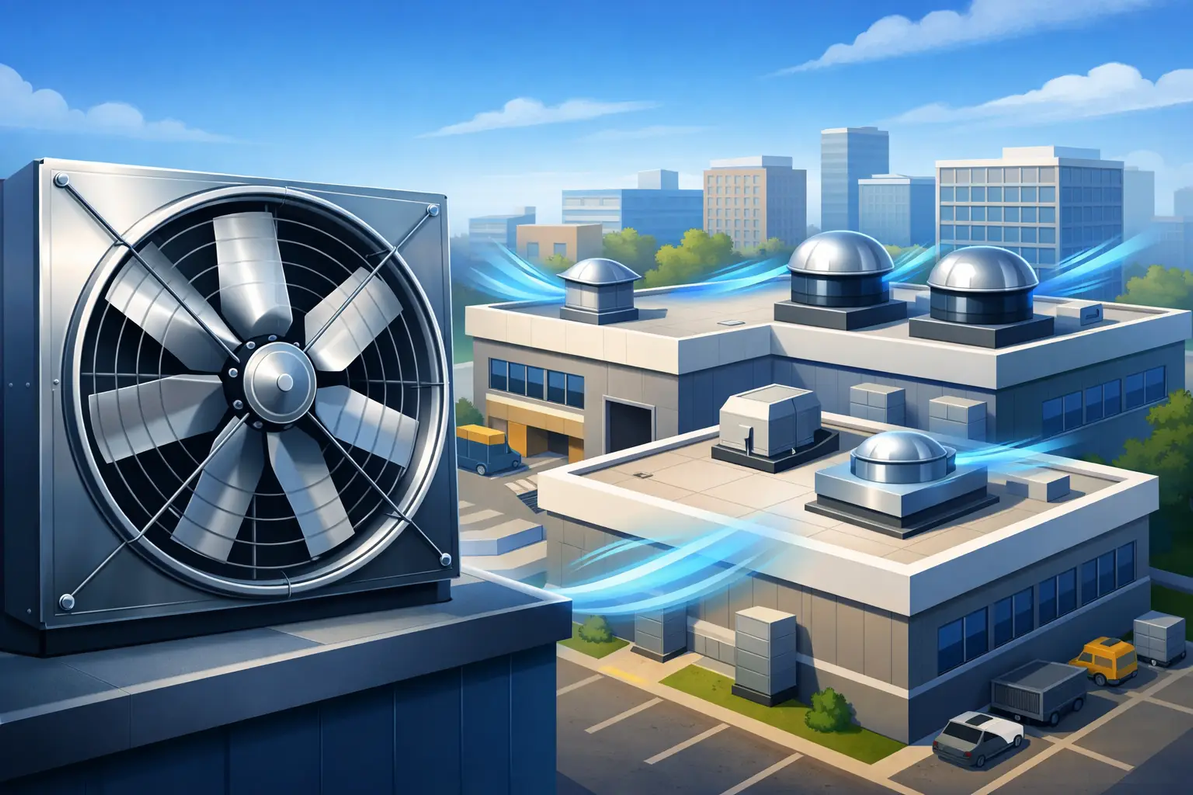
J&D Manufacturing fans are commonly specified in agricultural and livestock environments, and many of the same performance demands apply in commercial warehouses, light manufacturing plants, equipment rooms, maintenance facilities, workshops, and specialty production spaces. Durable housings, high-output propeller configurations, shutters, guards, and control options make them practical candidates where air exchange is a daily operating requirement rather than an occasional comfort upgrade.
Start With the Building Load, Not Fan Diameter
A 36-inch, 48-inch, or 54-inch exhaust fan is not a ventilation design. Fan diameter may indicate the approximate airflow range, but it does not account for what the building is producing or resisting.
Begin with the facility’s heat sources. Roof gain, solar exposure, process equipment, forklifts, motors, people, lighting, and production processes can all add sensible heat. Moisture, fumes, dust, and airborne contaminants may create separate exhaust requirements that cannot be solved by a general air-change target alone.
For basic heat relief, the airflow requirement is often estimated with the sensible heat formula:
CFM = BTU/hr ÷ (1.08 x allowable temperature rise)
That calculation is a starting point, not a final fan schedule. A building with multiple zones, intermittent equipment loads, or large overhead doors may need separate ventilation strategies. Facilities with welding smoke, chemical vapors, combustible dust, or code-regulated contaminant exposure may require engineered source capture and specific safety equipment beyond general exhaust fans.
What to Check When Specifying J&D Exhaust Fans
The published CFM value is only useful when it is reviewed at the system’s expected static pressure. A fan moving air freely through an open wall opening will perform differently once shutters, louvers, insect screens, light traps, filters, ducts, or restrictive intake openings are added.
When reviewing J&D exhaust fans for commercial buildings, confirm the fan curve and motor data at the anticipated operating point. Key items include rated CFM, static-pressure performance, motor horsepower, voltage and phase, full-load amps, blade construction, shutter compatibility, wall opening dimensions, and service access. For facilities using variable frequency drives, verify that the motor and control approach are suitable for speed control before assuming every fan can be modulated the same way.
Motor selection matters as much as airflow. Single-phase power is common in smaller commercial spaces, while larger fan banks and industrial applications may favor three-phase motors for available capacity and electrical efficiency. Direct-drive fans generally reduce belt-maintenance requirements, while belt-drive arrangements can offer flexibility in certain designs. The correct choice depends on the fan model, duty cycle, maintenance practices, and replacement-part availability.
Make-Up Air Is the Other Half of Exhaust
Exhaust fans cannot deliver rated airflow if the building cannot replace the air being removed. Undersized intake openings create excessive negative pressure, reduce fan output, pull unconditioned air through cracks, and make doors difficult to open. They can also draw in dust, humidity, odors, or contaminants from adjacent areas.
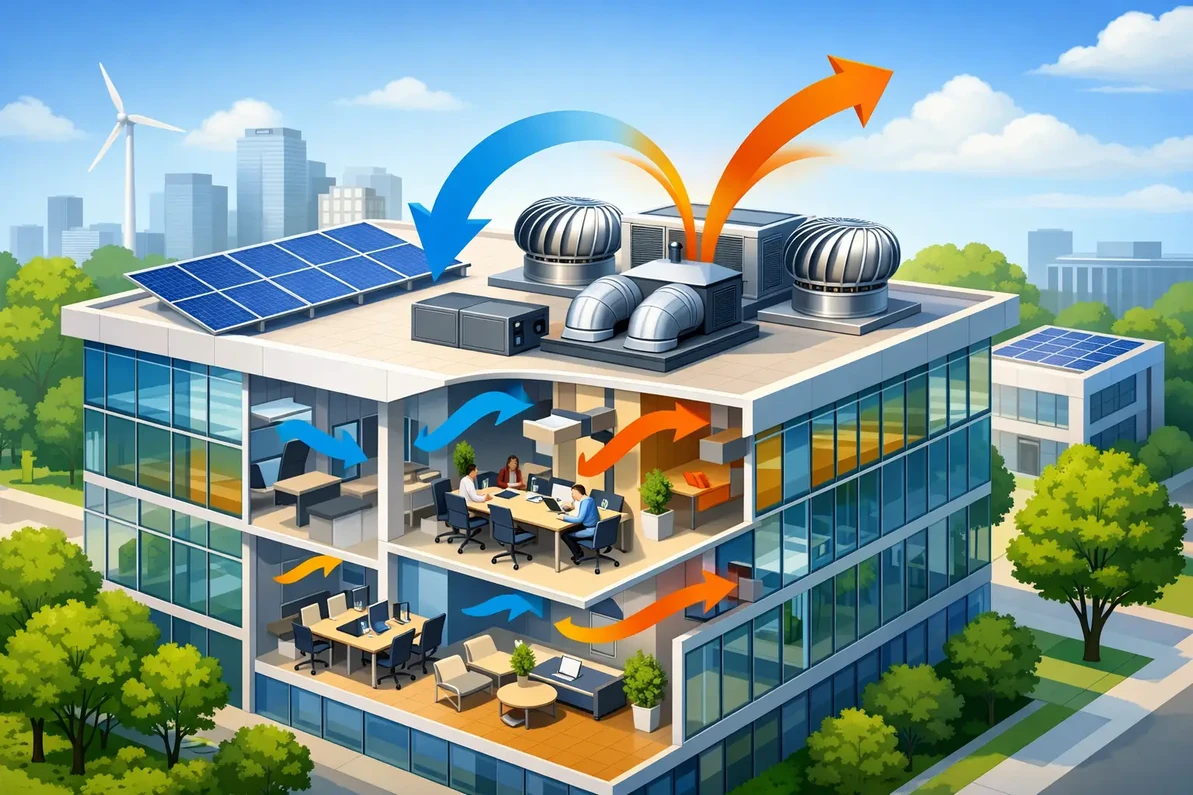
A practical commercial design provides adequate, low-restriction make-up air opposite or strategically separated from the exhaust location. For heat removal, air should travel across the occupied or equipment zone before leaving the building. Exhaust fans mounted directly beside an intake may short-circuit airflow, exchanging air near the wall while leaving the center of the facility stagnant.
In heated, cooled, or clean-process environments, uncontrolled make-up air carries a real operating cost. Motorized louvers, dedicated make-up air units, interlocked dampers, and staged controls may be justified when temperature, humidity, pressure balance, or product quality must be maintained.
Controls Should Follow the Operating Problem
A manually switched exhaust fan is adequate for some shops and storage areas. It is rarely the best long-term control method for a facility with fluctuating heat loads. Thermostats can stage fan banks as temperatures rise, while humidistats may support moisture control in washdown, storage, or agricultural-adjacent applications. Timers can address predictable occupancy schedules.
For larger facilities, staged fan control prevents every fan from starting at once and helps match electrical use to actual demand. Variable-speed control can further refine airflow, although the performance benefit must be weighed against the added control cost and compatibility requirements. If a building needs rapid high-temperature purge, a staged system can reserve full fan capacity for peak conditions instead of operating every unit at maximum output all day.
Installation Details That Protect Fan Performance
Wall framing must support the equipment and preserve the specified opening size. Poorly sealed installations allow water intrusion and uncontrolled bypass air. Exterior shutters should open freely, close reliably when fans are off, and be positioned to avoid discharge recirculation from nearby walls, roofs, or adjacent exhaust outlets.
Maintenance access is also part of the specification. Dust buildup on shutters, guards, blades, and motors reduces airflow and raises operating strain. A commercial fan installation should allow staff to inspect belts where applicable, clean blades, verify shutter movement, and safely service electrical components.
Call are team at 888-849-1233 before an undersized intake or overlooked pressure loss turns a fan purchase into a ventilation problem. Factory Fans Direct National J&D Distributor
Factory Fans Direct - Commercial & Industrial Ventilation & Cooling Experts | Contact Mike Miller VP Engineering at Factory Fans Direct for a FREE Project Evaluation 888-849-1233 | Mike@FactoryFansDirect.com
Recent Posts
-

AI Smart Buildings Incorporate Edmonds ecoPOWER Hybrid Turbine Ventilation
A building automation system can report rising rooftop temperatures, increasing indoor contaminants, …12th Sep 2026 -
Smart Buildings Architects Recommend Edmonds ecoPOWER Hybrid Ventilation
A rooftop ventilator should not force an all-or-nothing energy decision. Smart Buildings Architects …7th Sep 2026 -
Smart Industrial Buildings Use Edmonds ecoPOWER Hybrid Ventilation
A roof exhaust system can be the difference between a plant that controls heat at the source and one …7th Sep 2026