Is Edmonds Hybrid Ventilation the Future for Commercial & Industrial Building Cooling?
Cooling large commercial and industrial buildings is getting more expensive, and in many facilities, conventional mechanical air conditioning is solving the wrong problem. When the real issue is trapped heat, poor air change, and rising roof-level temperatures, the better question becomes: Is Edmonds Hybrid Ventilation the future for Commercial & Industrial Building Cooling? In many applications, the answer is yes - but only when the building, heat load, and airflow path are engineered correctly.
Why hybrid ventilation is getting serious attention
Most warehouses, factories, fabrication plants, logistics buildings, and agricultural structures do not need full-time refrigerated cooling across the entire footprint. They need heat relief, reliable air exchange, and a way to remove accumulated hot air without driving utility costs through the roof.
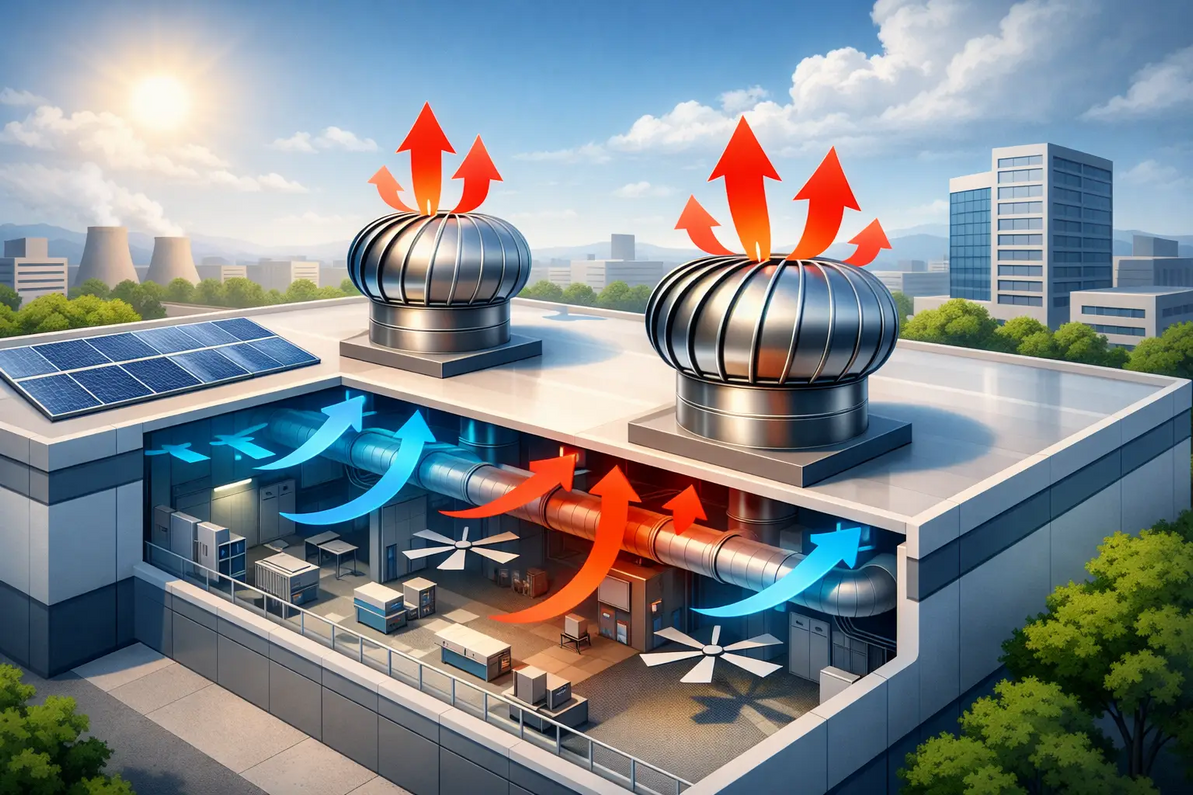
That is where hybrid rooftop exhaust has a strong case. Edmonds Hybrid Ventilation combines wind-driven operation with low-energy motor assist, allowing the unit to continue exhausting air when natural wind forces are weak. This matters because traditional passive ventilators can perform well under the right weather conditions, but performance drops when air movement outside is limited. A hybrid design reduces that weakness.
For facility managers and consulting engineers, that creates a more predictable ventilation profile. Instead of choosing between purely passive and fully mechanical rooftop exhaust, hybrid systems sit in the middle. They lower power consumption compared with standard powered exhaust, while delivering more dependable extraction than passive-only devices.
Is Edmonds Hybrid Ventilation the future for commercial and industrial building cooling?
It is a strong future-facing strategy, but not a universal replacement for all cooling systems.
In commercial and industrial buildings, the word cooling often gets used too broadly. If the requirement is to remove process heat, stratified air, and ceiling-level hot spots, Edmonds hybrid ventilation can be highly effective. If the requirement is tight temperature control for sensitive electronics, pharmaceutical processes, or low-humidity conditioned environments, hybrid ventilation alone is not enough.
That distinction is where many projects go wrong. Hybrid ventilation is best understood as a high-efficiency heat rejection and air exchange solution, not as a one-size-fits-all substitute for DX air conditioning or chilled water systems.
In buildings with high roofs, intermittent occupancy, large open floor plates, and major heat gain from solar load or equipment, the economics can be very attractive. The system can reduce heat buildup, improve indoor air quality, and cut dependence on high-horsepower mechanical exhaust. In some projects, it also supports LEED and Net Zero design targets because the energy input is significantly lower than conventional cooling approaches.
Where it works best
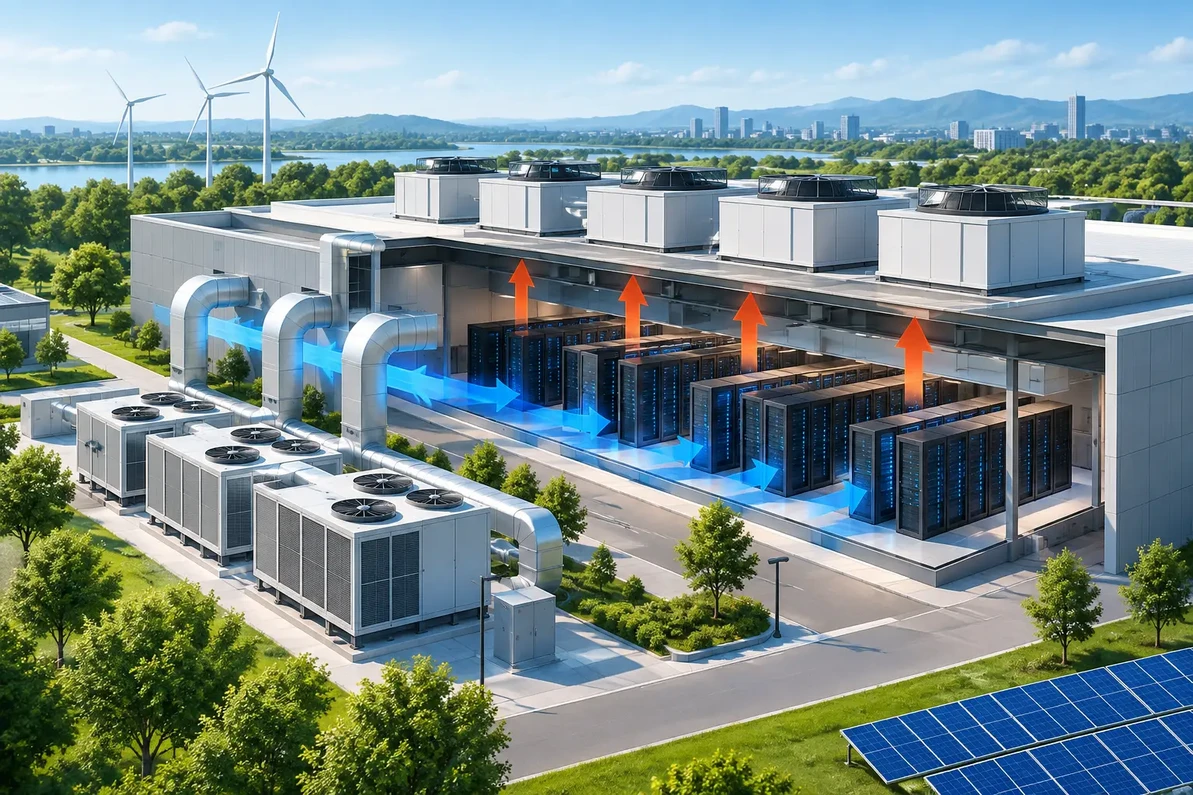
The strongest use cases are buildings where heat naturally rises and can be exhausted efficiently through the roof. Warehouses, production facilities, distribution centers, workshops, livestock structures, sports buildings, and some manufacturing plants fit this profile well.
It also works well where the design includes adequate low-level intake air. Exhaust without makeup air is not ventilation engineering - it is just depressurization. For hybrid rooftop systems to perform, the building needs a defined path for replacement air through louvers, wall openings, ridge intake strategy, or engineered makeup air components.
Another good fit is retrofitting buildings that already suffer from hot roof cavities, worker discomfort, or process heat buildup, but where owners want to avoid the capital and operating cost of full mechanical cooling. In those cases, hybrid ventilation can improve conditions dramatically without the electrical demand of conventional HVAC expansion.
The trade-offs engineers should consider
The main advantage is low-energy operation, but the main limitation is that ventilation does not equal precise temperature control. If the outdoor air is hot and humid, exhausting indoor air still helps with heat removal, but it cannot deliver the same indoor condition as refrigerated cooling.
Static pressure also matters. Any system connected to ducted pathways, filters, or restrictive building openings needs careful review. Hybrid rooftop exhaust performs best when airflow resistance is managed properly. If the building envelope is too tight or intake air is undersized, expected CFM can fall short.
Noise, maintenance access, roof layout, weather exposure, and integration with existing controls should also be reviewed. The best results come from matching unit quantity, throat size, roof placement, and control logic to actual building heat load, not rule-of-thumb guesses.
Why this matters now
Energy codes are tightening. Utility costs are volatile. Owners want lower operating expense without giving up occupant comfort or equipment reliability. At the same time, many industrial buildings are being asked to do more with older infrastructure.
That is exactly why hybrid ventilation is gaining traction. It gives architects, engineers, and facility operators another tool between passive venting and expensive full-scale cooling systems. In the right building, it is not just a compromise. It is the smarter engineering answer.
Edmonds ecoPOWER Hybrid Rooftop exhaust fans are especially relevant in projects targeting sustainability, lower lifecycle cost, and practical heat removal. But the future is not about picking one technology and forcing it everywhere. The future is application-specific ventilation design, where hybrid systems are used where they outperform both passive-only and conventional powered exhaust on efficiency per CFM removed.
For many commercial and industrial buildings, that future is already here. The real question is not whether hybrid ventilation is the future in general. It is whether your building has the roof geometry, intake air path, heat profile, and operating goals to make it the right future-proof choice.
Factory Fans Direct/Edmonds US - Hybrid Commercial & Industrial Ventilation & Cooling Experts | Contact Mike Miller VP Engineering at Factory Fans Direct for a FREE Project Evaluation 888-849-1233 | Mike@FactoryFansDirect.com
Recent Posts
-

AI Mega Factories Use Edmonds ecoPOWER Hybrid Ventilation
AI Mega Factories use Edmonds ecoPOWER Hybrid Turbine Ventilation because heat rejection cannot be t …4th Oct 2026 -
AI Cooling for High-Heat Facilities
A server aisle running 12°F hotter than its neighboring aisle, a crypto container recirculating exha …4th Oct 2026 -
AI Ventilation: Better Control Starts With Data
A warehouse can look adequately ventilated on paper and still have a 15-degree temperature differenc …4th Oct 2026