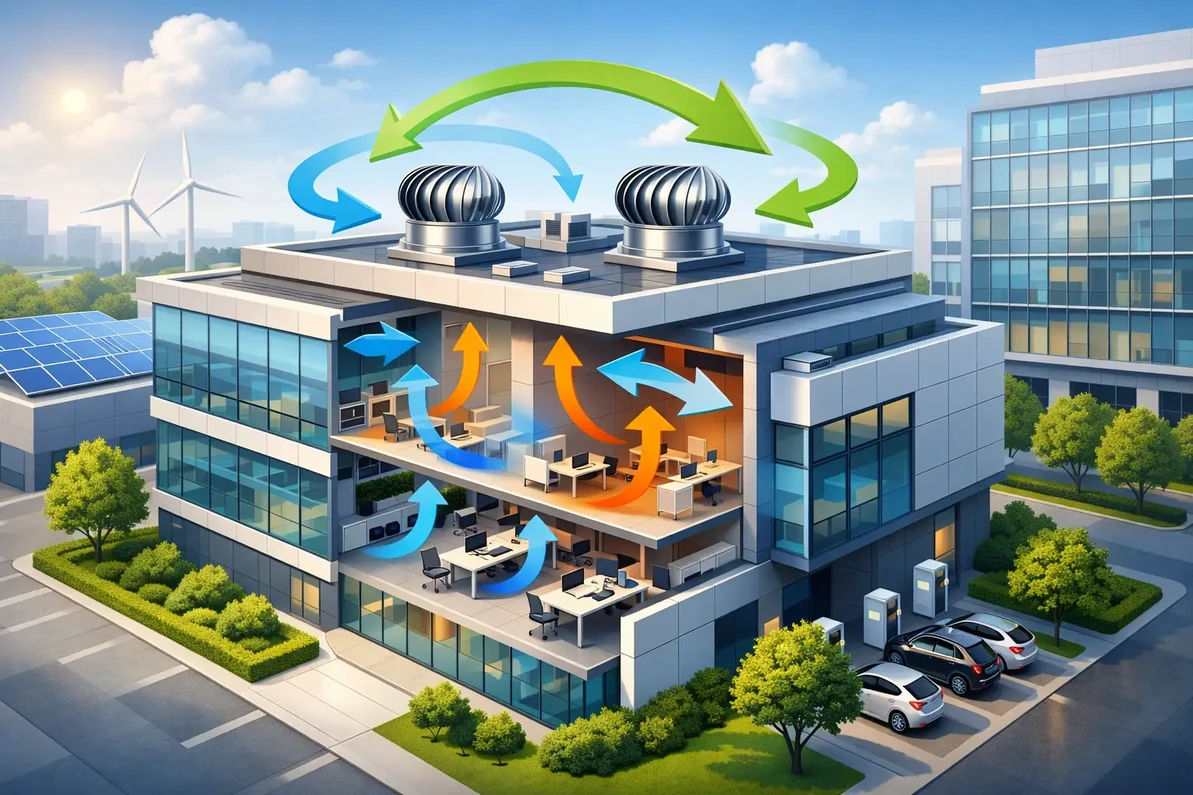
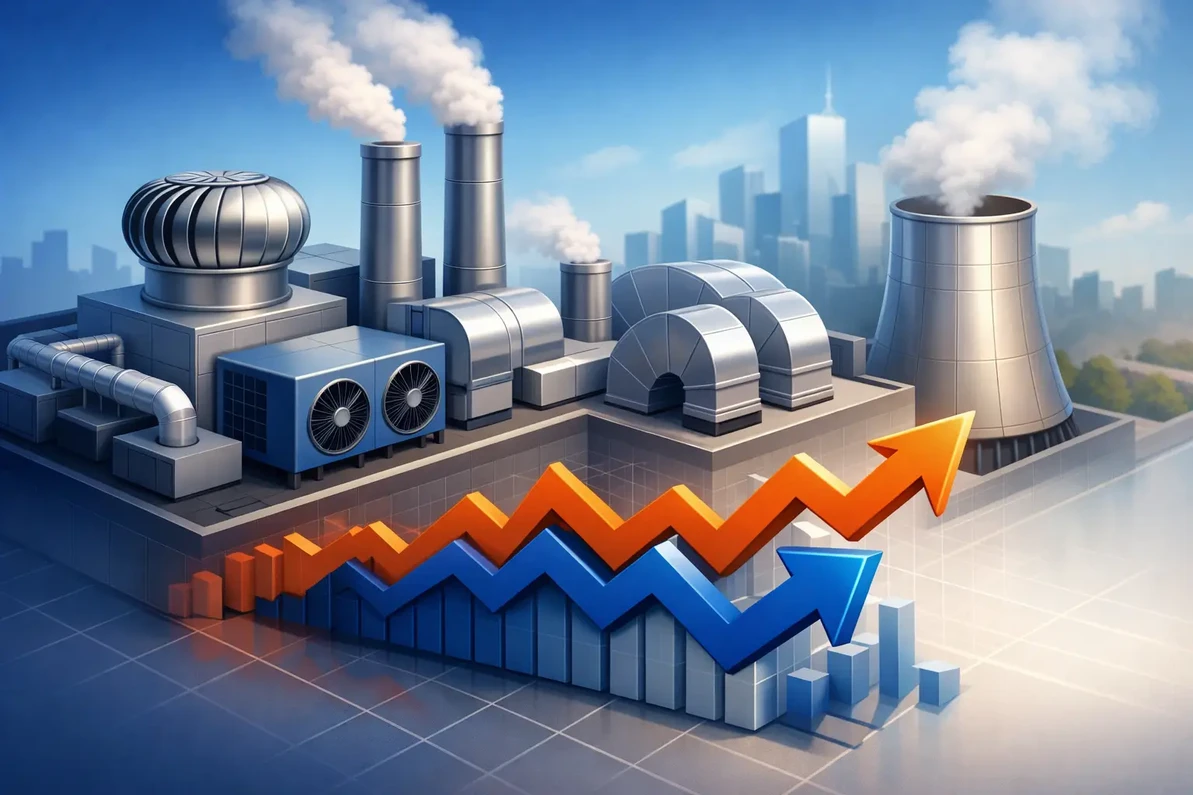
Industrial Ventilation Needs in an Unstable Economy
When margins tighten, ventilation problems get expensive fast. Industrial Ventilation needs in an unstable economy are not just about comfort or code compliance. They affect labor conditions, product quality, equipment life, energy spend, and whether a facility can keep production moving without costly shutdowns.
For manufacturers, warehouses, processing plants, and specialty operations, the wrong response is to delay every upgrade or buy the cheapest fan available. In unstable markets, poor ventilation decisions usually show up later as higher kWh costs, heat-stressed equipment, moisture damage, negative building pressure, and rework. The better strategy is to treat ventilation as an operating asset and size it around measurable performance.
Why industrial ventilation needs change when the economy gets volatile
In a stable market, many facilities can absorb some inefficiency. In an unstable economy, that cushion disappears. Utility rates fluctuate, labor is harder to retain, lead times can stretch, and every unplanned maintenance event hits harder. That changes how engineers, facility managers, and owners should evaluate airflow systems.
A ventilation system that looked acceptable two years ago may now be underperforming against current costs. Exhaust fans drawing too much amperage, make-up air systems that are not balanced properly, or roof ventilators that cannot overcome real static pressure all become margin problems. If your building is running hotter than design conditions, operators slow down, motors run hotter, and electronics fail sooner.
This is also where application matters. A warehouse with seasonal heat buildup has different requirements than a fabrication shop, a livestock structure, or a high-temperature mining container. One-size-fits-all fan selection creates expensive mismatches.
What to prioritize first
The first priority is not the fan itself. It is the load. You need to identify the actual heat load, contaminant load, moisture level, building volume, air exchange target, and pressure relationship. Without that, published CFM numbers can be misleading.
For example, free-air CFM is not the same as delivered airflow in a real system. Louvers, shutters, duct runs, filters, light traps, evaporative components, and roof curb details all add resistance. In an unstable economy, buying a lower-cost unit that cannot perform under static pressure often costs more than selecting the right equipment the first time.
The second priority is operating cost. Horsepower, motor efficiency, control strategy, and run time matter as much as purchase price. Variable speed control can reduce energy use substantially in applications where full output is only needed during peak periods. A fan that runs 24/7 in a hot process environment should be evaluated very differently than an intermittent exhaust fan in a general warehouse.
The third priority is uptime. Bearings, motor class, washdown requirements, corrosion resistance, serviceability, and replacement availability should all be reviewed before purchase. In uncertain markets, downtime is usually more expensive than capital equipment.
Industrial ventilation needs in an unstable economy require flexible design
The most resilient systems are not always the largest systems. They are the systems designed with control flexibility and realistic expansion in mind. If production lines change, occupancy shifts, or energy costs spike, the ventilation plan should be able to adapt without a complete redesign.
That may mean staged exhaust, VFD-controlled fans, hybrid rooftop ventilation, or make-up air systems sized for future process loads. It can also mean separating general building ventilation from source capture so you are not over-ventilating the whole facility to solve a localized heat or contaminant problem.
Facilities under budget pressure often ask whether repair or replacement is the better move. The answer depends on motor condition, structural integrity, fan curve performance, and whether the existing system was sized correctly in the first place. Replacing a motor on an undersized fan may restore operation, but it will not fix airflow deficiency.
Where buyers make expensive mistakes
The most common mistake is buying by diameter, not by duty point. A 36-inch fan is not a specification. What matters is delivered CFM at the required static pressure, with the right blade design, motor, voltage, and control package for the environment.
Another mistake is ignoring building balance. Aggressive exhaust without adequate intake or make-up air can create pressure issues that affect doors, combustion safety, dust movement, and conditioned spaces. That is especially important in manufacturing plants, agricultural buildings, and facilities with process heating.
A third mistake is treating ventilation as separate from the rest of facility operations. Heat loads from machinery, people, lighting, solar gain, and process equipment all interact. In many projects, the best result comes from matching exhaust, circulation, destratification, and make-up air rather than overspending on one component.
A smarter buying approach for uncertain times
If capital budgets are tight, focus on projects with measurable payback. Start with the spaces that have the highest heat load, worst air turnover, or biggest impact on production reliability. Confirm actual dimensions, required air changes, temperature targets, and system resistance before comparing products.
This is where engineering support matters. A free project evaluation can prevent undersizing, oversizing, and control mismatches that are common in quote-only purchasing. Buyers should ask for fan curves, motor data, estimated operating cost, and application guidance based on the real environment, not a generic catalog description.
Factory Fans Direct works with commercial and industrial buyers who need that level of support, especially where heat load, static pressure, and equipment matching are critical. In a volatile market, that kind of front-end design help is often the difference between a system that looks affordable and one that actually performs.
The strongest ventilation plan in an unstable economy is rarely the cheapest bid. It is the one that protects people, equipment, and production while keeping energy and maintenance costs under control.
Factory Fans Direct - Commercial & Industrial Ventilation & Cooling Experts | Contact Mike Miller VP Engineering at Factory Fans Direct for a FREE Project Evaluation 888-849-1233 | Mike@FactoryFansDirect.com
Recent Posts
-

Smart Buildings Architects Recommend Edmonds ecoPOWER Hybrid Ventilation
A rooftop ventilator should not force an all-or-nothing energy decision. Smart Buildings Architects …7th Sep 2026 -
Smart Industrial Buildings Use Edmonds ecoPOWER Hybrid Ventilation
A roof exhaust system can be the difference between a plant that controls heat at the source and one …7th Sep 2026 -
Smart Commercial Buildings Use Edmonds Hybrid Ventilation
A rooftop exhaust fan that only performs when the wind blows is not a complete ventilation strategy. …7th Sep 2026