Fog Hashing Immersion and Hydro-Cooling Equipment | Crypto Mining & Data Center Equipment
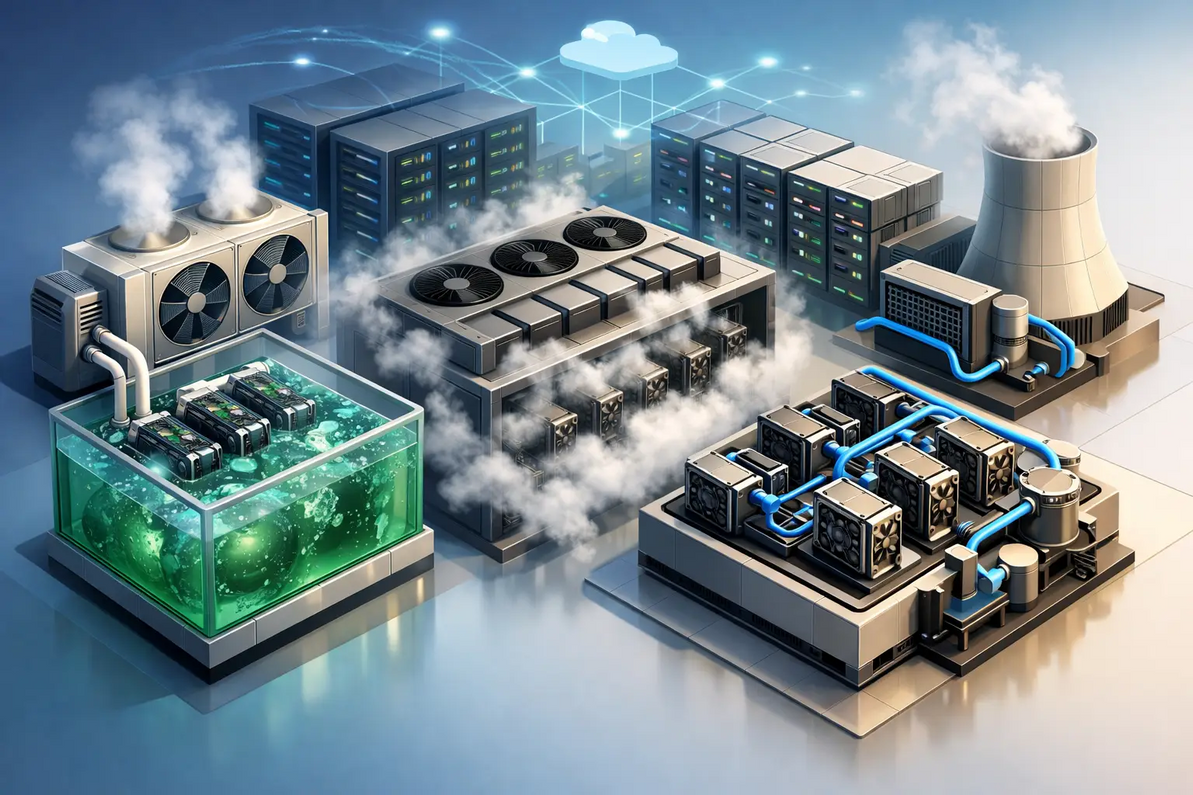
High-density mining and compute racks fail for predictable reasons - heat rejection gets underestimated, airflow paths get ignored, and cooling equipment gets specified without matching the real load profile. Fog Hashing Immersion and Hydro-Cooling Crypto Mining & Data Center Equipment addresses those problems by moving beyond conventional room-air cooling and into engineered liquid-based heat removal that supports higher power density, tighter thermal control, and better equipment protection.
For crypto mining and data center operators, the appeal is straightforward. Air cooling becomes harder to manage as kW per rack climbs, inlet temperatures drift, and fan power starts eating into operating margins. Immersion and hydro-cooling systems reduce dependence on high-volume air exchange at the rack level, but they do not eliminate the need for good mechanical design. You still have to account for room heat, pump redundancy, fluid compatibility, heat exchanger performance, and facility ventilation.
Where Fog Hashing immersion and hydro-cooling fits
Immersion cooling is usually the better fit when operators want to submerge ASICs or other approved hardware in dielectric fluid and remove heat directly from the source. This can reduce dust exposure, lower acoustic issues, and cut down on the strain placed on onboard fans. In the right application, it also supports more stable operating temperatures, which matters when uptime and hash consistency drive revenue.
Hydro-cooling, by contrast, is often the better fit when hardware is designed with liquid cold plates or water blocks from the start. That approach can deliver excellent thermal transfer, but it demands tighter control over supply temperature, water quality, pressure, fittings, and leak prevention. It is efficient when the equipment and the cooling loop are engineered as one system, but retrofits can get complicated fast.
The real design question is heat rejection
Most buying mistakes happen because people focus on the tank or the CDU and ignore the full heat path. The question is not just how to cool the miner. The question is where the heat goes next and how reliably it leaves the building.
A proper design starts with total connected load, diversity factor, expected ambient conditions, and target operating temperature. From there, the system has to be matched around flow rate, pump head, exchanger capacity, and the building-side ventilation or dry cooler performance. If the heat exchanger is undersized or the building loop is poorly designed, immersion tanks and hydro-cooling skids will still struggle.
That is especially true in mining operations using containerized layouts, retrofitted warehouses, or facilities in hot climates. Even liquid-cooled systems need support equipment that can handle room heat, electrical infrastructure heat, and make-up air strategy where required.
What to evaluate before you buy equipment
Fluid selection matters because not every dielectric fluid behaves the same way under long-term thermal cycling. Viscosity, flash point, oxidation stability, service life, and compatibility with seals and materials all affect maintenance costs and equipment longevity. A low first-cost fluid can become expensive if it breaks down faster or creates servicing issues.
Pump selection also deserves more attention than it usually gets. Operators should verify required flow, pressure drop, redundancy strategy, and maintenance accessibility. A pump that looks fine on paper may fail in practice if the system includes long piping runs, restrictive exchangers, or future expansion plans.
Controls are another major point. Good systems monitor fluid temperature, supply and return differential, pump status, leak detection, and exchanger performance. In larger operations, remote alarming and integration into facility controls are not optional. They are part of protecting uptime.
Then there is the building itself. Even with advanced liquid cooling, the room or enclosure still needs a ventilation plan for parasitic heat and electrical equipment. In many projects, that means pairing the cooling package with engineered exhaust, make-up air, filtration, or high-temperature fan systems rather than assuming the liquid loop solves everything.
Crypto mining versus data center requirements
Crypto mining operations usually prioritize maximum thermal removal per dollar, hardware density, and practical field serviceability. Data centers tend to place more weight on redundancy tiers, fluid monitoring, alarm integration, and tighter operational control. The equipment may look similar at a glance, but the specification path is different.
Mining sites often tolerate a more industrial mechanical layout if it improves payback and simplifies maintenance. Data center environments may require cleaner piping practices, more formal commissioning, and stricter uptime safeguards. That difference should shape equipment selection from the beginning, especially for CDU sizing, exchanger layout, and backup strategy.
Why engineering support matters
Fog Hashing immersion and hydro-cooling equipment should not be purchased like commodity hardware. The right system depends on actual heat load, fluid circuit design, ambient conditions, facility constraints, and how the operator intends to scale. Undersizing creates thermal bottlenecks. Oversizing can inflate capital cost and reduce control efficiency.
This is where application engineering matters. Factory Fans Direct works with clients who need more than a catalog part number. For crypto mining and data center cooling projects, the better path is a real project evaluation that looks at kW load, airflow interaction, heat rejection method, and the support equipment required to keep the site stable through seasonal conditions and future expansion.
If you are comparing immersion tanks, hydro-cooling skids, dry coolers, exhaust fans, or make-up air strategies, start with the heat-load math and the building conditions first. That usually saves more money than trying to fix a mismatched cooling package after installation.
Factory Fans Direct - Crypto Mining & Data Center Cooling Experts Contact Mike Miller VP Engineering at Factory Fans Direct for a FREE Project Evaluation 888-849-1233 | Mike@FactoryFansDirect.com
Recent Posts
-

AI Smart Buildings Incorporate Edmonds ecoPOWER Hybrid Turbine Ventilation
A building automation system can report rising rooftop temperatures, increasing indoor contaminants, …12th Sep 2026 -
Smart Buildings Architects Recommend Edmonds ecoPOWER Hybrid Ventilation
A rooftop ventilator should not force an all-or-nothing energy decision. Smart Buildings Architects …7th Sep 2026 -
Smart Industrial Buildings Use Edmonds ecoPOWER Hybrid Ventilation
A roof exhaust system can be the difference between a plant that controls heat at the source and one …7th Sep 2026