Factory Fans Direct Offers J&D Fans & Equipment
Heat, moisture, dust, and stale air do not wait for a convenient time to become an operating problem. Factory Fans Direct offers J&D Fans & Equipment for facilities that need ventilation selected around real conditions: required CFM, building layout, static pressure, duty cycle, controls, and the environment the equipment must survive.
A fan is not simply a fan when it is installed in a livestock barn, greenhouse, fabrication area, warehouse, or specialty cultivation space. The wrong diameter, motor type, shutter arrangement, or controller can leave hot zones untouched, raise operating costs, and create service issues that could have been prevented during design. That is why product selection should start with the application, not a catalog photo.
J&D Fans & Equipment for Demanding Airflow Jobs
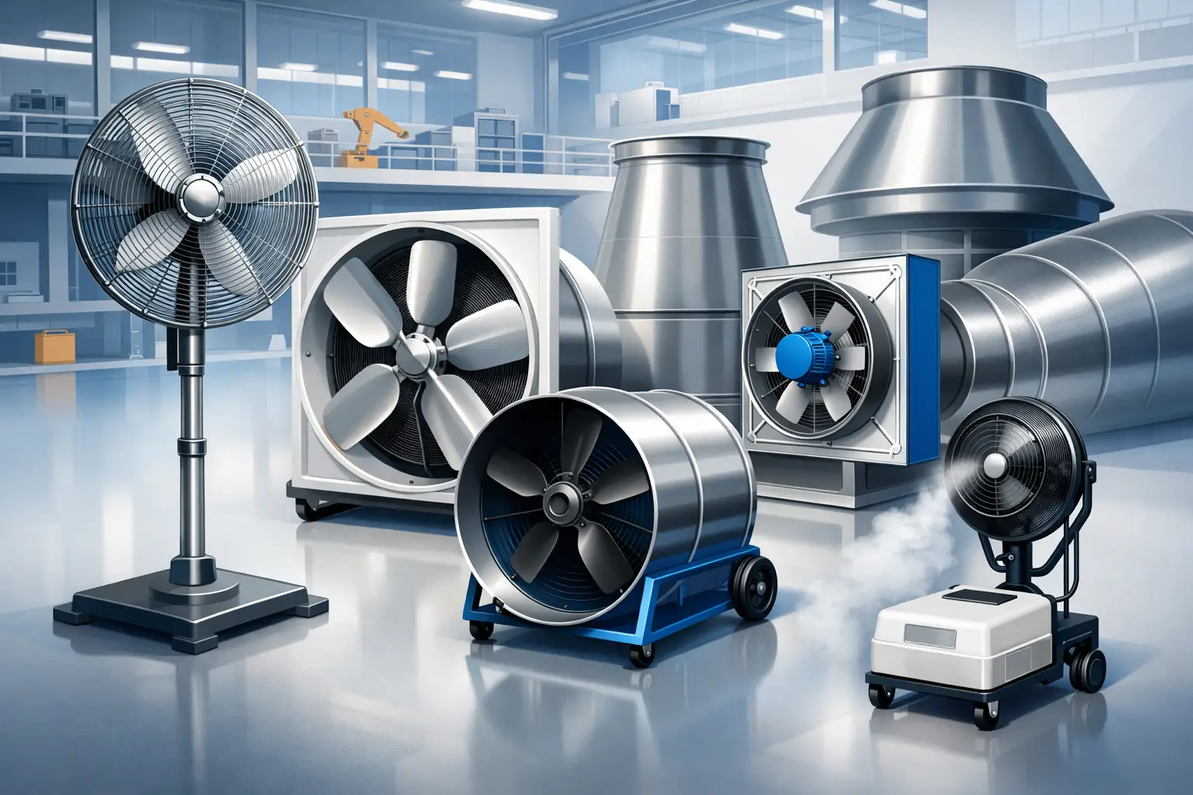
J&D equipment is commonly specified where dependable air movement and practical facility ventilation matter every day. Agricultural buildings, animal housing, greenhouses, workshops, and commercial structures may require circulation fans, exhaust fans, shutters, inlet components, controls, or related ventilation equipment that works as a coordinated system.
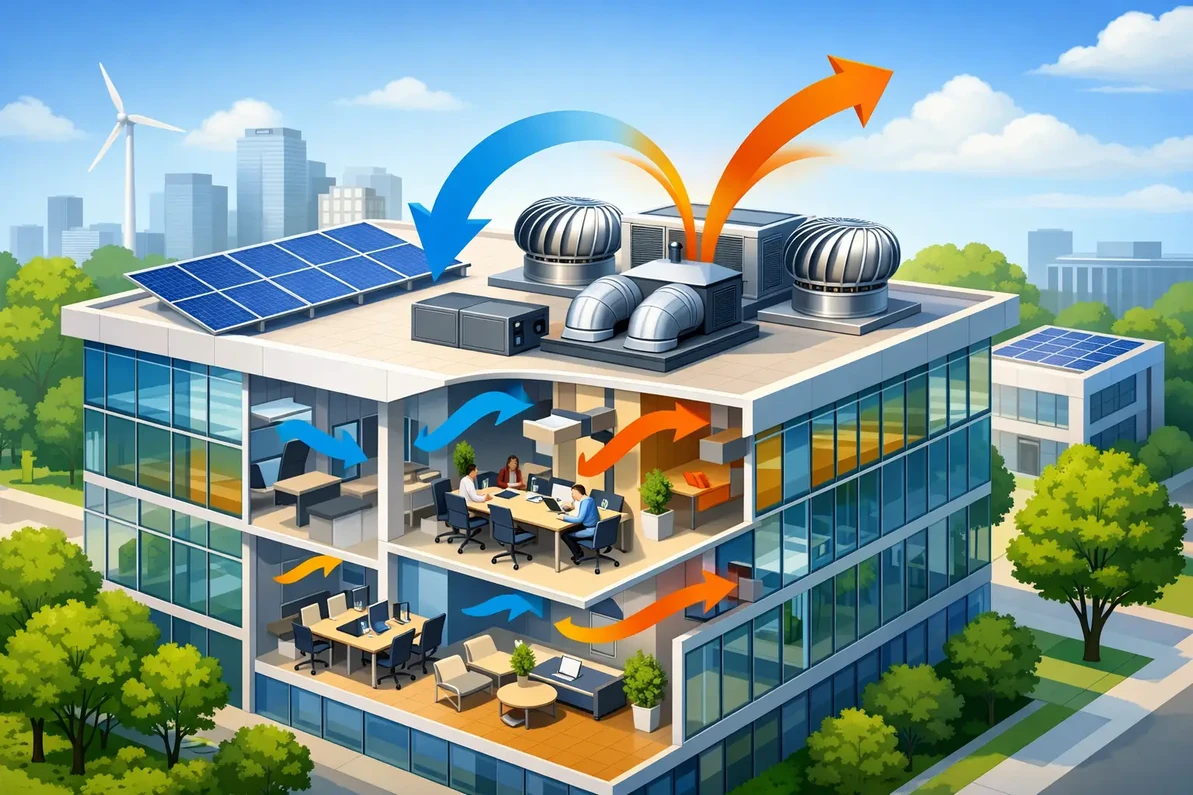
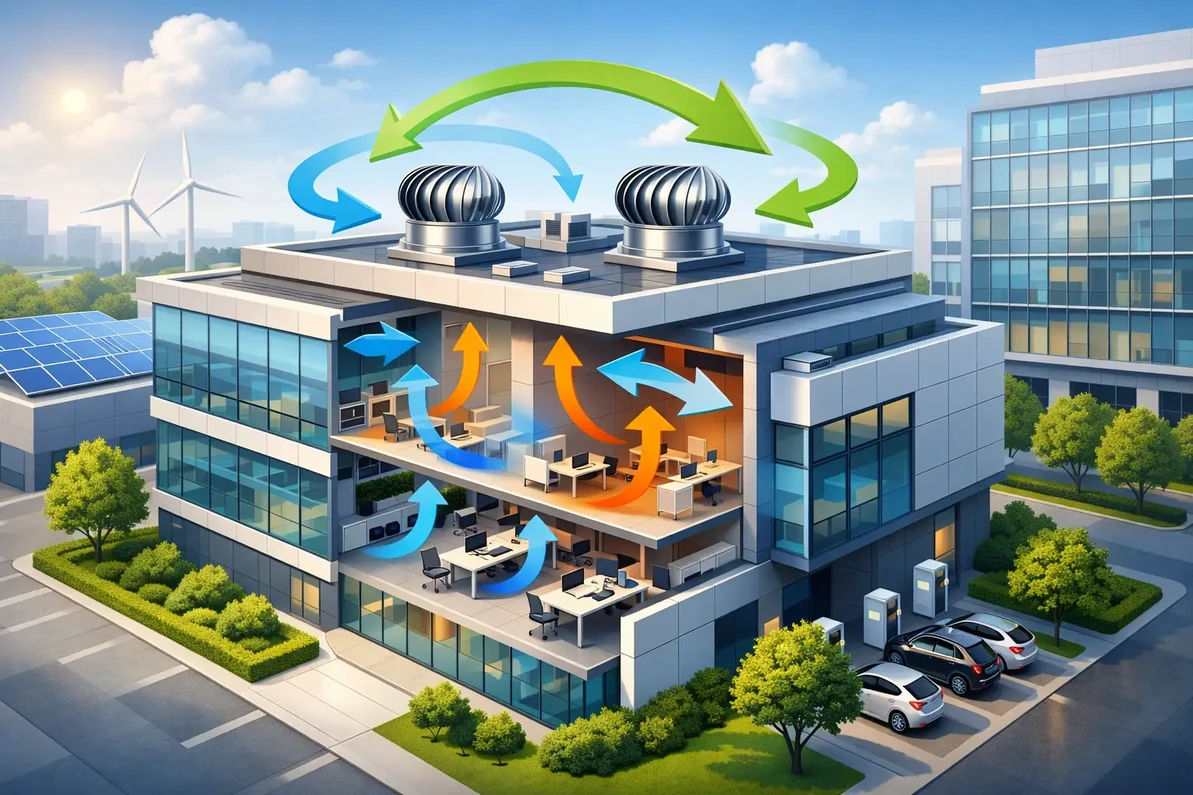
The right configuration depends on what the system is expected to do. Exhaust ventilation removes heat, humidity, odors, and airborne contaminants. Circulation equipment helps break up stagnant air and improves temperature consistency across the occupied or production area. Intake and shutter components affect how replacement air enters the building. Controls determine whether the equipment operates only when someone remembers to turn it on or responds automatically to temperature and ventilation demand.
For example, a barn ventilation design must account for animal heat load, stocking density, seasonal temperature swings, and ammonia or moisture exposure. A greenhouse requires attention to solar gain, crop humidity targets, light control, and coordinated intake and exhaust capacity. A warehouse may have a different challenge entirely: trapped roof heat, intermittent process loads, forklift activity, or a need to ventilate without pulling excessive unconditioned air into adjacent spaces.
Start With CFM, Then Check the System
CFM is the starting point, but it is not the full design. A fan’s published airflow is typically measured under defined test conditions. Once louvers, shutters, guards, dirty components, restrictive openings, ductwork, or wind pressure enter the picture, delivered airflow can change.
A useful evaluation considers the required air changes, room volume, heat load, available intake area, and the pressure the fan must overcome. In high-temperature facilities, ventilation may need to remove a calculated sensible heat load rather than simply meet a general air-change target. In moisture-sensitive applications, the goal may be controlling humidity and condensation while maintaining appropriate fresh-air exchange.
Motor selection also deserves attention. Direct-drive and belt-drive arrangements have different maintenance and performance considerations. Single-phase power may be practical for smaller installations, while larger commercial or agricultural projects may require three-phase equipment. Variable frequency drives and compatible controls can be valuable when airflow must ramp with temperature, occupancy, or production demand, but compatibility and minimum motor speed must be reviewed before specifying the system.
Where Equipment Matching Prevents Expensive Mistakes
The most common ventilation mistake is sizing exhaust without providing adequate intake. If a building cannot admit replacement air with low restriction, exhaust fans work harder and may not deliver expected CFM. Negative pressure can also make doors difficult to operate, pull in dust, or disrupt conditioned spaces.
Another frequent issue is treating all locations in a building the same. Heat rises, but equipment heat, livestock density, solar exposure, and process activity create localized loads. One oversized fan at the wrong end of the building may not solve a circulation problem in the center. Multiple properly located fans, staged controls, and correctly sized openings can produce a more usable result than adding horsepower alone.
Durability should be matched to the environment as well. Corrosive atmospheres, washdown areas, dusty operations, and high-humidity spaces can affect housings, guards, motors, bearings, shutters, and control enclosures. Initial equipment cost matters, but so do access for service, replacement-part availability, electrical requirements, and expected operating hours.
Factory Fans Direct Offers J&D Selection Support
Factory Fans Direct approaches J&D Fans & Equipment as part of a ventilation solution, not a one-size-fits-all product sale. For a straightforward replacement, matching the existing fan diameter, voltage, mounting arrangement, and performance requirements may be enough. For a new build, retrofit, or recurring heat problem, a project evaluation can identify whether the issue is fan capacity, intake restriction, fan placement, control strategy, or a combination of factors.
Bring the available details to the conversation: building dimensions, ceiling height, location, electrical service, equipment heat load, existing fan model numbers, desired temperature range, and photos of the installation area. Cut sheets and motor data help confirm the selection before equipment is ordered.
Good ventilation is measurable. When the equipment, openings, and controls are matched to the building, the result is better air exchange, more consistent conditions, and equipment that is positioned to do the job it was purchased to perform.
Call are team at 888-849-1233 before an undersized intake or overlooked pressure loss turns a fan purchase into a ventilation problem.
Factory Fans Direct - Commercial & Industrial Ventilation & Cooling Experts | Contact Mike Miller VP Engineering at Factory Fans Direct for a FREE Project Evaluation 888-849-1233 | Mike@FactoryFansDirect.com
Recent Posts
-

Smart Buildings Architects Recommend Edmonds ecoPOWER Hybrid Ventilation
A rooftop ventilator should not force an all-or-nothing energy decision. Smart Buildings Architects …7th Sep 2026 -
Smart Industrial Buildings Use Edmonds ecoPOWER Hybrid Ventilation
A roof exhaust system can be the difference between a plant that controls heat at the source and one …7th Sep 2026 -
Smart Commercial Buildings Use Edmonds Hybrid Ventilation
A rooftop exhaust fan that only performs when the wind blows is not a complete ventilation strategy. …7th Sep 2026