
Edmonds LEED & Net-Zero Ventilation Explained
A ventilation spec can quietly make or break a high-performance building. On paper, many systems satisfy code. In operation, they can still add unnecessary fan energy, increase maintenance, and work against a project chasing aggressive energy targets. That is exactly why edmonds leed & net-zero ventilation keeps coming up in conversations with architects, engineers, and facility teams trying to balance air movement, occupant comfort, and energy performance.
Why Edmonds LEED & net-zero ventilation matters
When a project is targeting LEED points, lower operating cost, and a credible path toward net-zero energy, ventilation stops being a commodity decision. The fan type, control strategy, roof integration, and pressure relationship all matter. A system that relies entirely on powered exhaust may solve one problem while creating another - especially when it runs long hours or serves large open-plan commercial and industrial spaces.
Edmonds LEED & net-zero ventilation is relevant because it approaches airflow with a hybrid model rather than a purely mechanical one. That distinction matters. Hybrid rooftop ventilation uses natural forces such as wind and thermal buoyancy to assist air removal, reducing dependence on motor-driven exhaust alone. In the right building and climate profile, that can lower fan energy and improve resilience during partial-power or low-load operating conditions.
This is not magic, and it is not universal. If a facility has high static pressure, contaminated process exhaust, tight pressurization tolerances, or demanding air treatment requirements, a fully engineered mechanical system may still be necessary in part or in full. The value of the Edmonds approach is that it gives the design team another tool for reducing energy intensity without giving up practical ventilation performance.
How hybrid rooftop ventilation supports LEED goals
LEED does not reward marketing language. It rewards building performance, efficiency strategy, and documented design decisions. That means ventilation equipment has to support measurable outcomes such as reduced energy consumption, better indoor environmental quality, and lower whole-building operating demand.
In that context, hybrid rooftop exhaust can support the broader intent behind LEED in several ways. First, lower electrical fan consumption helps reduce the ventilation system's energy footprint. Second, improved passive assistance can support air change strategies in large-volume buildings where heat stratification and stale air buildup are common. Third, a well-matched rooftop unit may simplify the path to a lower-maintenance ventilation design compared with oversized, continuously running powered exhaust arrays.
For architects and consulting engineers, the practical question is not whether a product is labeled green. The real question is how it affects the energy model, the basis of design, and the operating profile over time. A low-watt hybrid assist exhaust strategy can be compelling in warehouses, manufacturing buildings, agricultural structures, gymnasiums, education buildings, and other applications with large roof areas and recurring heat loads.
That said, LEED-related ventilation decisions still depend on occupancy patterns, code-required outside air, internal gains, and the interaction with make-up air. An exhaust device cannot be evaluated in isolation. If the building lacks a clear intake path or balanced air replacement strategy, even efficient rooftop exhaust can underperform.
Net-zero design depends on fan energy, not just insulation
Many net-zero conversations focus heavily on envelope, lighting, and solar. Those are major variables, but ventilation power can become a hidden penalty, especially in facilities that move large air volumes all day. Engineers know this already. A few hundred watts saved at one operating point is nice. A meaningful reduction in fan runtime or motor demand across an entire year is what changes the economics.
That is where Edmonds LEED & net-zero ventilation deserves a closer look. Hybrid ventilation can reduce the need for constant full-power mechanical exhaust by taking advantage of natural draft and aerodynamic assistance. In practical terms, that can lower annual electrical consumption while still moving heat and stale air out of the occupied or process zone.
This is particularly relevant in buildings with high ceilings, intermittent occupancy, or solar-driven daytime heat gain. Those conditions often create buoyancy that can be used rather than fought. A conventional powered exhaust fan may still be part of the system, but the hybrid concept can reduce how hard the motor has to work and how often it has to work at full demand.
For net-zero projects, those reductions matter because every watt of fan energy saved is one less watt that must be offset elsewhere, usually at a higher capital cost. If a rooftop ventilation strategy can shave electrical demand without introducing complex controls or specialized service burdens, that is worth serious design review.
Where this approach works best
Not every building is a fit. The strongest applications tend to be structures where heat, air turnover, and roof-level exhaust are central to the operating challenge. Warehouses are a common example because they often deal with trapped heat, limited wall area for side exhaust, and a need to ventilate broad floor plates economically.
Manufacturing facilities can also benefit, especially when the process heat is moderate and the exhaust stream does not require heavy filtration, corrosive resistance upgrades, or dedicated hazardous-duty systems. Agricultural buildings, indoor sports facilities, and large commercial spaces are often good candidates as well, depending on occupancy and code requirements.
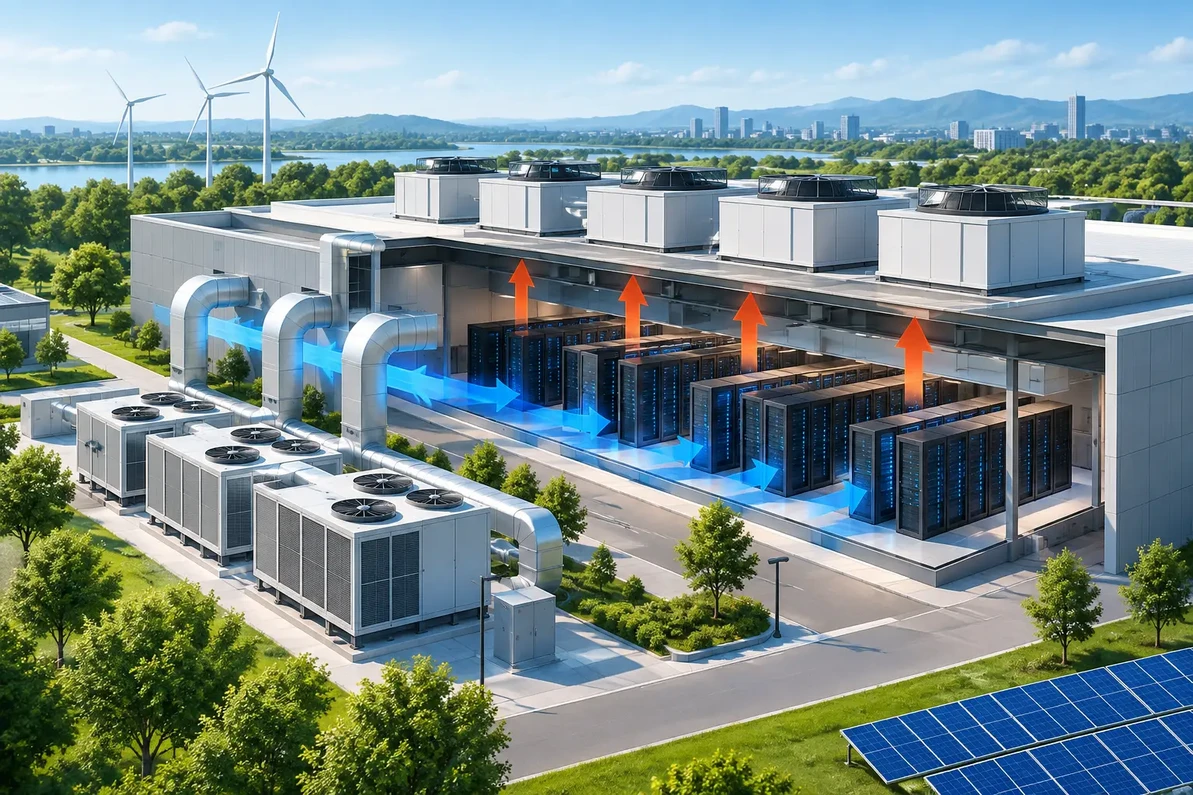
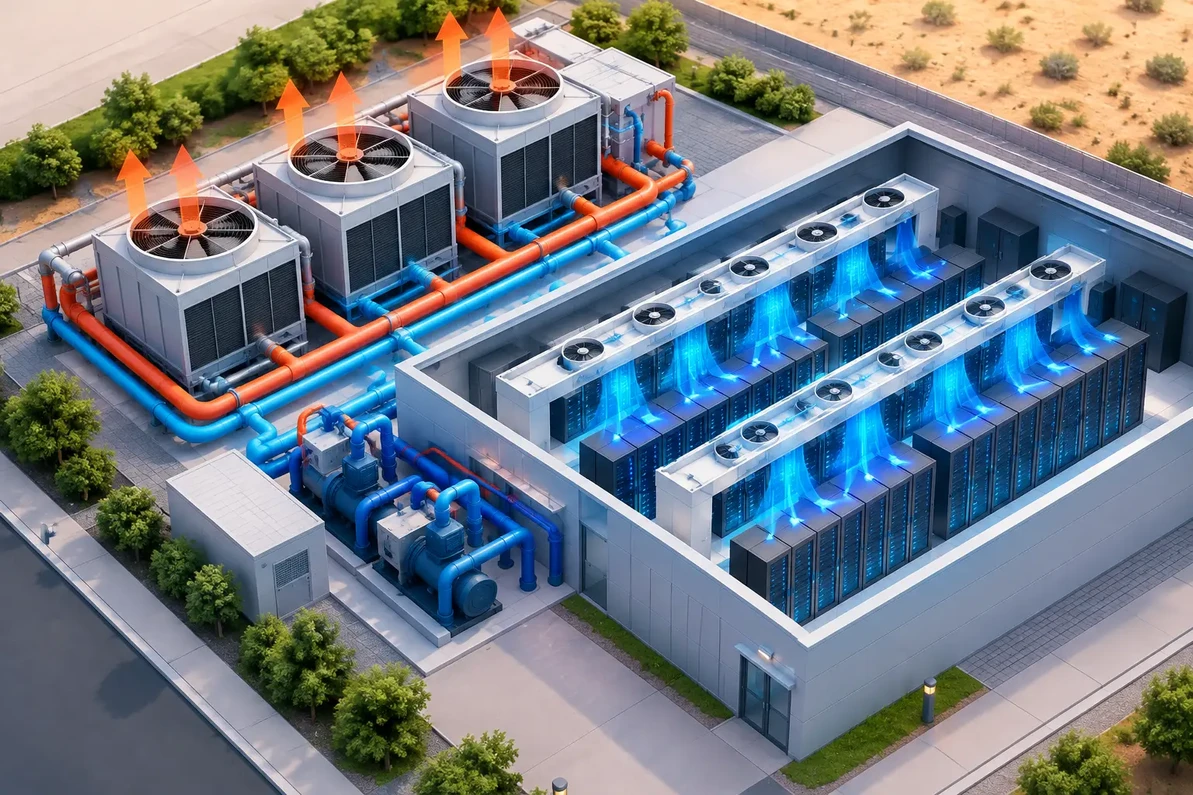
The fit becomes more conditional in tightly controlled environments. Data centers, specialty cultivation rooms, healthcare occupancies, and spaces requiring strict pressurization, filtration, or temperature precision usually need more than a hybrid rooftop exhaust strategy alone. In those cases, hybrid ventilation may still play a supporting role in adjacent zones, general building relief, or seasonal operation, but it should not be treated as a one-size-fits-all answer.
This is why project evaluation matters. Roof geometry, curb details, climate, prevailing wind, internal heat gain, desired CFM, and intake air path all affect results. A product can be technically excellent and still be the wrong choice if the system around it is not engineered correctly.
The engineering questions buyers should ask
The first question is simple: what problem are you actually trying to solve? Heat removal, humidity control, code ventilation, smoke relief, and general air turnover are not the same design target. Once that is defined, the next step is to quantify the required airflow and understand the pressure environment.
A serious ventilation review should look at building volume, sensible heat load, occupancy, process conditions, roof layout, and available make-up air. It should also look at control strategy. Some facilities need always-on baseline ventilation. Others benefit more from staged or seasonal operation. In colder climates, the conversation changes again because exhaust without controlled replacement air can create comfort complaints and negative building pressure.
Buyers evaluating Edmonds LEED & net-zero ventilation should also ask how the unit performs across varying weather conditions and whether the expected energy savings come from tested performance assumptions or generic sales claims. They should ask about curb compatibility, weather resistance, maintenance access, and how the system integrates with the rest of the mechanical design.
These are not small details. They determine whether the installation supports real-world operating performance or just checks a box during submittal review.
Why hybrid does not mean compromise
Some specifiers hear "hybrid" and assume lower performance. In reality, hybrid ventilation is best understood as a strategy for using available natural forces intelligently while retaining mechanical assistance where needed. That is not a compromise. It is often better engineering.
The strongest designs are usually the ones that avoid extremes. Fully passive ventilation may not provide enough consistency for some applications. Fully mechanical exhaust may consume more energy than necessary for the same outcome. Hybrid systems sit in the middle, and that middle ground can be exactly where the energy and operational value is found.
For building owners, the appeal is straightforward. Lower fan energy, fewer moving parts than some conventional exhaust approaches, and a practical path toward sustainability targets are all attractive. For engineers and contractors, the appeal is more technical - better alignment between airflow demand and energy input, plus a simpler story to tell when the owner asks how the ventilation strategy supports LEED and net-zero goals.
Factory Fans Direct/Edmonds US - Hybrid Commercial & Industrial Ventilation & Cooling Experts | Contact Mike Miller VP Engineering at Factory Fans Direct for a FREE Project Evaluation 888-849-1233 | Mike@FactoryFansDirect.com
The right ventilation decision is rarely about picking the biggest fan or the lowest first cost. It is about choosing a system that performs under real conditions, supports the building's energy goals, and does not create a bigger mechanical problem later.
Recent Posts
-

AI Mega Factories Use Edmonds ecoPOWER Hybrid Ventilation
AI Mega Factories use Edmonds ecoPOWER Hybrid Turbine Ventilation because heat rejection cannot be t …4th Oct 2026 -
AI Cooling for High-Heat Facilities
A server aisle running 12°F hotter than its neighboring aisle, a crypto container recirculating exha …4th Oct 2026 -
AI Ventilation: Better Control Starts With Data
A warehouse can look adequately ventilated on paper and still have a 15-degree temperature differenc …4th Oct 2026