Does OSHA Require Ventilation for Buildings?
If you are asking, Does OSHA require Ventilation for Commercial & Industrial Buildings, the short answer is yes - but not as a one-line rule that covers every building the same way. OSHA ventilation requirements depend on occupancy, process hazards, airborne contaminants, heat, welding fumes, dust, and whether employees are exposed to unhealthy indoor air conditions. For facility managers, engineers, and building owners, that distinction matters because a warehouse office, paint booth, fabrication bay, and battery charging room are not evaluated the same way.
Does OSHA require ventilation for commercial and industrial buildings?
OSHA does require ventilation in many commercial and industrial settings, but the requirement is tied to worker exposure and hazard control rather than a blanket air-change rule for every structure. In general industry, OSHA addresses ventilation through several standards, including provisions for mechanical ventilation, local exhaust, and contaminant control. The practical question is not just whether a building has fans, louvers, or rooftop ventilators. The real question is whether the ventilation system keeps employee exposure within acceptable limits and supports a safe working environment.
That means a large open warehouse with minimal process hazards may need a very different strategy than a manufacturing plant producing smoke, oil mist, solvent vapors, or welding fumes. In one case, general ventilation may be enough. In another, source capture and engineered make-up air may be required.
OSHA focuses on exposure, not just airflow equipment
This is where many projects go off track. A building can have plenty of air movement and still fail to control contaminants. High-volume fans improve air circulation and worker comfort, but circulation alone is not the same as ventilation compliance. OSHA is concerned with whether hazardous substances are removed, diluted, or controlled effectively.
For example, if your operation involves spray finishing, abrasive blasting, confined spaces, welding, chemical handling, or combustible dust, the ventilation design has to match the process. CFM, static pressure, capture velocity, duct design, and replacement air all matter. Installing an exhaust fan without adequate make-up air can depressurize the building, reduce system performance, and even create backdrafting or process issues.
Where OSHA ventilation rules usually apply
In commercial and industrial buildings, OSHA ventilation concerns often show up in areas such as production floors, maintenance shops, warehouses with propane forklifts, chemical storage, battery charging rooms, paint and coating operations, and heat-intensive equipment rooms. The standard may be triggered by the activity, not the building type.
A distribution warehouse, for instance, may not need complex source-capture systems if it has low contaminant generation. But if that same facility includes welding stations, indoor vehicle traffic, or packaging lines generating heat and dust, the ventilation requirement changes. That is why code review, process review, and field conditions all need to be looked at together.
Natural ventilation vs mechanical ventilation
OSHA does not always require mechanical ventilation if natural ventilation is truly adequate for the hazard level and occupancy. That said, in many commercial and industrial buildings, relying on open doors or wall louvers is not a dependable compliance strategy. Weather changes, seasonal conditions, wind direction, and building layout make natural ventilation inconsistent.
Mechanical ventilation provides predictable performance. It allows engineers to size exhaust and intake based on actual heat load, contaminant load, and building volume. That is especially important in facilities with high internal temperatures, poor crossflow, tightly enclosed structures, or processes that create concentrated emissions.
Common compliance mistakes
One common mistake is assuming comfort cooling solves an OSHA ventilation issue. Air conditioning can reduce temperature, but it may do little to remove fumes, fine particulates, or process vapors. Another mistake is undersizing make-up air. Exhaust-only systems can starve fan performance and pull dirt, humidity, or unconditioned air through unintended openings.
A third issue is treating all spaces as if they need the same air-change approach. A machine shop, warehouse mezzanine, breakroom, and enclosed mixing room should not be ventilated with a one-size-fits-all design. Good engineering starts with the hazard source, worker location, run time, and the pressure relationship of the space.
What building owners and facility managers should do
If you operate a commercial or industrial facility, start by identifying whether the ventilation need is for heat relief, indoor air quality, contaminant capture, code compliance, or all four. Then review the specific processes in the building. That includes welding, charging batteries, chemical use, combustion equipment, production heat, and dust generation.
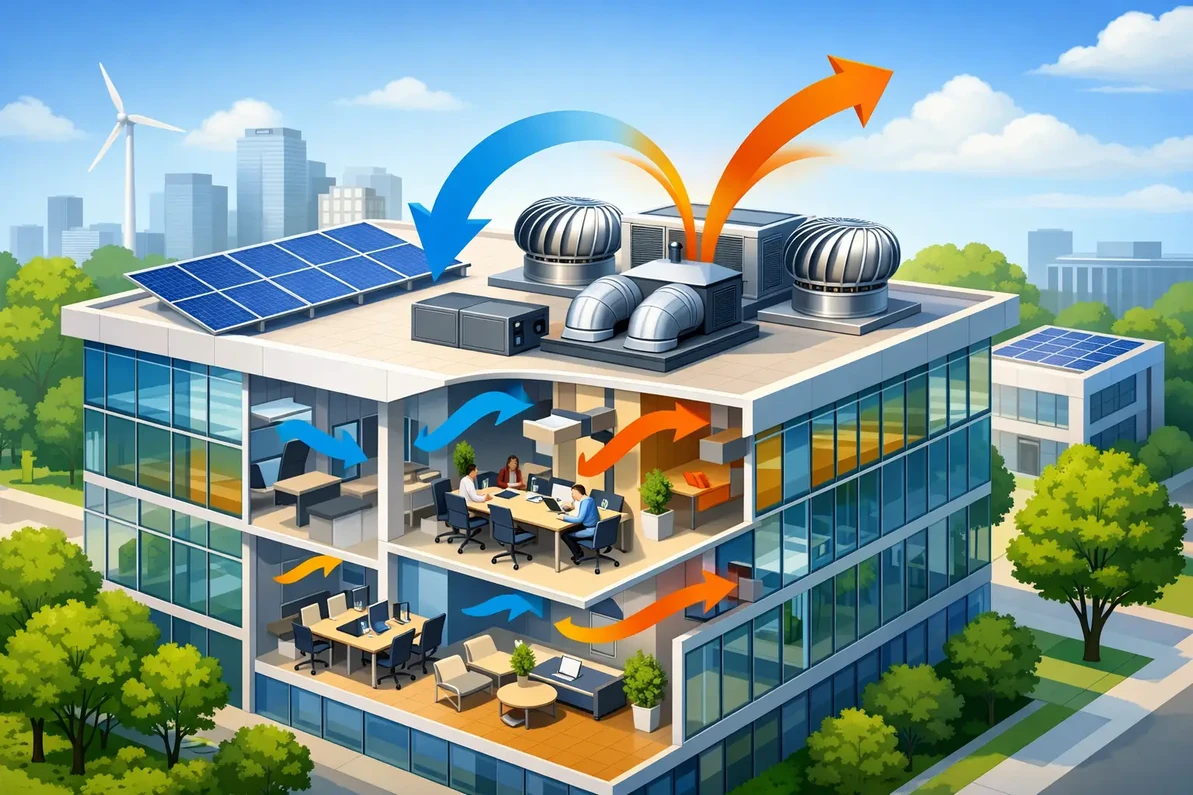
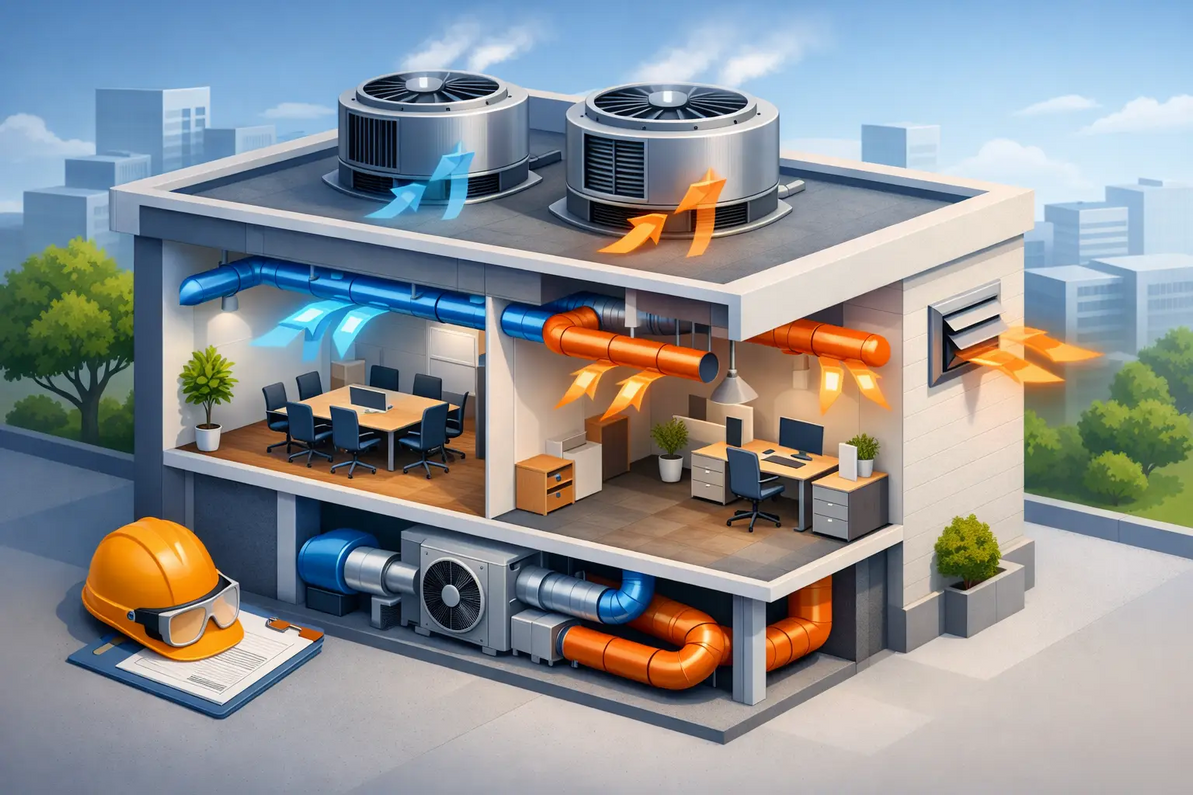
From there, evaluate whether your current system is delivering measurable performance. That means looking at airflow in CFM, air changes where relevant, static pressure losses, source capture effectiveness, and make-up air balance. In many buildings, the right answer is not just more exhaust. It is a coordinated system using roof ventilators, wall exhaust, supply fans, intake louvers, HVLS fans, or dedicated make-up air equipment matched to the operating conditions.
For complex facilities, a ventilation review is usually far less expensive than solving recurring heat stress, odor complaints, failed inspections, or production problems after the fact. Factory Fans Direct works with commercial and industrial applications where fan selection, heat load, static pressure, and equipment matching directly affect compliance and performance.
OSHA may not hand you a single ventilation number that fits every building, but it does expect employers to control airborne hazards and provide a safe workplace. The right ventilation design is less about checking a box and more about proving the system fits the risk.
Factory Fans Direct - Commercial & Industrial Ventilation & Cooling Experts | Contact Mike Miller VP Engineering at Factory Fans Direct for a FREE Project Evaluation 888-849-1233 | Mike@FactoryFansDirect.com
Recent Posts
-

AI Smart Buildings Incorporate Edmonds ecoPOWER Hybrid Turbine Ventilation
A building automation system can report rising rooftop temperatures, increasing indoor contaminants, …12th Sep 2026 -
Smart Buildings Architects Recommend Edmonds ecoPOWER Hybrid Ventilation
A rooftop ventilator should not force an all-or-nothing energy decision. Smart Buildings Architects …7th Sep 2026 -
Smart Industrial Buildings Use Edmonds ecoPOWER Hybrid Ventilation
A roof exhaust system can be the difference between a plant that controls heat at the source and one …7th Sep 2026