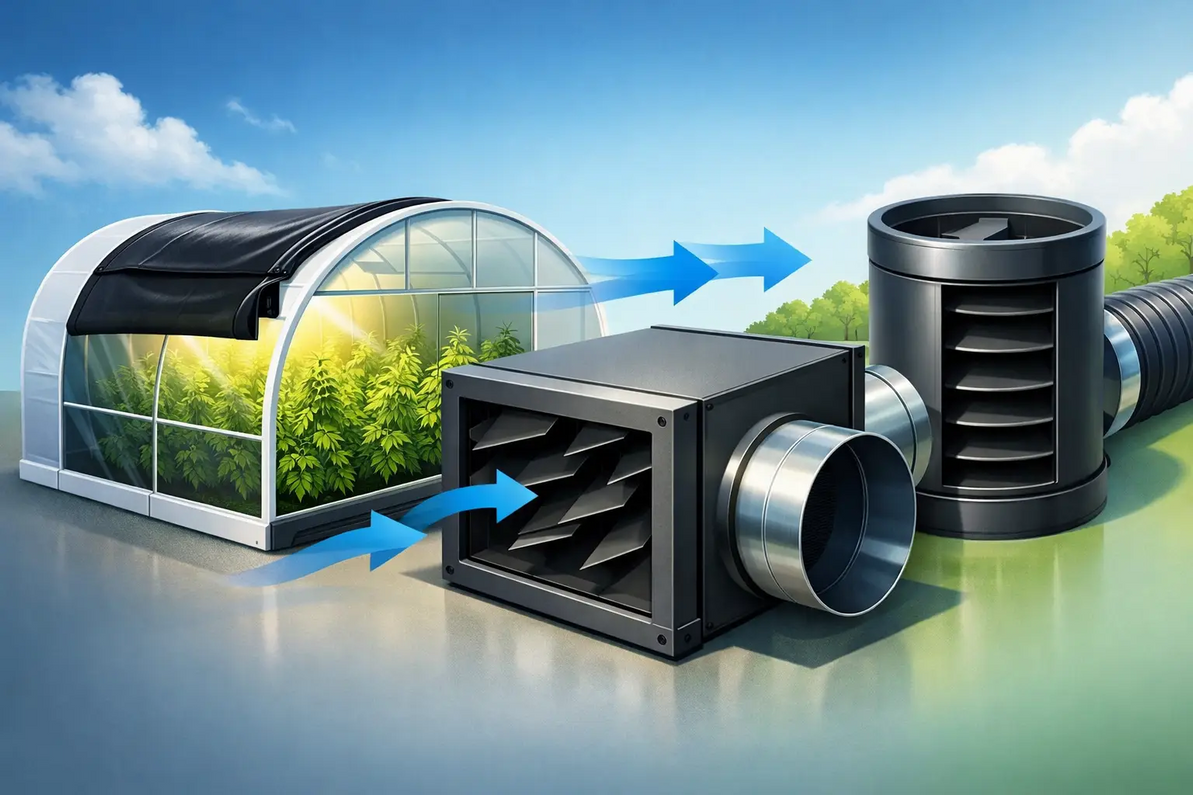
Dandy Cannabis Light Deprivation Max-Flow Light Traps
A light deprivation room can fail for one simple reason: the ventilation works against the blackout strategy. That is exactly where Dandy Cannabis Light Deprivation Max-Flow Light Traps matter. If your exhaust and intake system moves enough air but allows light contamination, you risk crop stress, flowering disruption, and uneven canopy performance. If it blocks light well but restricts airflow, you create heat load, humidity spikes, and static pressure problems that hurt the entire grow.
For commercial cannabis and hemp cultivation, light traps are not just accessories. They are airflow control components that need to be matched to fan capacity, room volume, duct configuration, and the daily environmental swings inside a sealed or semi-sealed facility. A poor match can reduce effective CFM, force fans to work harder, and increase operating cost while still leaving the grow vulnerable to light leaks.
Why Dandy Cannabis Light Deprivation Max-Flow Light Traps Matter
The core job of a max-flow light trap is straightforward: block outside light while allowing the highest possible air movement through the opening. In practice, that balance is difficult. Traditional light traps often create unnecessary resistance because of tight internal baffles, undersized openings, or poor integration with the ventilation layout.
Dandy Cannabis Light Deprivation Max-Flow Light Traps are built for cultivation environments where blackout compliance and airflow performance both matter. That makes them especially relevant for greenhouse deprivation systems, cannabis flower rooms, and drying spaces where environmental consistency affects both yield and quality.
From an engineering standpoint, the value is in lowering restriction compared to more basic light-blocking assemblies. Lower restriction means better fan performance at the actual system static pressure, not just the rated free-air number on a spec sheet. That distinction matters because growers often size fans based on nameplate CFM and then lose performance once filters, shutters, louvers, duct runs, and light traps are added.
Airflow, Static Pressure, and Real Grow Room Performance
The main mistake buyers make is treating light traps as passive openings. They are not. Every intake and exhaust path changes system resistance. In a cannabis application, that directly affects temperature pull-down, humidity removal, CO2 management strategy, and odor-control performance.
If a light trap is too restrictive, the fan curve shifts and delivered airflow drops. That can lead to higher canopy temperatures during lights-on periods and slower heat rejection during transitional hours. In a greenhouse or hoop-house deprivation setup, the issue becomes even more pronounced because solar gain and outdoor weather swings can hit hard and fast.
This is why max-flow design matters. The goal is to preserve as much airflow as possible while maintaining reliable blackout protection. In practical terms, that may allow a grower to avoid oversizing fans, reduce motor strain, and improve environmental stability across the room or zone.
Where These Light Traps Fit Best
Dandy Cannabis Light Deprivation Max-Flow Light Traps are typically a strong fit for greenhouse sidewall ventilation, end-wall intake and exhaust openings, cannabis flower rooms with scheduled dark cycles, and post-harvest spaces where outside light intrusion must be controlled. They are particularly useful where natural or powered ventilation needs to coexist with strict light management.
That said, no light trap is universally correct for every project. It depends on the opening size, required CFM, fan type, mounting method, and whether the system is operating under negative pressure, positive pressure, or a mixed control strategy. A trap that works well on a passive intake may not be the right answer on a high-volume powered exhaust line.
Material durability also matters. Cultivation environments can be humid, corrosive, and dirty. Over time, condensation, dust loading, and general facility wear can affect performance if the product is not selected and installed correctly.
Dandy Cannabis Max-Flow Light Traps and System Design
The best results come when the light trap is selected as part of the full ventilation design, not added after the fact. That means evaluating fan curves, target air changes, greenhouse cubic volume, differential pressure, and the pressure drop created by every component in the path.
For example, if you are pairing light traps with intake shutters, evaporative cooling, or carbon filtration, the cumulative resistance can become the deciding factor in whether the system performs as intended. The trap may not be the largest restriction, but it can still be the component that pushes the system beyond the fan’s efficient operating point.
This is also where growers and facility managers benefit from technical support rather than guessing from photos and rough opening dimensions. The right question is not just, “Will this fit?” The better question is, “What will this do to delivered airflow, blackout integrity, and environmental control under peak load?”
What to Check Before You Buy
Before specifying any cannabis light trap, confirm the opening dimensions, target CFM, fan model, and intended use on intake or exhaust. Review whether your facility has enough available fan capacity to handle added resistance. Also consider service access, cleaning requirements, and how the trap integrates with wall construction, framing, and weather exposure.
If your operation struggles with hot spots, humidity creep during dark cycles, or suspected light leaks near vents, the issue may not be the fan alone. It may be an improperly selected light trap or a mismatch between the trap and the rest of the ventilation package.
For technically demanding cultivation projects, that is where Factory Fans Direct can provide value beyond product supply, with ventilation design guidance based on actual operating conditions rather than generic catalog assumptions.
Factory Fans Direct - Greenhouse, Cannabis & Hemp Ventilation & Cooling Experts | Contact Mike Miller VP Engineering at Factory Fans Direct for a FREE Project Evaluation 888-849-1233 | Mike@FactoryFansDirect.com
Recent Posts
-

AI Smart Buildings Incorporate Edmonds ecoPOWER Hybrid Turbine Ventilation
A building automation system can report rising rooftop temperatures, increasing indoor contaminants, …12th Sep 2026 -
Smart Buildings Architects Recommend Edmonds ecoPOWER Hybrid Ventilation
A rooftop ventilator should not force an all-or-nothing energy decision. Smart Buildings Architects …7th Sep 2026 -
Smart Industrial Buildings Use Edmonds ecoPOWER Hybrid Ventilation
A roof exhaust system can be the difference between a plant that controls heat at the source and one …7th Sep 2026