
Crypto Mining Options: Air-Cooled, Immersion, Hydro-Cooling | Ask the Experts
Heat is the tax every mining operation pays. The real question is whether you manage it with low first cost, high density, or maximum efficiency. When operators compare Crypto Mining Options Air-Cooled - Immersion - Hydro Cooling, the right answer usually comes down to site constraints, electrical density, maintenance strategy, water availability, and the cost of lost uptime.
For most facilities, cooling is not a side issue. It is a core design variable that affects miner performance, fan power, noise, filtration, service access, and even the building layout. If the cooling strategy is wrong, the result is hot spots, recirculation, rising failure rates, and wasted electrical spend.
Crypto Mining Options Air-Cooled - Immersion - Hydro Cooling
Air-cooled mining is still the most common entry point because it is simple to deploy and relatively familiar to contractors and facility teams. Immersion cooling is favored where operators need higher rack density, lower dust exposure, and tighter thermal control. Hydro cooling, which typically refers to direct liquid or water-assisted cooling systems built around the miners, is best suited to high-density deployments with the right infrastructure and water management plan.
None of these approaches is universally better. Each one has clear operating trade-offs.
Air-Cooled Mining Works Best When Ventilation Is Engineered Correctly
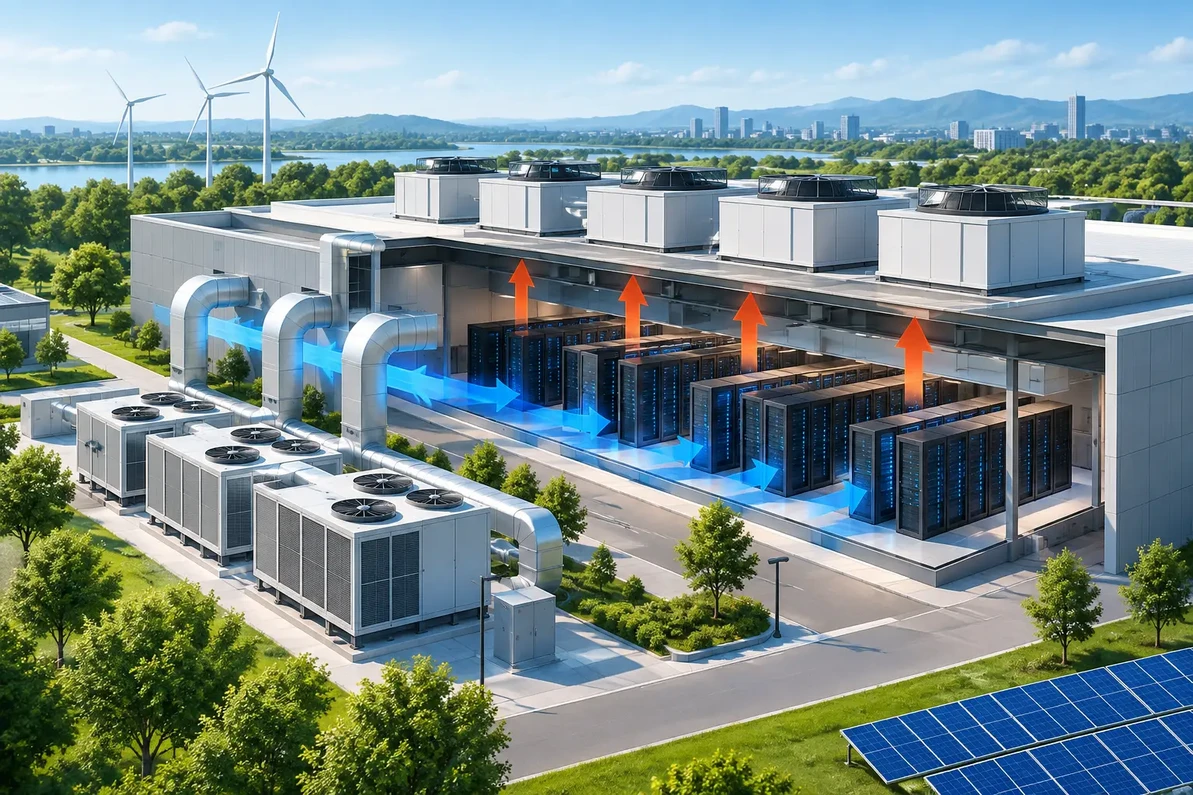
Air-cooled systems look straightforward until the room starts loading up with heat. ASIC miners produce a large and constant sensible heat load, and that heat must be moved out of the space with controlled airflow. That means more than just adding exhaust fans. The design has to account for total CFM, intake area, static pressure, louvers, filtration, sound, and separation between hot exhaust and incoming makeup air.
The advantage of air cooling is lower initial system complexity. Equipment is easier to swap, technicians understand it, and many existing buildings can be adapted without major plumbing infrastructure. For smaller or mid-sized sites, this can make the project pencil out faster.
The downside is that air-cooled mining becomes harder to manage as density rises. Dust, humidity swings, ambient summer temperatures, and poor building airflow all reduce performance. If the site has restricted openings, long duct runs, or weak pressure management, the miners can ingest their own exhaust. That is where engineered ventilation matters more than raw fan count.
Immersion Cooling Reduces Air Problems but Adds System Complexity
Immersion cooling places miners in dielectric fluid so heat is transferred into the liquid instead of being rejected directly into the room air. This sharply reduces airborne contamination, minimizes fan-related wear, and supports higher and more stable operating loads.
For operators dealing with dirty air, corrosive environments, or very high equipment density, immersion can be a strong technical solution. It also changes the acoustic profile of the site, which can be important in mixed-use or noise-sensitive locations.
But immersion is not simple plug-and-play infrastructure. The tanks, pumps, heat exchangers, fluid selection, controls, and service procedures all need to be designed as a system. Maintenance is different. Miner compatibility matters. So does fluid handling, leak prevention, and the method used to reject heat from the fluid loop to the outdoors.
Immersion often makes sense when the goal is density and thermal stability, not just cooling for cooling’s sake. Operators should also evaluate how quickly technicians can service submerged units and what the total maintenance workflow looks like over time.
Hydro Cooling Fits High-Density Sites With the Right Utilities
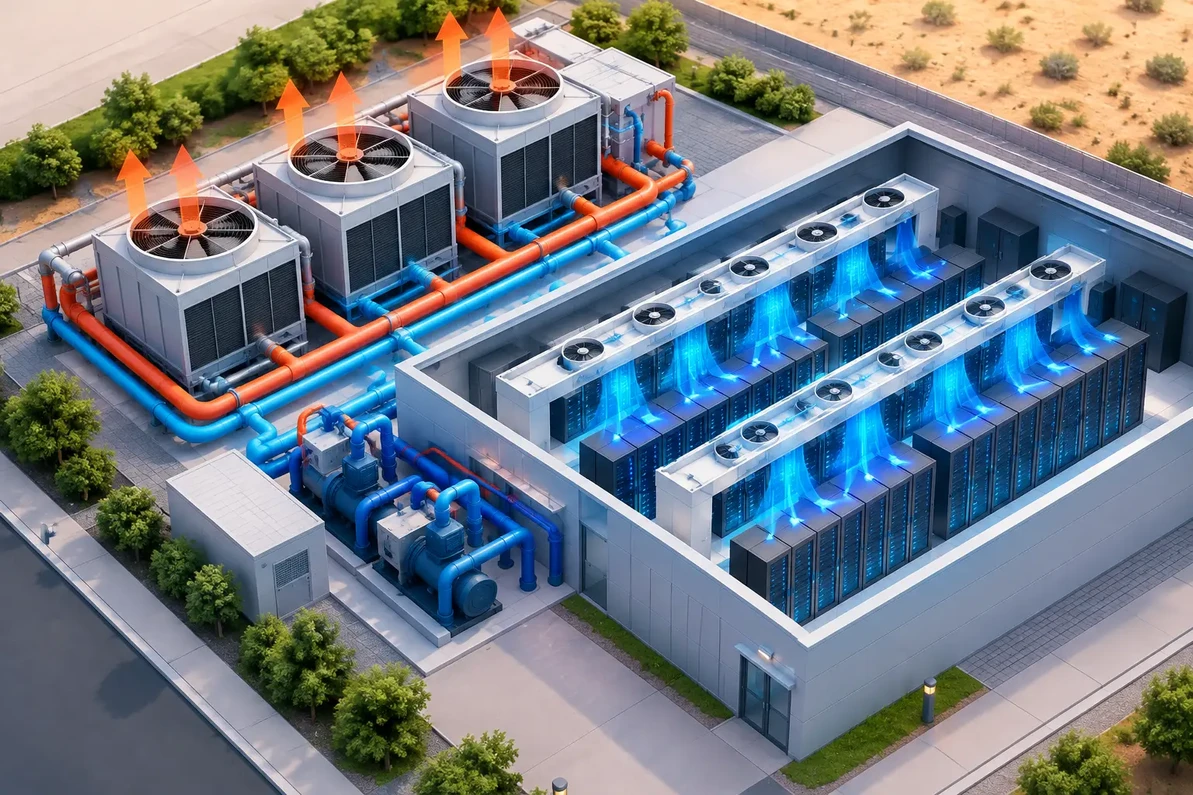
Hydro cooling can deliver strong thermal performance, especially for large-scale operations that are pushing power density beyond what standard air systems can handle efficiently. In these systems, heat is removed through liquid channels, cold plates, or manufacturer-specific hydro miner designs, then transferred through a water or coolant loop to external heat rejection equipment.
The appeal is clear. Hydro cooling can reduce room heat, lower dependence on massive ventilation airflow, and support dense installations where traditional air cooling becomes difficult or expensive. It is also a serious option for operators building from the ground up rather than retrofitting older shells.
The challenge is infrastructure. Water quality, pump redundancy, freeze protection, heat exchangers, piping layout, controls, and leak detection all become central to uptime. In some regions, water use and treatment can also affect operating cost and permitting. Hydro is powerful, but only when the mechanical design is disciplined.
How to Choose the Right Cooling Path
The best selection usually starts with five engineering questions: What is the total heat load in BTU/hr or kW? What are the local outdoor design temperatures? How much usable building volume and intake area exist? What uptime risk can the operation tolerate? And how much capital is available for cooling infrastructure versus future expansion?
If the site is a retrofit with good exterior wall access and moderate density, air-cooled ventilation may be the most practical answer. If contamination, noise, and density are major problems, immersion deserves a serious review. If the operation is being designed around high-density miners with strong utility support, hydro cooling may provide the best long-term thermal control.
This is where many mining projects go wrong. They compare miners and power costs in detail, then treat cooling as an afterthought. In reality, the cooling method drives fan selection, makeup air strategy, filtration, control logic, and building pressure. It also affects how serviceable the mine will be six months later when ambient conditions change.
For operators who need to move beyond generic fan sizing and into actual ventilation design, Factory Fans Direct supports crypto mining and data center applications with project-specific guidance on exhaust, intake, heat rejection, and equipment matching.
Factory Fans Direct - Crypto Mining & Data Center Cooling Experts Contact Mike Miller VP Engineering at Factory Fans Direct for a FREE Project Evaluation 888-849-1233 | Mike@FactoryFansDirect.com
Recent Posts
-

AI Mega Factories Use Edmonds ecoPOWER Hybrid Ventilation
AI Mega Factories use Edmonds ecoPOWER Hybrid Turbine Ventilation because heat rejection cannot be t …4th Oct 2026 -
AI Cooling for High-Heat Facilities
A server aisle running 12°F hotter than its neighboring aisle, a crypto container recirculating exha …4th Oct 2026 -
AI Ventilation: Better Control Starts With Data
A warehouse can look adequately ventilated on paper and still have a 15-degree temperature differenc …4th Oct 2026