
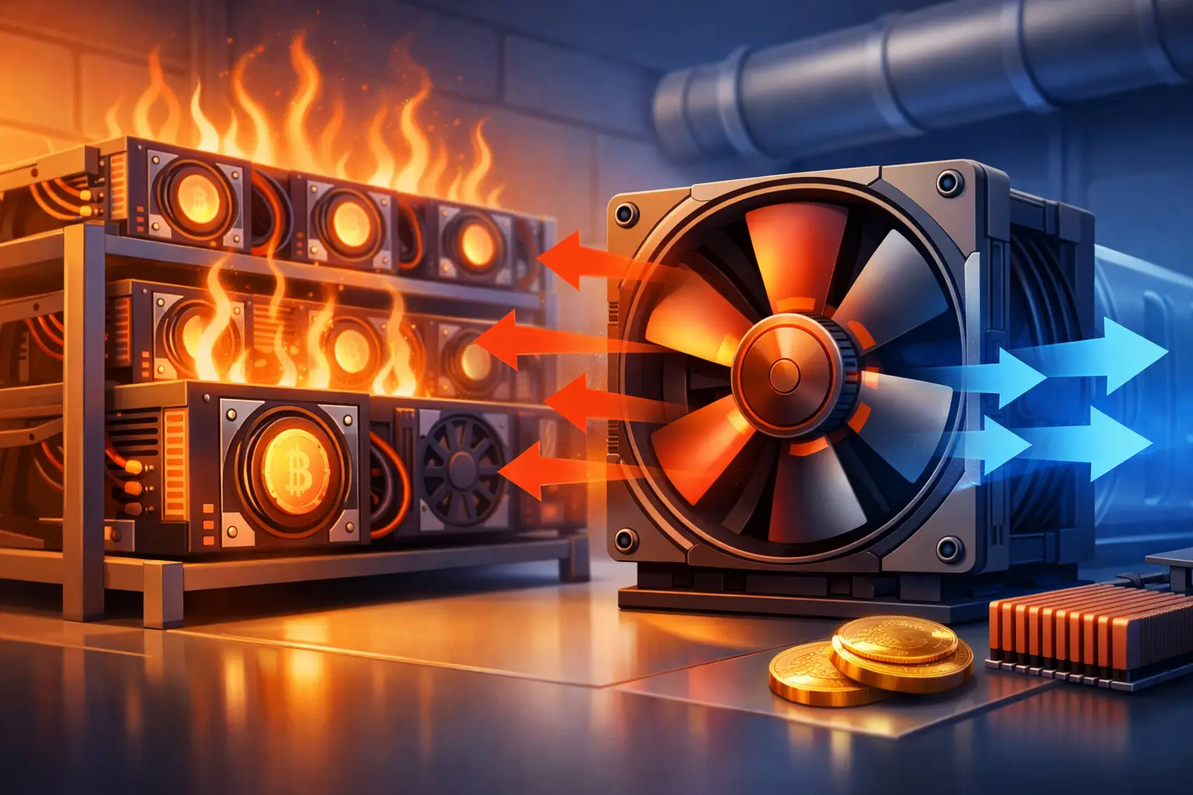
Crypto Mining Heat Issues Solved With High Temp/SP Crypto Mining Fans
Heat is what turns a profitable mining room into a shutdown risk. Crypto Mining Heat Issues Solved | 36", 48", 54" & 60" High Temp/SP Crypto Mining Fans is not just a product pitch - it is the practical reality of keeping ASIC miners online when ambient temperatures, static pressure, and exhaust resistance start working against you.
Mining operations do not fail on airflow theory. They fail when fan selection is too small for the heat load, when the exhaust path adds more static pressure than expected, or when standard ventilation products are pushed into high-temperature duty they were never built to handle. That is why high temp and SP crypto mining exhaust fans matter. They are designed for the kind of continuous operation, elevated air temperatures, and pressure resistance that mining containers, retrofitted buildings, and dedicated mining rooms create.
Why crypto mining heat gets hard to control
A mining facility can produce a massive heat load in a very small footprint. As ASIC density increases, sensible heat rises fast, and every restriction in the air path starts to matter more. Intake louvers, filters, light traps, bends in ductwork, discharge shutters, and long exhaust runs all add resistance. Once static pressure climbs, the wrong fan may still spin at full speed while delivering far less CFM than the nameplate suggests.
That is one of the most common design mistakes in mining ventilation. Buyers look at free-air CFM and assume the number will hold under operating conditions. It usually does not. In crypto mining, the real question is how much air the fan can move at your actual static pressure and temperature. If that point is missed, equipment inlet temperatures rise, thermal throttling begins, and uptime suffers.
Crypto Mining Heat Issues Solved with 36", 48", 54" and 60" fans
The 36", 48", 54", and 60" high temp/SP crypto mining fans fit different operating envelopes, but they solve the same core problem: moving large air volume against resistance without falling apart under continuous high-heat duty.
A 36" fan can be the right choice for smaller mining rooms, targeted hot aisle exhaust, or modular installations where wall space is limited. A 48" fan often lands in the sweet spot for medium-sized operations because it balances strong airflow with manageable installation requirements. The 54" and 60" models are typically where larger mining farms, container builds, and high-density spaces start to get serious about system-level heat removal.
Size alone is not the full story. Blade design, motor rating, drive configuration, housing construction, and temperature tolerance matter just as much. In many crypto applications, the correct fan is the one that can hold performance under elevated static pressure instead of just posting a big free-air number in a catalog.
High temp and SP fan selection is an engineering decision
For mining ventilation, fan selection should start with total heat rejection, required air changes, intake strategy, and measured or estimated static pressure. If your room is under negative pressure, you also need to account for make-up air. If intake air cannot enter freely, the exhaust fan will never perform as intended.
This is where many projects need more than a simple online checkout. A proper evaluation should consider miner count, wattage, room dimensions, target temperature rise, altitude, louver area, and whether the system is using open-air exhaust, containment, immersion support, or hydro cooling support equipment. A fan that looks oversized on paper may be exactly right once shutters, guards, weather hoods, and exhaust losses are included.
There are trade-offs. Larger fans can reduce the number of wall penetrations and simplify airflow planning, but they may require stronger structural framing and more electrical planning. Smaller multiple-fan layouts can provide redundancy, but they can also complicate controls and maintenance. The best answer depends on the facility, not on a one-size-fits-all rule.
Where high temp/SP crypto mining fans deliver the most value
These fans are especially effective in converted industrial spaces, mining containers, and high-output rooms where conventional ventilation products struggle. If your operation runs in a hot climate, if your miners are packed tightly, or if your discharge path includes louvers and other restrictions, you need fan performance that holds under pressure.
They also make sense when uptime is the metric that matters most. Thermal shutdowns, shortened equipment life, and unstable room temperatures cost more than the price difference between a general-purpose exhaust fan and a mining-grade high temp/SP model. In other words, cheap fan selection often becomes expensive operations.
Factory Fans Direct works with buyers who need more than a basic product listing. For crypto mining and data center cooling, the right path is usually a free project evaluation that matches fan size, static pressure capability, and overall ventilation design to the actual mining load.
If you are comparing 36", 48", 54", or 60" high temp/SP crypto mining fans, the smartest next step is to stop guessing from free-air CFM alone. Get the heat load, pressure losses, and intake path reviewed together so the fan you install is the fan that performs once the miners are running.
Factory Fans Direct - Crypto Mining & Data Center Cooling Experts Contact Mike Miller VP Engineering at Factory Fans Direct for a FREE Project Evaluation 888-849-1233 | Mike@FactoryFansDirect.com
Recent Posts
-

AI Smart Buildings Incorporate Edmonds ecoPOWER Hybrid Turbine Ventilation
A building automation system can report rising rooftop temperatures, increasing indoor contaminants, …12th Sep 2026 -
Smart Buildings Architects Recommend Edmonds ecoPOWER Hybrid Ventilation
A rooftop ventilator should not force an all-or-nothing energy decision. Smart Buildings Architects …7th Sep 2026 -
Smart Industrial Buildings Use Edmonds ecoPOWER Hybrid Ventilation
A roof exhaust system can be the difference between a plant that controls heat at the source and one …7th Sep 2026