Crypto Mining & Data Center Cooling Experts
Heat is not a side issue in mining and compute environments - it is often the reason performance drops, hardware fails early, and operating costs climb. Crypto Mining & Data Center Cooling Experts look at the full thermal picture, not just fan size, because hash rate stability and equipment life depend on airflow path, static pressure, intake conditions, exhaust strategy, and control logic working together.
Too many facilities try to solve high temperatures by adding more fans wherever space allows. That approach can move air, but it does not always move it where the heat is actually building. In crypto mining containers, retrofit warehouses, and data rooms, the real problem is usually poor air management. Hot exhaust recirculates into the intake side, pressure imbalances starve equipment, or the building envelope restricts flow more than the fan curve suggested on paper.
Why crypto mining cooling fails in real buildings
Mining rigs and high-density servers generate concentrated heat loads that expose every weak point in a ventilation design. A room that works for light industrial storage or office electronics can fail quickly when loaded with ASIC miners or dense rack equipment. The challenge is not only total CFM. It is how that CFM performs under actual resistance from louvers, filters, dampers, light traps, duct runs, wall openings, and equipment layout.
This is where experienced Crypto Mining & Data Center Cooling Experts add value. They calculate sensible heat removal, evaluate intake and exhaust placement, and match equipment to the true static pressure of the application. A fan rated for high free-air CFM can underperform badly once system resistance increases. That mismatch leads to rising inlet temperatures, throttling, and power wasted on ineffective airflow.
Ambient conditions matter too. A site in Texas, Arizona, or Nevada cannot be treated the same as a site in the Midwest. Seasonal temperature swings, dust loading, humidity, and make-up air requirements all change the equipment recommendation. The right design for one region can be the wrong design for another.
Air-cooled mining and data center ventilation design
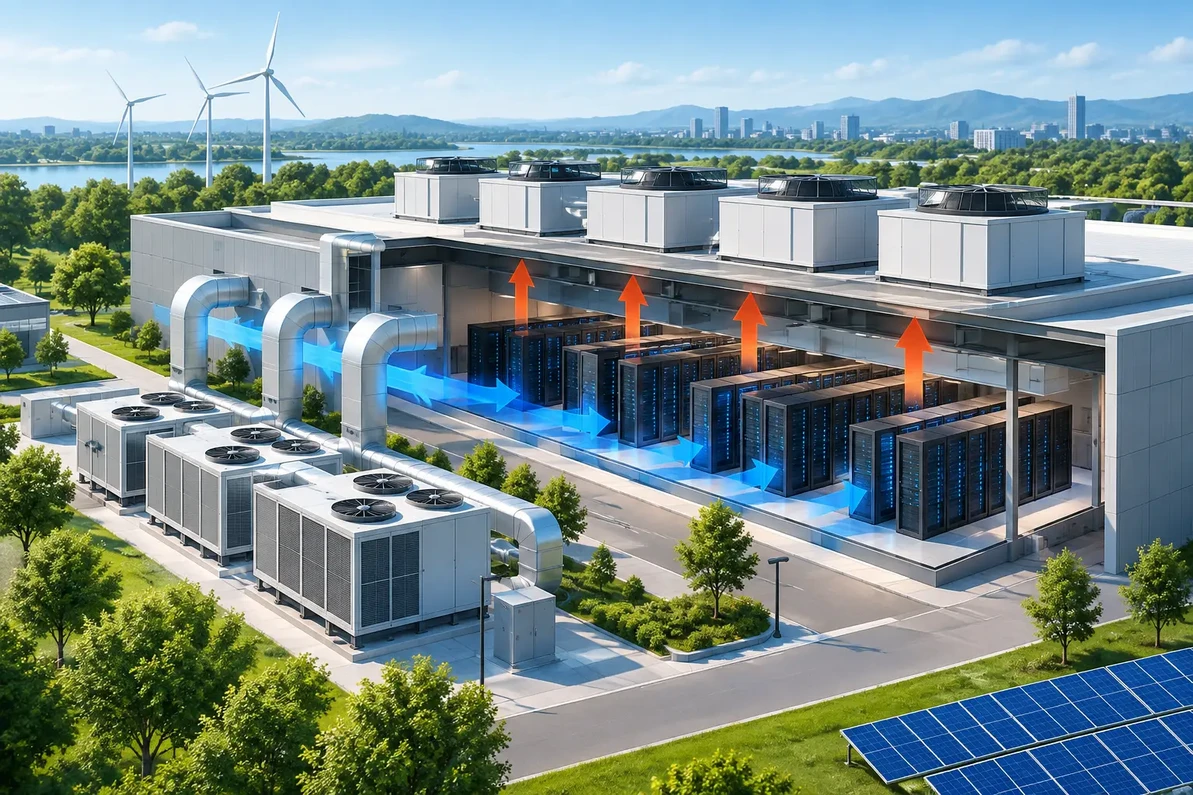
For many facilities, properly engineered air cooling is still the most practical first step. That can include high-temperature exhaust fans, wall-mounted intake systems, roof ventilators, circulation fans, and variable speed controls. The goal is straightforward: move cool air to the equipment intake, remove hot air before it recirculates, and maintain predictable pressure relationships across the room or container.
In mining applications, separating hot and cold aisles is not optional once density increases. If miners inhale their own exhaust, inlet temperature rises fast and machine efficiency falls. In data center environments, the same principle applies at the rack level. Containment, directional airflow, and exhaust extraction need to be coordinated with the fan package, not treated as separate decisions.
Fan selection should also account for motor duty, power quality, control compatibility, and service life. Running a low-cost fan continuously in a high-temperature environment often creates another maintenance problem a few months later. Commercial and industrial-grade equipment costs more upfront, but it usually performs better where uptime matters.
When immersion or hydro cooling makes sense
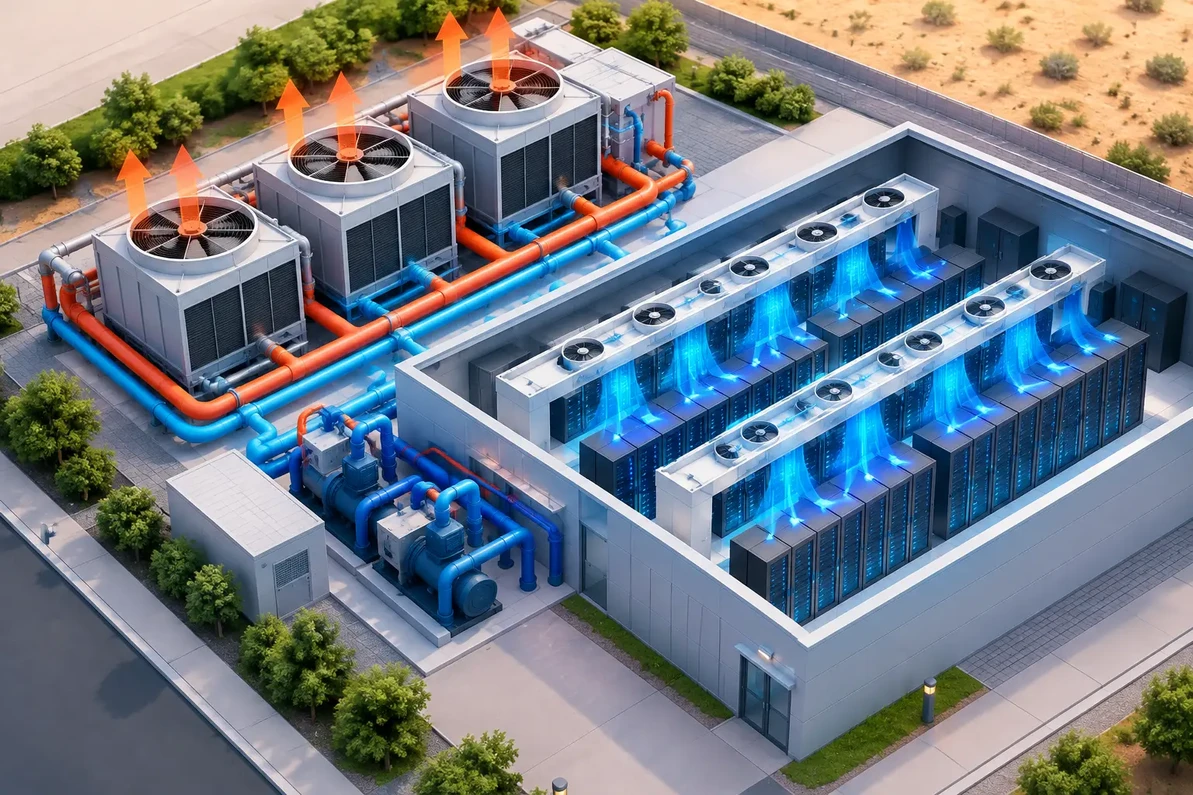
There are cases where air cooling alone is no longer the best answer. If the heat load is extreme, space is limited, ambient temperatures stay high, or noise control is a major concern, immersion and hydro cooling deserve serious evaluation. These systems can reduce airborne dust exposure, improve thermal consistency, and support higher equipment density than traditional room ventilation.
That said, liquid-based cooling is not automatically the cheaper or simpler path. Fluid selection, heat exchanger sizing, pump redundancy, maintenance procedures, and facility integration all need to be reviewed. Some operators move to immersion too early when better exhaust design would have solved the problem. Others stay with air too long and absorb unnecessary downtime, machine derating, and electrical waste.
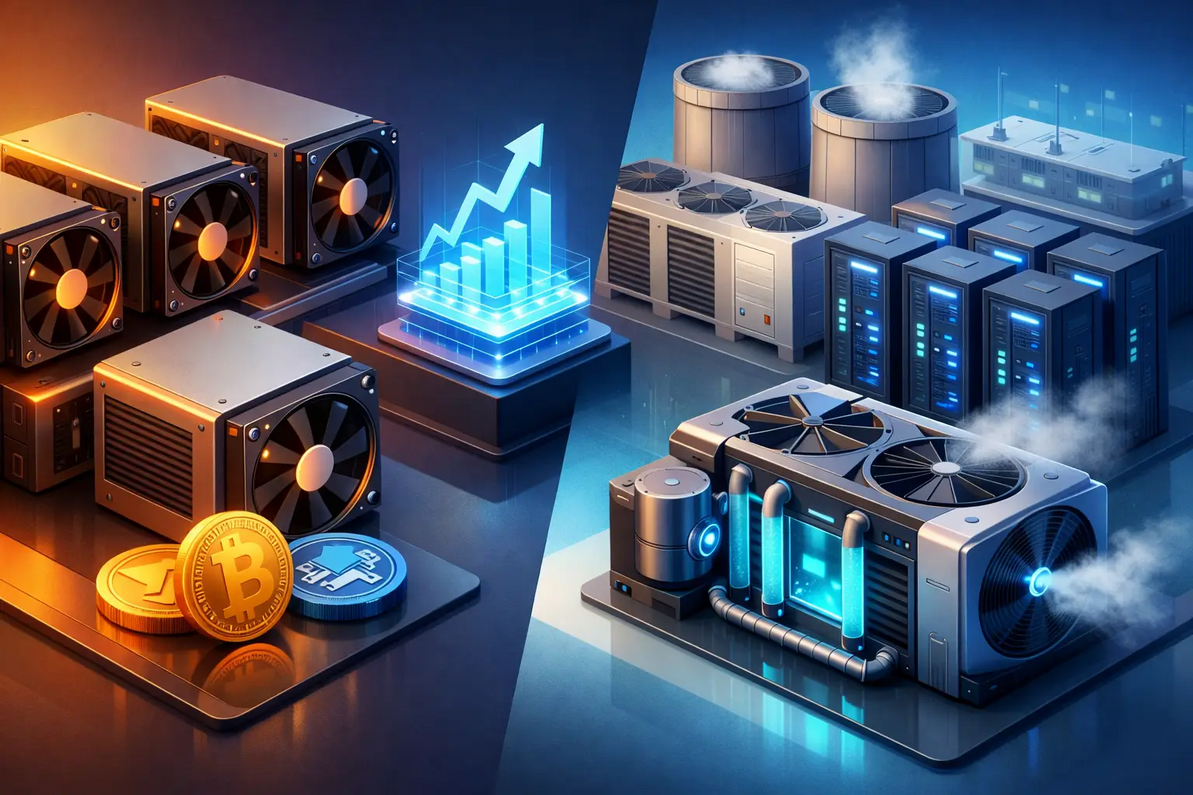
The right answer depends on power density, target operating temperature, building constraints, and long-term operating strategy. A good engineering review compares these options based on heat load and operating economics, not trend-driven marketing.
What a real cooling evaluation should include
A credible project evaluation starts with the numbers. That means reviewing equipment count, wattage, total heat rejection, building dimensions, intake and exhaust paths, local climate, and any restrictions created by filters, louvers, or sound attenuation. It should also consider whether the facility needs negative pressure, balanced airflow, or controlled make-up air.
From there, the equipment package can be matched to the application. In some projects, that means high static pressure exhaust fans with speed control. In others, it may involve roof-mounted ventilation, evaporative pre-cooling, make-up air systems, or an immersion-based approach. The best result is rarely a one-size-fits-all product choice.
Factory Fans Direct works from this engineering-first approach, which is why project support matters as much as the fan itself. Buyers in crypto mining and data center environments usually do not need more catalog pages. They need cut-sheet level guidance, airflow calculations, and practical advice on what will actually hold temperature under load.
If your operation is fighting heat, unstable intake temperatures, or equipment throttling, start with a proper ventilation and cooling review before buying more hardware. Correct fan sizing, pressure management, and thermal layout can solve problems that brute-force airflow never will.
Factory Fans Direct - Crypto Mining & Data Center Cooling Experts Contact Mike Miller VP Engineering at Factory Fans Direct for a FREE Project Evaluation 888-849-1233 | Mike@FactoryFansDirect.com
Recent Posts
-

AI Mega Factories Use Edmonds ecoPOWER Hybrid Ventilation
AI Mega Factories use Edmonds ecoPOWER Hybrid Turbine Ventilation because heat rejection cannot be t …4th Oct 2026 -
AI Cooling for High-Heat Facilities
A server aisle running 12°F hotter than its neighboring aisle, a crypto container recirculating exha …4th Oct 2026 -
AI Ventilation: Better Control Starts With Data
A warehouse can look adequately ventilated on paper and still have a 15-degree temperature differenc …4th Oct 2026