
Crypto Exhaust Fan Upgrade Case Guide
A crypto exhaust fan upgrade case usually starts the same way - miners add more rigs, intake air looks adequate on paper, and room temperature still creeps up until throttling, shutdowns, and dusty hotspots show up. The problem is rarely just “not enough fan.” More often, the existing exhaust path, static pressure, louver resistance, make-up air, and fan placement no longer match the actual heat load in the room.
For mining operators, garage-scale hosts, and facility managers, that mismatch gets expensive fast. Higher chip temperatures reduce stability, fans on the miners work harder, filters load up faster, and the whole room becomes harder to manage season to season. An upgrade should fix the airflow system, not just swap in a bigger motor and hope for better results.
What a crypto exhaust fan upgrade case is really solving
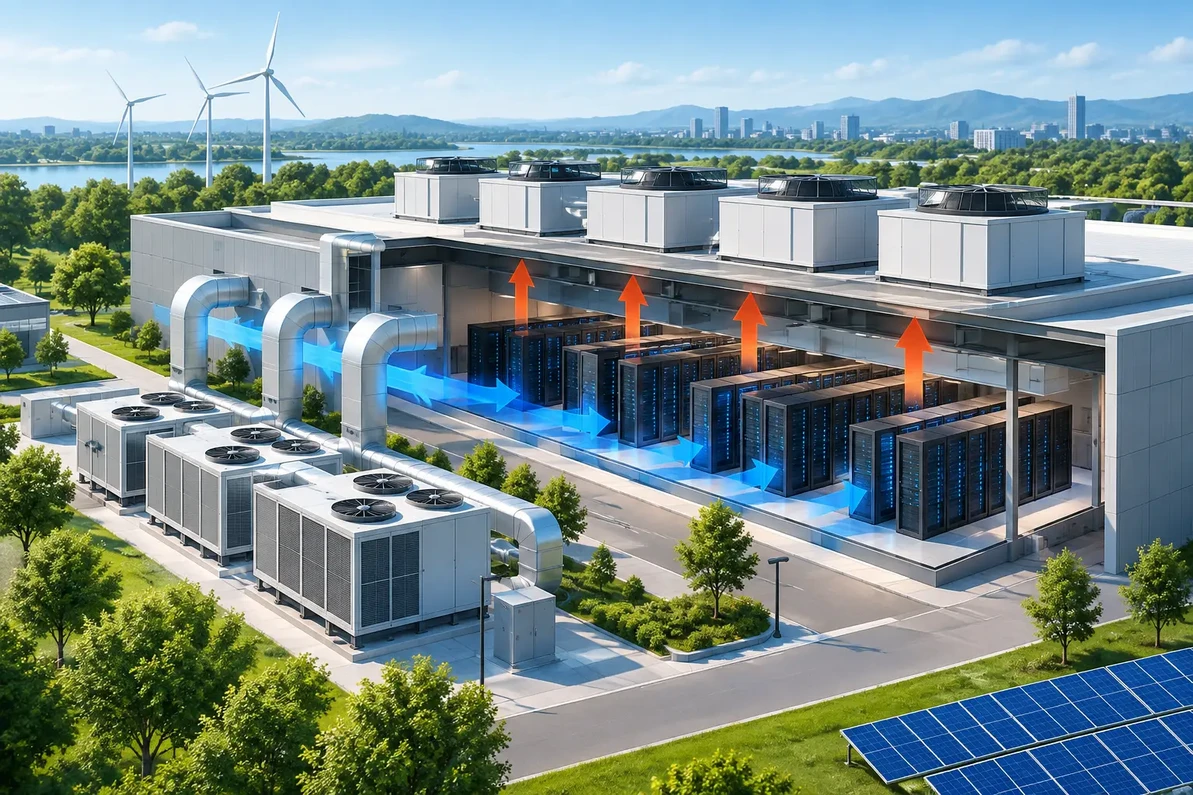
In crypto mining, exhaust is not just about removing warm air. It is about maintaining a pressure relationship and airflow path that pulls heat off the rigs consistently. If air short-circuits from intake to exhaust without moving through the equipment aisles, the room can have acceptable average temperature and still produce localized overheating.
That is why a good upgrade case starts with the numbers. Total equipment wattage, estimated BTU load, desired room temperature rise, target CFM, intake free area, filter pressure drop, duct or shutter losses, and fan performance at actual static pressure all matter. A fan rated for high free-air CFM can underperform badly once shutters, wall housings, light traps, or restrictive openings are added.
The practical issue is simple. Crypto rooms evolve faster than the ventilation design. Racks get denser, miners get moved, containers get retrofitted, and what worked for 120 kilowatts does not hold up at 300 kilowatts.
Signs your current exhaust system is undersized
The obvious sign is heat, but experienced operators look deeper. If miner inlet temperatures vary significantly by row, if one side of the room runs hotter, or if exhaust air stagnates near the ceiling, the issue may be airflow distribution rather than raw fan capacity.
Static pressure is another common blind spot. Once a system adds birdscreen, motorized shutters, louvers, filters, silencers, or longer duct runs, the fan curve becomes more important than the nameplate CFM. Many low-cost upgrades fail because buyers compare fan CFM at 0.0 static pressure even though the installed system may be operating at 0.15 to 0.50 inches static pressure or higher.
Power consumption also deserves attention. A larger exhaust fan can improve cooling, but if the motor draw jumps substantially and the room still lacks make-up air, the operator just bought more electrical load without solving the root problem.
Crypto exhaust fan upgrade case calculations that matter
The first calculation is heat load. Every kilowatt consumed by mining hardware becomes heat. A 100 kW mining room produces roughly 341,200 BTU per hour. As capacity climbs, the exhaust system has to move enough air to carry that heat out while holding an acceptable temperature rise.
The second calculation is allowable delta T, or the temperature increase from incoming air to room exhaust. If the incoming air is 80 F and the operator wants the room to stay near 95 F, the system has only a 15 F rise to work with. Lower allowable rise means higher required CFM.
The third calculation is pressure loss across the whole path. Intake openings, filters, wall boxes, backdraft dampers, evaporative sections, and exhaust shutters all add resistance. In many retrofit cases, the fan selection changes once the real static pressure is modeled.
This is where upgrade projects separate into two categories. Some only need more exhaust horsepower and a better wheel design. Others need a complete airside correction - more intake area, revised fan placement, larger wall openings, or a shift to high-static-pressure exhaust fans designed for crypto mining rooms.
Choosing the right fan for the upgrade
In a real crypto exhaust fan upgrade case, fan type matters more than many buyers expect. Belt-drive and direct-drive options each have a place. Direct drive can simplify maintenance and reduce some service variables, while belt drive can provide flexibility in matching airflow and pressure performance. Material choice, motor duty rating, corrosion exposure, and service access also matter in harsher environments.
Axial fans can move large volumes of air efficiently in lower-pressure applications, but once system resistance increases, performance can drop off quickly depending on the fan design. Centrifugal and mixed-flow options can make more sense where filters, ducting, or restrictive discharge conditions are unavoidable.
Noise is another trade-off. More airflow and higher tip speed often mean more sound. In detached industrial space that may be manageable. In mixed-use buildings, garages, or urban sites, acoustic impact can become a permitting or operational issue. That needs to be addressed during fan selection, not after installation.
The make-up air side cannot be ignored
Exhaust-only thinking causes a lot of mining room failures. If the room cannot bring in replacement air with low resistance, the exhaust fan pulls against the building envelope, performance drops, and dust infiltration can worsen through unplanned openings.
A proper upgrade case looks at intake square footage, louver velocity, filtration level, and whether negative pressure is hurting fan output. In some applications, adding or enlarging make-up air openings produces a bigger cooling improvement than increasing exhaust motor size.
Controls can improve more than airflow
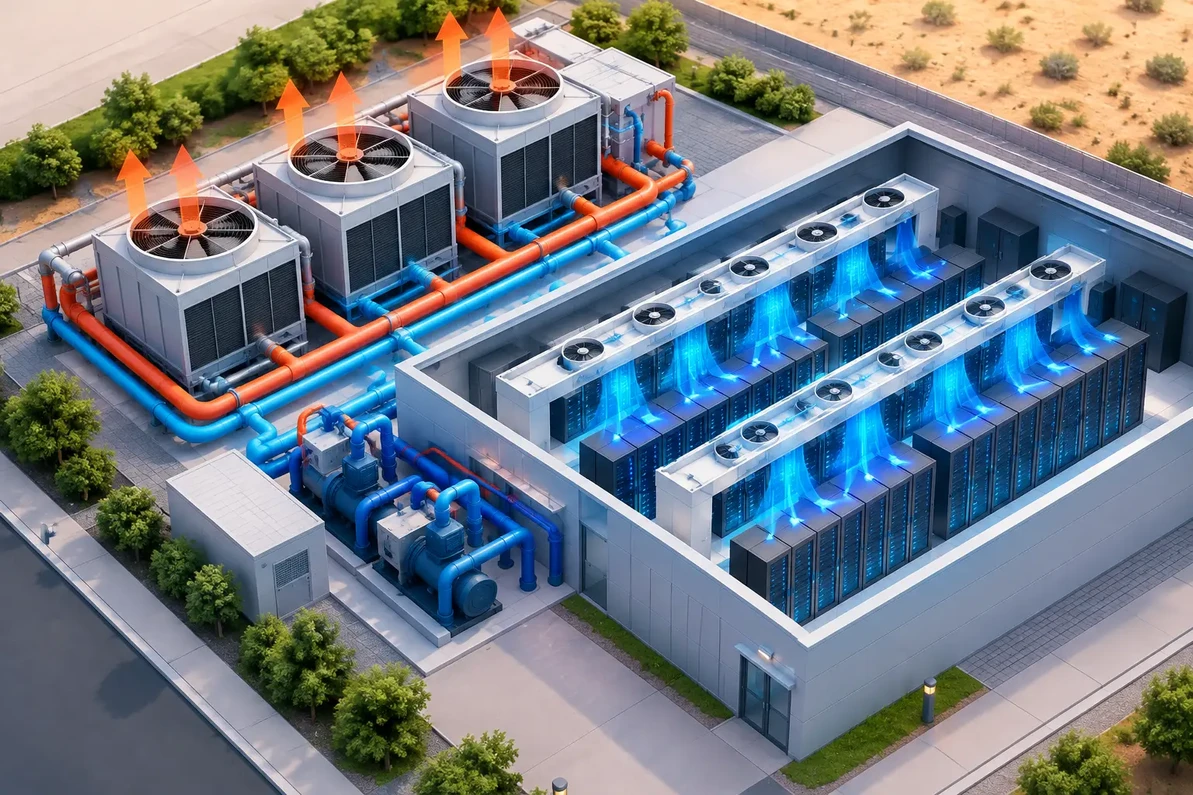
Variable frequency drives and staged fan control can help mining operators respond to seasonal swings and partial-load conditions. Running one large fan at full speed all the time is not always the best strategy. Controlled exhaust can reduce energy waste, moderate noise, and maintain a tighter temperature band.
It depends on the site. For some operations, fixed high-volume exhaust is the simplest and most reliable approach. For others, a controlled system tied to temperature sensors and pressure readings gives better stability and lower operating cost.
Common upgrade mistakes in crypto mining rooms
The most common mistake is buying by fan diameter instead of performance curve. A bigger wheel does not guarantee better delivered CFM at installed pressure.
The second mistake is underestimating intake resistance. Operators often focus on the hot air leaving the room and forget that every cubic foot exhausted must be replaced.
The third mistake is poor fan placement. If exhaust fans are positioned where they pull the shortest path from intake to discharge, the equipment in the middle of the room may see weak airflow and recirculation. Layout matters.
The fourth mistake is overlooking service conditions. Mining sites can be dirty, hot, and continuous-duty. Motor insulation class, bearing quality, weather protection, and access for cleaning are not minor details in a 24/7 environment.
When an upgrade is enough and when the whole design needs rework
Not every room needs a full redesign. If the heat load increase is moderate and the structure already has adequate intake area and short, low-resistance exhaust paths, a fan upgrade may be straightforward. In those cases, replacing older units with higher-performance exhaust fans and correcting controls may solve the issue.
But if the room was never designed for current density, a simple upgrade can become a bandage. Hot aisle containment, directional airflow management, larger wall openings, filtration changes, or even supplemental cooling strategies may be warranted. High-temp crypto mining exhaust fans are often part of the solution, but they are not the entire solution by themselves.
That is especially true for enclosed mining buildings and retrofitted containers. These spaces can have extreme temperature layering and pressure issues. A layout that looks efficient on a sketch can behave very differently once real rigs, cable trays, dust, and weather are introduced.
A better way to evaluate your crypto exhaust fan upgrade case
Start with the actual electrical load, not the estimated one from when the room was first built. Measure current operating temperatures at multiple points, including miner inlets, ceiling level, and exhaust discharge. Document intake opening sizes, filter condition, and any restrictions added over time. Then compare required airflow to fan performance at installed static pressure, not free-air rating.
From there, look at the full operating picture. Ask whether the goal is lower chip temperature, more stable operation in summer, room expansion, reduced noise, or lower fan energy use. Those goals can point to different equipment choices.
For technically demanding mining applications, a project evaluation is usually the fastest way to avoid rework. The right answer may be a higher static pressure wall fan, a different exhaust arrangement, improved make-up air, or a staged control package. Engineering support matters because the cost of getting it wrong is measured in uptime, power waste, and hardware stress.
If your mining room has outgrown its original ventilation plan, treat the exhaust upgrade like an airflow design problem, not a catalog problem. The fan is only one component. The delivered result comes from matching heat load, pressure, intake, controls, and equipment layout to the way the site really operates.
Factory Fans Direct - Crypto Mining & Data Center Cooling Experts Contact Mike Miller VP Engineering at Factory Fans Direct for a FREE Project Evaluation 888-849-1233 | Mike@FactoryFansDirect.com
Recent Posts
-

AI Mega Factories Use Edmonds ecoPOWER Hybrid Ventilation
AI Mega Factories use Edmonds ecoPOWER Hybrid Turbine Ventilation because heat rejection cannot be t …4th Oct 2026 -
AI Cooling for High-Heat Facilities
A server aisle running 12°F hotter than its neighboring aisle, a crypto container recirculating exha …4th Oct 2026 -
AI Ventilation: Better Control Starts With Data
A warehouse can look adequately ventilated on paper and still have a 15-degree temperature differenc …4th Oct 2026