
Centric Air Whole House Fan Review
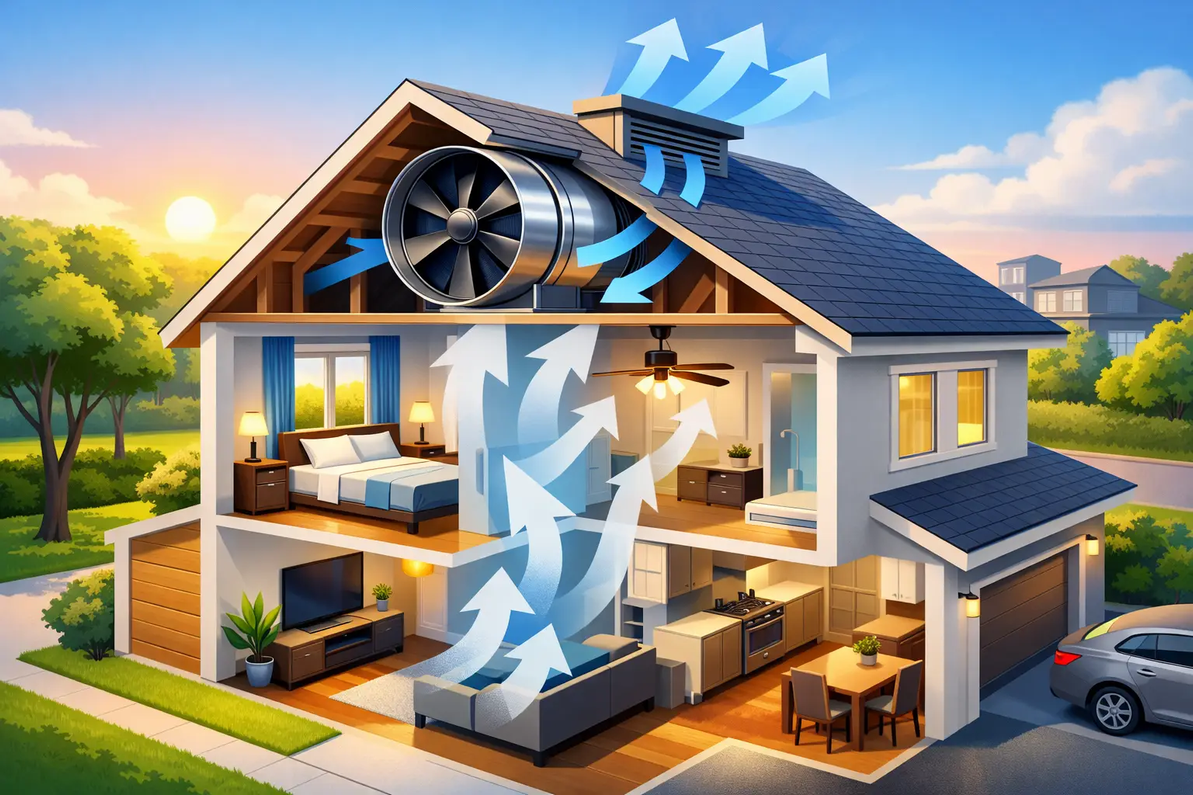
If you are looking at a premium cooling upgrade instead of another high electric bill, this Centric Air whole house fan review gets to the point fast. Centric Air is not the bargain end of the category. It is a higher-spec whole house fan built for homeowners who care about airflow performance, lower sound levels, insulation value, and a cleaner install than many commodity units.
That matters because whole house fans are often compared on price first, when the real difference shows up in motor quality, damper design, grille appearance, vibration control, and how the fan behaves at night when people are trying to sleep. On paper, many units claim strong CFM. In real homes, the better system is the one that moves heat out efficiently without sounding like shop equipment mounted in your hallway ceiling.
Centric Air whole house fan review: what stands out
Centric Air's strongest selling point is that it is engineered like a premium ventilation product, not just a basic residential fan assembly. The line is known for insulated gravity dampers, good-looking ceiling grilles, and ECM motor technology that keeps watt draw lower than older belt-drive or standard PSC designs.
For a technically minded homeowner, that combination is meaningful. Airflow is only one part of the equation. If the fan is loud, leaks attic heat in winter, or creates a rough finished look in the ceiling plane, the system can become a regret purchase. Centric Air generally performs better than lower-cost alternatives in these areas.
The other point in its favor is operating efficiency. With whole house fans, the goal is not just moving air but moving a lot of it per watt consumed. Centric Air models are usually positioned as energy-conscious units with variable-speed or multi-speed style operation depending on the specific package. That gives users better control over nighttime cooling, especially in shoulder seasons when outdoor air is cool enough to flush the structure but not cold enough to justify maximum speed.
Where Centric Air performs well
Noise control and livability
This is one of the biggest reasons buyers step up to Centric Air. Many standard whole house fans can move air, but they do it with more motor noise, grille turbulence, and vibration transfer into the framing. Centric Air products are typically designed to reduce that problem through better motor technology and a more refined assembly.
No whole house fan is silent. That is not a realistic expectation. You are still pulling a large air volume through the home and exhausting it into the attic. But compared with many lower-tier fans, Centric Air tends to deliver a more acceptable sound profile for occupied residential spaces.
Insulated damper design
The damper system matters more than many buyers realize. A poor damper can leak conditioned air, allow attic heat to radiate back into the living area, and create comfort issues in winter and summer. Centric Air has built much of its reputation around insulated damper assemblies that close more effectively than the simple louvers used on entry-level fans.
That helps preserve the ceiling thermal boundary when the fan is off. If you live in a climate with both cooling and heating seasons, this is not a small detail.
Finish quality
A whole house fan sits in a visible area of the house. For many homeowners, appearance is a real buying factor. Centric Air generally has a cleaner, more architectural look than the utilitarian grilles common in older fan packages. If the fan is going into a central hallway or upper landing, that cleaner finish can be worth paying for.
Efficiency and control
ECM-based performance is another plus. These motors are generally more efficient and can provide better speed control than older motor types. That means lower operating cost and a smoother ability to match the fan output to the weather conditions.
In practical terms, that can make the difference between using the fan often and only using it occasionally. When a system is easier to live with, homeowners tend to get more value from it.
The trade-offs in a Centric Air whole house fan review
The most obvious trade-off is price. Centric Air is usually not the lowest-cost option in the whole house fan category. If your sole metric is initial purchase price, there are less expensive products available.
The second trade-off is that a premium fan still requires proper system design. A good fan installed in the wrong house, with inadequate attic venting or poor intake strategy, will not perform the way the brochure suggests. Whole house fans need enough net free attic exhaust area to relieve pressure and move heat outdoors. If that part is ignored, airflow drops, noise can increase, and attic temperatures can rise.
Installation quality also matters. Cutting corners on ceiling location, electrical setup, control placement, or attic ventilation can undermine a premium product. So while Centric Air is a strong product line, it is not magic. It still needs to be sized correctly and integrated into the house as a system.
Is Centric Air worth it for your home?
It depends on what you are trying to solve.
If you want the cheapest possible way to move nighttime air through the house, Centric Air may feel like more fan than you need. A basic model from a lower price tier may satisfy the requirement if you are tolerant of more sound and less refined finishing.
If, however, you want a whole house fan that is easier to live with over the long term, Centric Air makes a stronger case. Homeowners who care about lower sound, cleaner appearance, better insulation when the unit is off, and efficient motor performance are usually the right fit for this product line.
It is also a good match for buyers who plan to use the fan regularly. Frequent use changes the economics. The comfort improvement, lower AC runtime, and better overall user experience can justify the premium more easily than in a house where the fan is only used a few nights per year.
Sizing and application matter more than brand hype
Airflow must match house size and layout
A whole house fan should be selected based on home square footage, ceiling height, climate pattern, and how the home is actually occupied. Open floor plans behave differently than chopped-up layouts. Two-story homes can develop different pressure and airflow behavior than single-story ranch homes. A fan that looks adequate by simple square-foot estimates can still underperform if the house layout restricts air movement.
Attic exhaust capacity is critical
This is one of the most common design mistakes. If the attic does not have enough exhaust vent area, the fan cannot unload properly. That creates backpressure, cuts effective airflow, and can increase system noise. Before approving any whole house fan, attic vent area should be reviewed against the fan's airflow range.
Climate and usage pattern affect value
Whole house fans perform best where evenings and mornings cool down enough to purge indoor heat. In many dry and mixed climates, they can reduce AC dependence significantly. In hot-humid regions, results are more variable. If outdoor dew point stays high overnight, a whole house fan may offer less benefit because you are bringing in moist air even if the dry-bulb temperature drops.
That does not automatically rule it out, but it changes the value calculation.
Who should buy Centric Air
Centric Air is a sensible choice for homeowners who want a premium residential ventilation product rather than a builder-grade fan. It fits buyers who notice sound, care about finished appearance, and want a better off-season ceiling seal. It is also a good choice for people comparing lifecycle value instead of just upfront price.
For contractors and technically minded homeowners, the key is to approach the purchase as a system design decision. Confirm the target CFM range, review attic venting, verify intake window strategy, and think through controls and placement. When those boxes are checked, Centric Air is one of the stronger premium options in the category.
If you are still weighing it against less expensive alternatives, the right question is not whether Centric Air moves air. It does. The real question is whether you value the quieter operation, more refined construction, and better thermal closure enough to pay for them. In many homes, that answer is yes.
Factory Fans Direct can help evaluate fan sizing, attic ventilation requirements, and model selection before you buy. That kind of front-end review usually prevents the most expensive mistake in residential ventilation - choosing a fan based on marketing claims instead of actual house conditions.
A whole house fan is one of those products that rewards careful selection. When the fan, attic venting, and home layout all work together, the result is simple - better cooling, better efficiency, and fewer compromises every time the outdoor air turns in your favor.
Factory Fans Direct - Whole House Fans Experts | Contact Mike Miller at Factory Fans Direct for a FREE Home Evaluation 888-849-1233 and a $50 discount Coupon and Live Support on the Centric Air Whole House Fans.
Recent Posts
-

AI Smart Buildings Incorporate Edmonds ecoPOWER Hybrid Turbine Ventilation
A building automation system can report rising rooftop temperatures, increasing indoor contaminants, …12th Sep 2026 -
Smart Buildings Architects Recommend Edmonds ecoPOWER Hybrid Ventilation
A rooftop ventilator should not force an all-or-nothing energy decision. Smart Buildings Architects …7th Sep 2026 -
Smart Industrial Buildings Use Edmonds ecoPOWER Hybrid Ventilation
A roof exhaust system can be the difference between a plant that controls heat at the source and one …7th Sep 2026