Blue Wave Restores Solar, Wind & Energy Efficient Edmonds Hybrid Turbine Ventilation
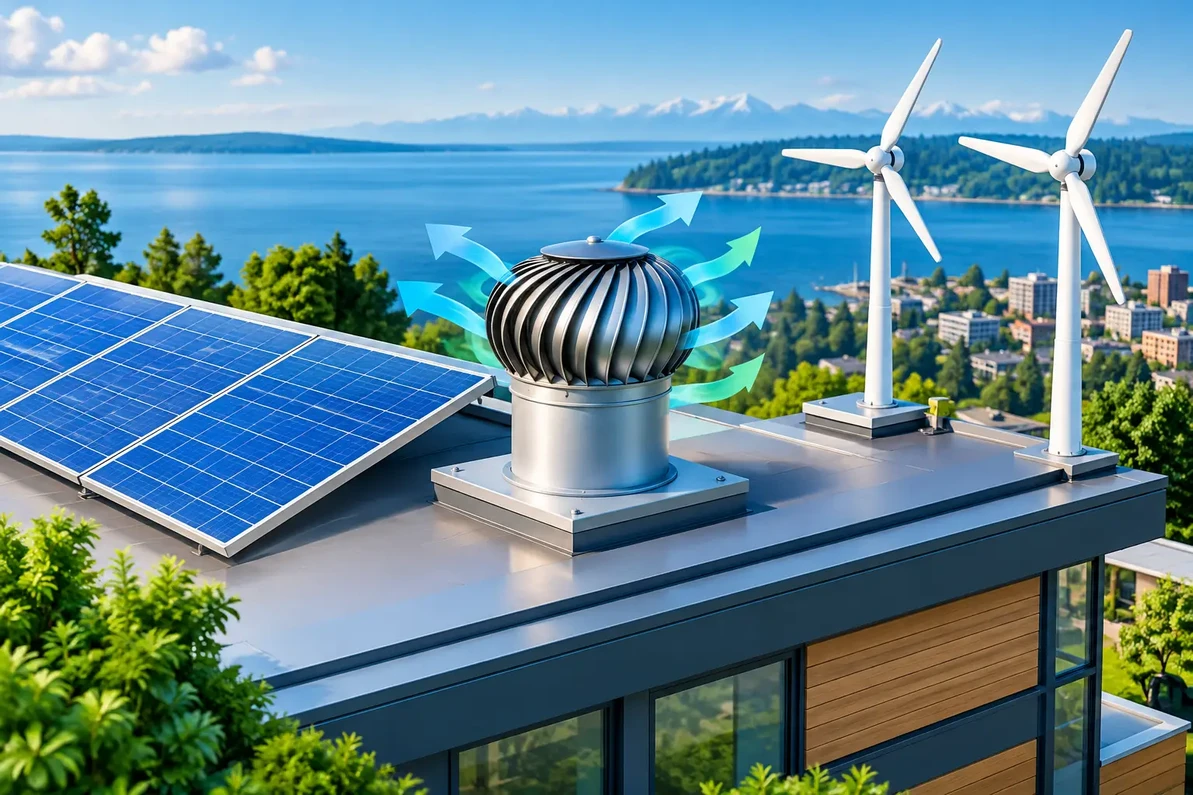
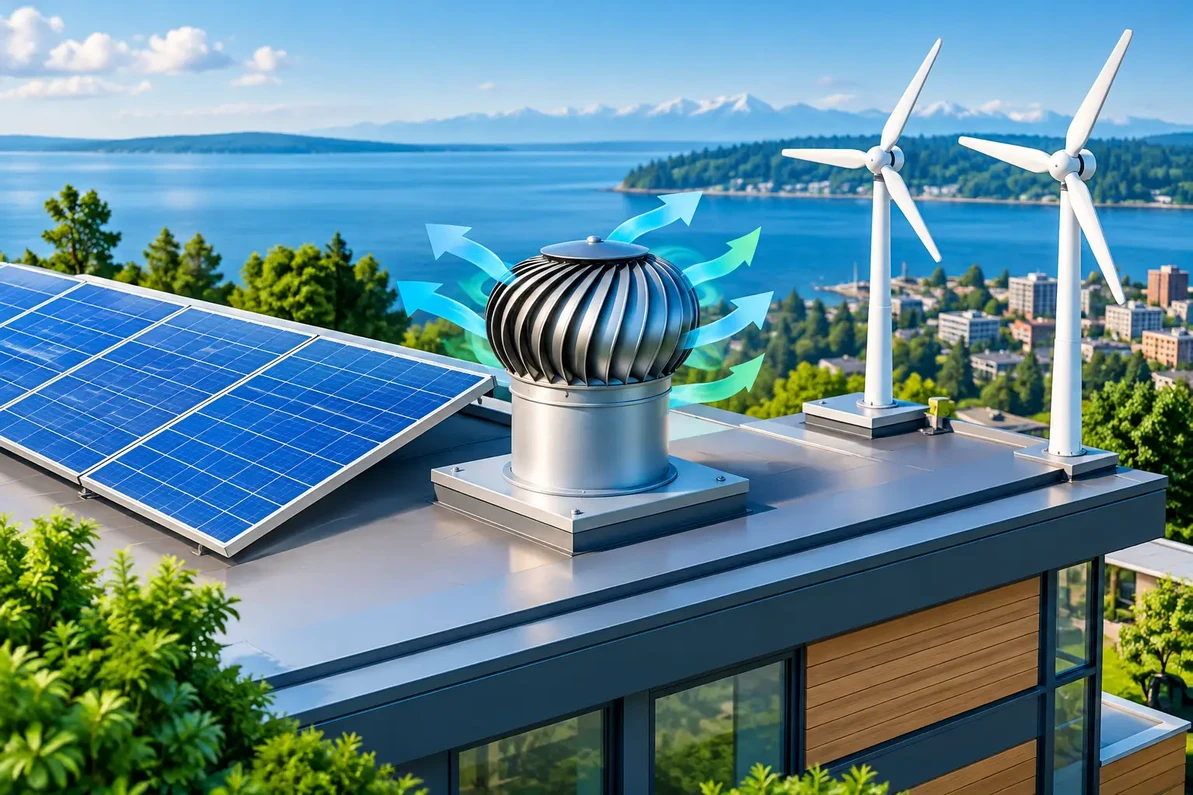
A renewed focus on energy policy, electrification, and operating-cost control has put rooftop ventilation back under the microscope. The phrase Blue Wave Restores Solar, Wind & Energy Efficient Comm/Industrial Edmonds Hybrid Ventilation captures that market interest, but facility teams need to separate the labels from the equipment physics. Edmonds ecoPOWER is not a solar-powered ventilator. It is a true hybrid rooftop exhaust ventilator that combines wind-driven ventilation with an efficient EC brushless DC motor for dependable, continuous mechanical operation.
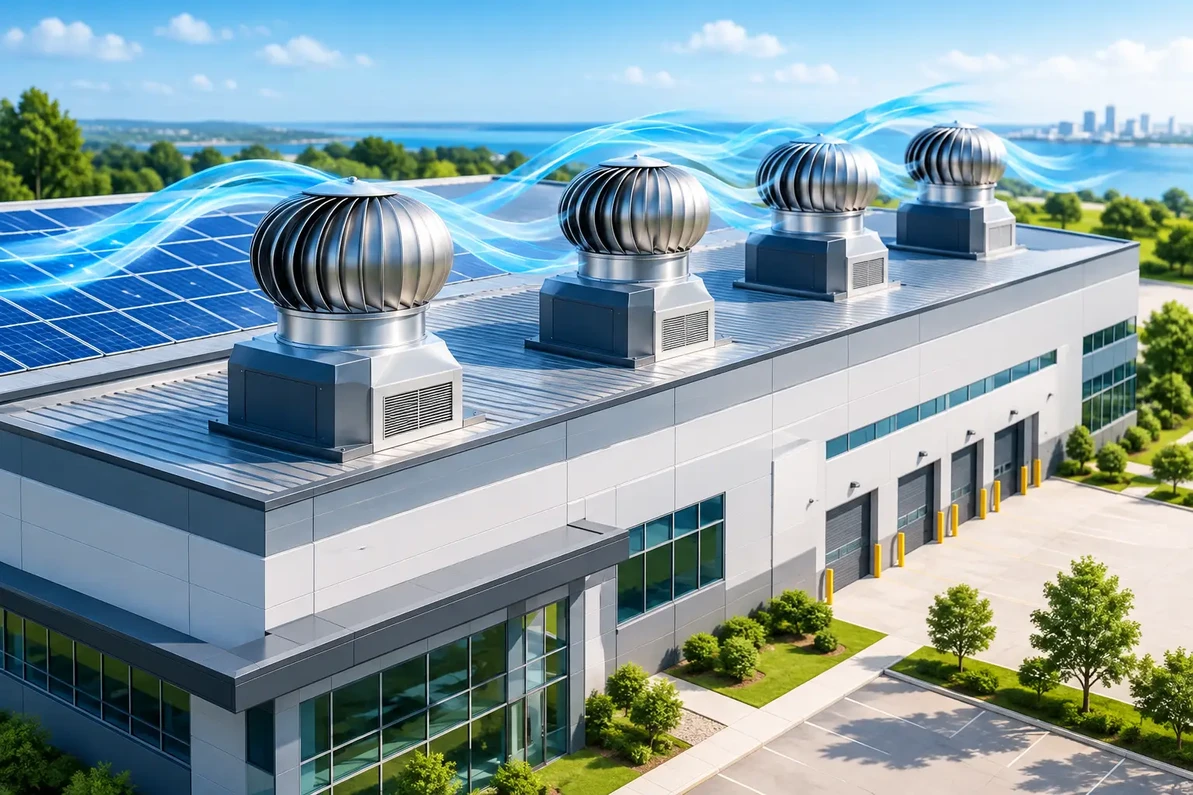
For warehouses, manufacturing plants, agricultural buildings, sports facilities, and high-heat commercial spaces, that distinction affects design, budgeting, and expected airflow. A turbine that depends on wind alone cannot guarantee CFM when a building needs it most. A conventional powered exhaust fan can deliver predictable airflow, but it consumes electrical energy whenever it operates. The ecoPOWER concept is engineered to use available wind energy when conditions permit while retaining motorized airflow when weather, pressure, or heat loads demand control.
Why Edmonds Hybrid Ventilation Matters for Commercial Buildings
Heat does not wait for favorable weather. A warehouse roof can absorb substantial solar gain, while process equipment, forklifts, lighting, compressors, and occupants add internal load below. In a manufacturing building, hot air stratifies near the ceiling. Without a defined exhaust path and adequate make-up air, that heat stays trapped, drives worker discomfort, raises cooling demand, and can affect equipment reliability.
Wind turbines have long been used for passive roof exhaust. They are durable and can move useful air without electrical consumption, but their output changes with wind speed, wind direction, roof exposure, turbine size, and system resistance. A building with long duct runs, restrictive louvers, dirty filters, or insufficient intake area may see much lower real-world airflow than a turbine catalog number suggests.
The Edmonds ecoPOWER Hybrid Rooftop Exhaust Fan addresses the operating gap between passive and fully powered ventilation. Its wind-driven turbine action supports low-energy operation when natural conditions are available. Its high-performance EC brushless DC motor provides controlled exhaust when natural draft is inadequate. This is especially useful for facilities that cannot accept ventilation that drops to near zero during a hot, still afternoon.
Wind assistance is not the same as solar power
Solar attic fans and solar exhaust products have valid applications, particularly where running electrical service is difficult or where the design load is modest. Their available power, however, follows solar irradiance. Output can decline with cloud cover, panel orientation, contamination, shading, and late-day conditions, even while a building remains hot.
Edmonds ecoPOWER should be evaluated on its own engineering basis. It uses wind operation plus efficient electrical motor operation. Calling it solar-powered creates the wrong expectation about its power source, controls, and performance profile. For LEED-oriented and Net-Zero projects, accurate product language matters because energy claims, control sequences, and mechanical schedules need to match the equipment actually installed.
Energy-Efficient Commercial and Industrial Exhaust Design
A hybrid ventilator is not a substitute for ventilation design. It is a component in a larger airflow system. The first question is not, “How many roof units fit on the roof?” The first question is, “What heat, contaminant, moisture, and air-change objective must the system handle?”
A practical design review starts with building dimensions, ceiling height, roof geometry, occupancy, internal equipment loads, process heat, desired temperature differential, and the location of outdoor-air inlets. Facility managers should also identify whether the building requires general heat relief, spot source capture, smoke control, negative pressure, fume removal, or a combination of these needs.
CFM must be evaluated against static pressure. On a free-air roof opening, an exhaust device may move significant air. Add a curb, backdraft damper, birdscreen, duct transition, louvers, or a pressurized building condition, and the system resistance rises. The selected fan or hybrid unit must maintain useful airflow at the actual operating static pressure rather than only under ideal test conditions.
Make-up air is equally important. Exhausting air without adequate replacement air creates excessive negative pressure. Doors become hard to open, outside air may enter through uncontrolled gaps, and fan performance can fall. In conditioned facilities, make-up air may need tempering, filtration, or humidity treatment. In a basic warehouse, properly sized wall louvers and low-resistance intake paths may be sufficient. The right approach depends on climate, process, building envelope, and worker comfort requirements.
Where ecoPOWER Hybrid Rooftop Units Fit Best
Edmonds hybrid ventilation is particularly relevant in buildings with large roof areas, recurring heat buildup, and variable operating schedules. Warehouses and distribution centers often benefit from high-level heat relief, especially where full air conditioning is not economically justified. Manufacturing facilities can use roof exhaust as part of a layered system that includes source capture, wall intake, circulation fans, and controlled make-up air.
Agricultural and livestock applications require additional attention to moisture, ammonia, dust, and animal-health ventilation rates. A hybrid roof exhaust approach can support general ventilation, but it should not be selected solely on energy language. Corrosion resistance, washdown exposure, winter ventilation needs, inlet placement, and emergency power requirements may govern the design.
For architect and engineering teams, the ecoPOWER platform can also be attractive where roof aesthetics, low-energy intent, and continuous exhaust capability must coexist. Yet hybrid equipment is not automatically the lowest-cost answer for every project. A small building with short operating hours may be better served by a properly controlled conventional exhaust fan. A heavily process-driven plant with high static pressure may require dedicated centrifugal exhaust equipment and engineered make-up air. Selection should follow load and pressure calculations, not product category alone.
Controls determine whether efficiency becomes measurable
The EC motor is a central part of the hybrid value proposition. EC technology can provide efficient operation and control flexibility compared with basic fixed-speed motor arrangements. But the savings depend on how the equipment is scheduled and controlled.
A unit running continuously at full demand will consume more energy than one matched to actual need. Temperature sensors, programmable schedules, variable-speed control logic, building management system integration, and staged operation can reduce unnecessary runtime. In facilities with fluctuating heat loads, the control sequence should ramp ventilation in response to ceiling temperature, process status, or occupancy rather than rely only on a manual switch.
Commissioning is where the design becomes operational. Verify rotation, curb integrity, weatherproofing, electrical supply, control setpoints, intake area, and measured airflow. If the building remains hot after installation, investigate the complete system: inadequate make-up air, blocked louvers, roof recirculation, excessive process load, poor fan placement, or incorrect control settings can all limit results.
Specify Performance, Not Just a Product Name
A commercial ventilation schedule should state the required airflow, expected external static pressure, motor and control characteristics, roof curb dimensions, electrical requirements, sound expectations, environmental exposure, and backdraft strategy. It should also clarify whether the unit supports general building exhaust or is part of a code-driven process, smoke, or hazardous exhaust application.
For Net-Zero and energy-conscious projects, document the intended operating mode. Wind-assisted operation can reduce electrical demand when environmental conditions cooperate. Motorized operation provides the predictable airflow facilities need when they do not. That balanced design is the point of true hybrid ventilation: use natural energy when available, retain engineering control when it is not.
Factory Fans Direct/Edmonds US provides commercial and industrial ventilation evaluation for projects involving roof exhaust, hybrid ventilation, make-up air, warehouse heat relief, manufacturing airflow, and energy-focused controls. Contact Mike Miller, VP Engineering, for a FREE Project Evaluation at 888-849-1233. Bring the building dimensions, heat sources, roof plan, and operating schedule to the conversation - those details turn a rooftop ventilator selection into a ventilation system that can be measured and managed.
Factory Fans Direct/Edmonds US - Hybrid Commercial & Industrial Ventilation & Cooling Experts | Contact Mike Miller VP Engineering at Factory Fans Direct for a FREE Project Evaluation 888-849-1233 | Mike@FactoryFansDirect.com
Recent Posts
-

Blue Wave Restores Solar, Wind & Energy Efficient Edmonds Hybrid Turbine Ventilation
A renewed focus on energy policy, electrification, and operating-cost control has put rooftop ventil …13th Nov 2026 -
Will a Blue Wave Restore US Capex Confidence?
Capital spending does not move on election headlines alone. A plant manager approving a $600,000 ven …9th Nov 2026 -
The BLUE WAVE Supports Commercial & Industrial ecoPOWER Hybrid Turbine Ventilation
A hot production floor, warehouse, or agricultural building rarely has one ventilation problem. Heat …8th Nov 2026