Bitcoin Mining Ventilation Solutions That Work
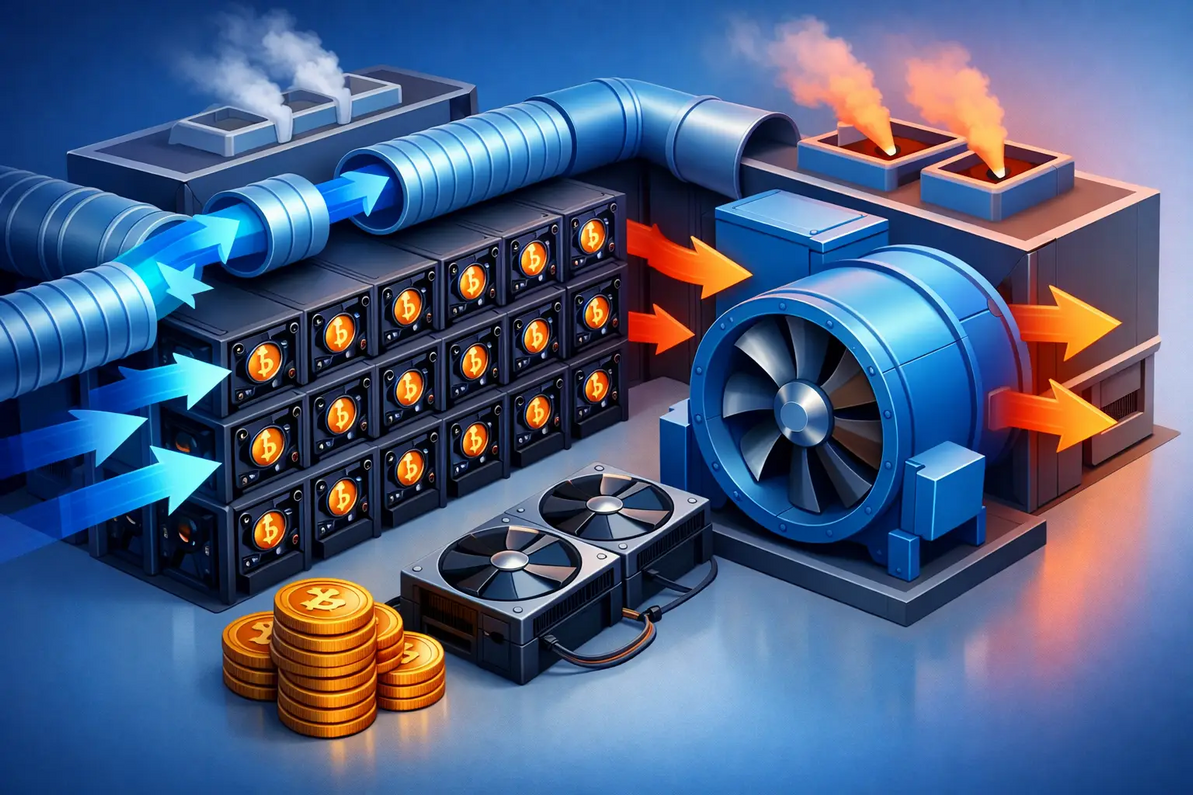
A mining room that looks fine on paper can still cook ASICs by mid-afternoon. That usually happens when the design stops at fan count and never gets into actual heat load, intake restriction, discharge path, and static pressure. Effective bitcoin mining ventilation solutions are not just about moving air - they are about moving enough air, in the right direction, at the right pressure, for the full operating cycle.
Bitcoin mining creates a straightforward engineering problem with expensive consequences. ASICs turn electrical power into heat, and that heat has to leave the building reliably. If it does not, inlet temperatures rise, hash boards throttle, failure rates climb, and dust fouling accelerates. Operators often blame the miners first, but many performance issues start with poor ventilation design.
What bitcoin mining ventilation solutions must solve
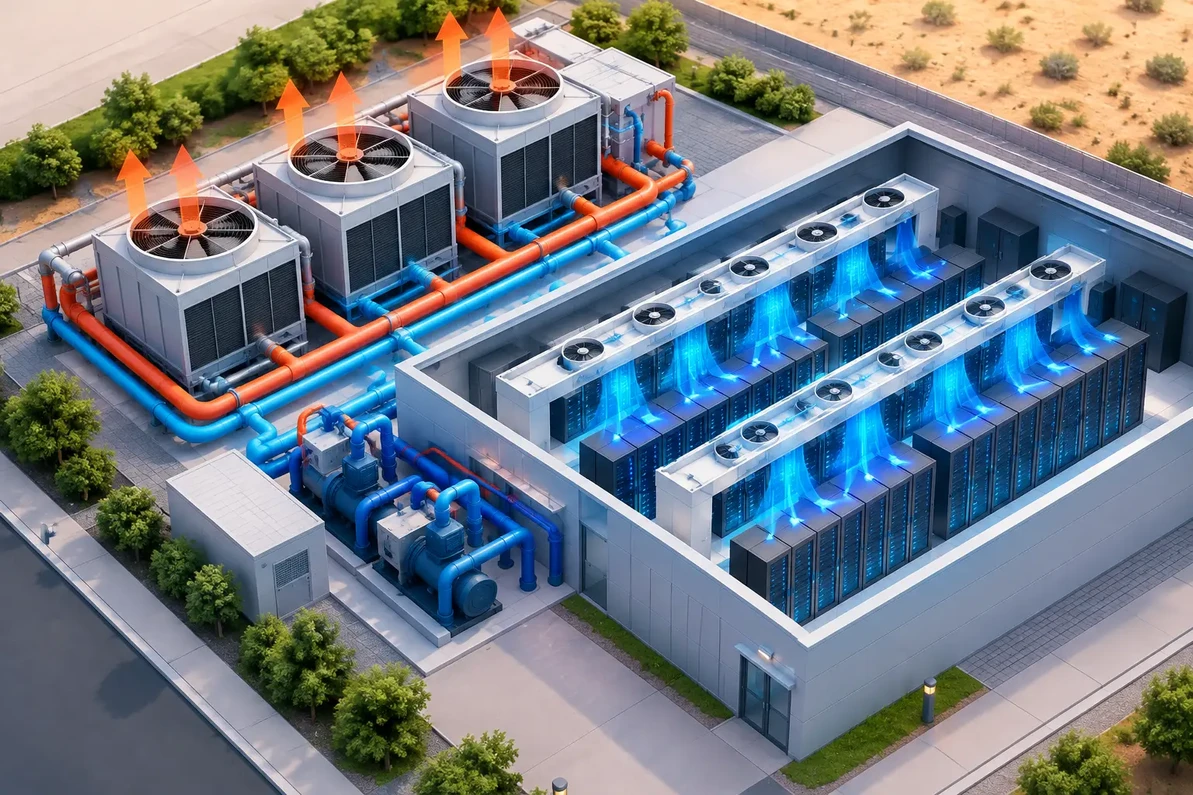
Every mining site is balancing the same variables: heat rejection, air exchange, contaminant control, and operating cost. The basic math starts with power consumption. Nearly all electrical energy used by miners ends up as heat in the space. That means a 500 kW mining operation is also a 500 kW heating system unless the ventilation system removes that energy fast enough.
That is where many installs go wrong. A buyer may know the total CFM target, but CFM by itself is not enough. Real systems deal with intake louvers, filters, weather hoods, dampers, and wall caps that add resistance. Long duct runs and poor discharge geometry add more. Once static pressure rises, a fan that looked adequate in free air can miss the requirement by a wide margin.
Temperature control also is not a single number. A mining container in West Texas, a retrofitted warehouse in Ohio, and a smaller farm in a cold northern climate all need different approaches. In one market, summer heat drives the design. In another, winter operation introduces condensation risk, recirculation problems, and the need to control freezing drafts without starving miners of cooling air.
Start with heat load, not fan catalog pages
The right sequence is simple. First calculate total heat load from the connected mining equipment and any supporting electrical gear that releases heat into the room. Then determine the allowable temperature rise between intake air and exhaust air. From there, required airflow can be estimated with standard ventilation formulas and then adjusted for real-world losses.
This is where engineering support matters. If your miners draw 1.2 MW, the target airflow is substantial, and small sizing errors become expensive fast. Undersized exhaust fans lead to hot aisles, uneven machine inlet temperatures, and dead zones. Oversized systems can create unnecessary electrical cost, poor pressure balance, and difficult control behavior in cooler weather.
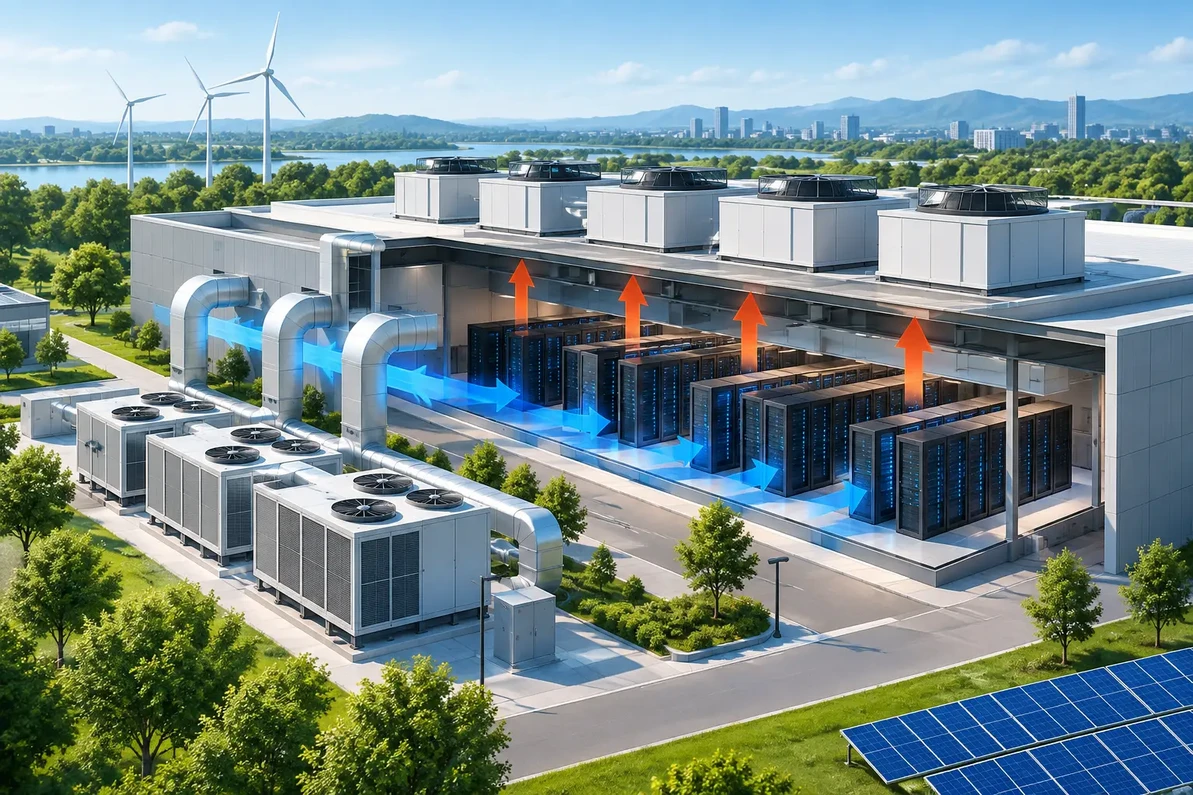
A good design also accounts for equipment layout. Row spacing, rack orientation, and aisle separation influence how well air actually moves through the miners. You can install high-capacity wall exhaust fans and still have recirculation if hot discharge air loops back to the intake side. In practical terms, airflow path matters as much as airflow volume.
Intake and exhaust have to be engineered together
One of the most common mistakes in bitcoin mining ventilation solutions is treating intake and exhaust as separate purchases. They are one system. If exhaust is strong but intake is undersized or overly restricted, the building pulls harder negative pressure than intended. That can bring in dust through cracks, slam doors, reduce fan performance, and create uneven airflow across the miner racks.
On the intake side, operators usually want some combination of weather protection, bird screening, and filtration. Those are reasonable requirements, but each adds pressure drop. Filtration is especially trade-off driven. Better filtration can reduce dust accumulation on heat sinks and boards, but higher-efficiency filters also create more resistance and require maintenance discipline. In a dusty environment, neglected filters can become the reason your cooling capacity collapses.
Exhaust design deserves the same scrutiny. Fan location, discharge orientation, and wall opening size all affect performance. If hot air cannot leave cleanly, it spills back into the envelope or creates localized turbulence that hurts extraction. Roof-mounted exhaust can work well in some facilities, but wall-mounted exhaust may be easier to service and better aligned with rack layout. It depends on the building shell, structural limits, and the airflow path from miner inlet to final discharge.
Pressure management is where many systems fail
Mining operators often talk about temperature first, but pressure control deserves equal attention. Most air-cooled mining rooms are designed for negative pressure, with exhaust fans pulling air through intake openings and through the machines. That approach can be effective, but too much negative pressure creates problems quickly.
The goal is controlled pressure, not maximum suction. When pressure drops too far, fan performance can move away from the design point, unplanned infiltration increases, and noise rises. Sensitive areas of the building start acting like accidental air intakes. If your site includes electrical rooms, offices, or adjacent process spaces, pressure imbalance can affect them too.
This is why fan selection should be based on fan curves, not only rated CFM. The curve tells you what the fan will actually deliver at the static pressure your system creates. For mining applications, that distinction is critical. Free-air numbers are easy to advertise. Delivered airflow under load is what keeps machines online.
Controls matter more than many operators expect
A mining ventilation system that only runs full-on or off is rarely ideal. Outdoor temperature changes, miner loading changes, and filter condition changes all affect cooling demand and pressure. Variable speed control can help maintain more stable inlet conditions while reducing power consumption when ambient conditions are favorable.
This does not mean every project needs a complicated controls package. Some smaller operations do well with staged fans and straightforward thermostatic logic. Larger rooms, warehouses, and containers often benefit from variable frequency drives, temperature sensors, and pressure-based control sequences that keep the system in a useful operating window.
The practical benefit is better equipment protection with less wasted fan horsepower. Instead of forcing the same operating profile year-round, the system can respond to actual conditions. That usually improves uptime and lowers maintenance strain.
Dust, noise, and seasonal weather change the design
The ventilation design for a clean indoor electrical space is different from the design for a rural or industrial site with airborne dust. In mining, dust is not cosmetic. It coats internal surfaces, restricts heat transfer, and can shorten maintenance intervals. If your operation is near agriculture, unpaved lots, traffic corridors, or manufacturing emissions, intake strategy needs to reflect that.
Noise can also become a project constraint. ASIC miners are loud, and added high-velocity ventilation can push a site into a range that creates employee complaints or neighbor issues. Sometimes the answer is lower-velocity air paths, larger openings, acoustic treatment, or rethinking the fan type and placement. Those decisions affect footprint and budget, but ignoring acoustics early can create expensive retrofits later.
Cold weather brings a different set of issues. Very low outdoor temperatures can seem like free cooling, but they can create thermal shock, condensation, and uneven flow if not managed properly. Some sites need dampers, mixing strategies, or controlled bypass to avoid feeding miners air that is colder than the equipment or room conditions can tolerate.
Common ventilation approaches for mining sites
The simplest systems use direct air exchange with filtered intake and high-capacity exhaust. For many air-cooled mining rooms, this is the most cost-effective path if the building layout supports a clean front-to-back airflow pattern. It is straightforward, serviceable, and scalable.
Container mining often uses tightly managed intake and exhaust zones with aggressive airflow through the miners. These systems can perform well, but they leave little margin for poor fan selection or bad louver design. Small errors show up quickly because the enclosure is compact and densely loaded.
Larger warehouse operations may need segmented airflow zones rather than one giant open room. That helps control recirculation and lets operators match fan capacity to actual equipment density. It also creates flexibility for phased growth.
For buyers evaluating equipment, the key specifications are not limited to fan diameter or advertised CFM. Motor type, horsepower, voltage, serviceability, fan curve data, shutter or damper behavior, and compatibility with speed control all matter. In mining environments, durability and parts support matter too.
Why expert evaluation saves money
The cheapest path is rarely the least expensive outcome. A ventilation package that is not matched to the building and mining load can cost more through downtime, shortened miner life, emergency replacements, and higher electrical use. That is why a proper review should include site dimensions, miner count and wattage, rack layout, intake and exhaust locations, elevation, local climate, and any filtration or noise constraints.
Factory Fans Direct works with these details every day because airflow in mining is an engineering application, not a guessing game. Free project evaluation is valuable here for a simple reason: once fans, louvers, controls, and electrical coordination are installed, fixing the wrong design is much harder than selecting the right one upfront.
If your mining operation is running hot, pulling dust through every crack, or leaving certain rows warmer than others, the answer is usually not more random fan capacity. It is a better-matched system with verified airflow, controlled pressure, and a layout that respects how heat actually moves through the space. That is the kind of correction that pays back in uptime, not just in temperature readings.
Factory Fans Direct - Crypto Mining & Data Center Cooling Experts Contact Mike Miller VP Engineering at Factory Fans Direct for a FREE Project Evaluation 888-849-1233 | Mike@FactoryFansDirect.com
Recent Posts
-

AI Mega Factories Use Edmonds ecoPOWER Hybrid Ventilation
AI Mega Factories use Edmonds ecoPOWER Hybrid Turbine Ventilation because heat rejection cannot be t …4th Oct 2026 -
AI Cooling for High-Heat Facilities
A server aisle running 12°F hotter than its neighboring aisle, a crypto container recirculating exha …4th Oct 2026 -
AI Ventilation: Better Control Starts With Data
A warehouse can look adequately ventilated on paper and still have a 15-degree temperature differenc …4th Oct 2026