AI Smart ecoPOWER Hybrid Turbine Ventilation for Warehouses
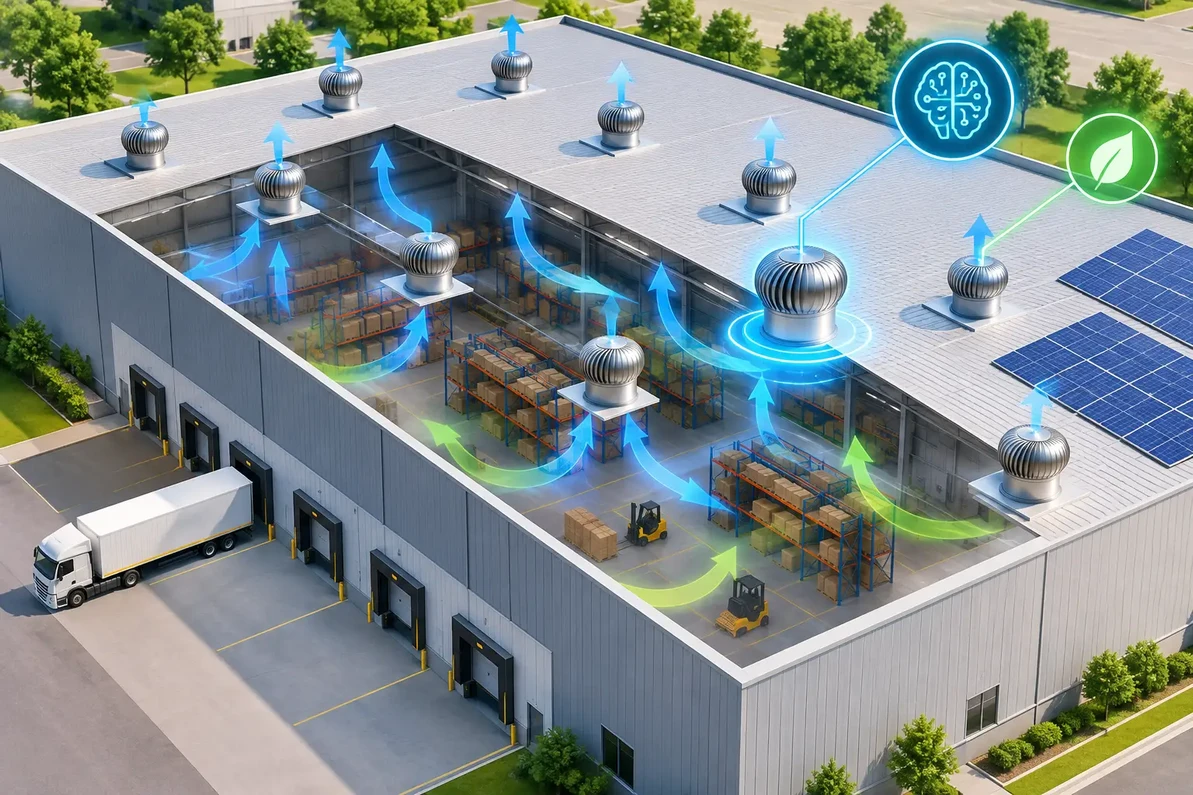
A warehouse roof can hold the answer to a recurring operating problem: heat rises, accumulates under the deck, and pushes working temperatures higher long before equipment on the floor has reached its limit. AI Smart ecoPOWER Hybrid Turbine Ventilation for Warehouses addresses that heat layer with a different approach than a conventional powered roof exhaust fan or a passive spinning turbine alone. It combines wind-driven extraction with an electronically commutated EC brushless DC motor for continuous, controlled ventilation when natural wind is not enough.
For facility managers, project engineers, and operations teams, the value is not simply lower wattage. The objective is predictable roof-level exhaust, measured airflow performance, and a ventilation strategy that can respond to changing indoor and outdoor conditions without treating every warehouse as if it has the same heat load.
Why Warehouse Heat Requires More Than a Standard Turbine
Passive turbine ventilators can be useful where wind exposure is favorable and heat loads are light to moderate. Their limitation is obvious on still, hot days, which are often the exact days when a warehouse needs exhaust the most. If the turbine has no wind energy, its ventilation output falls when the building's thermal pressure and internal heat are climbing.
Conventional powered exhaust fans solve the no-wind problem but can run at full output regardless of actual need. That may increase electrical consumption, pull excessive replacement air through uncontrolled openings, and create pressure issues at dock doors or conditioned zones. A fan selection based only on roof opening size or a broad CFM estimate can miss the real operating conditions.
The ecoPOWER Hybrid concept fills the gap between these two methods. Under favorable wind conditions, the ventilator can operate as a wind-driven unit. When wind energy is insufficient, its high-performance EC motor provides powered extraction. This is a true hybrid ventilator - not a solar-powered roof fan and not a conventional passive turbine with a small accessory motor.
That distinction matters for LEED-oriented and Net-Zero projects. Wind operation can contribute to extremely low-energy ventilation, while the EC motor maintains airflow continuity when environmental conditions change. The system is designed to use power when it is needed rather than depend entirely on a weather condition the facility cannot control.
How AI Smart Controls Improve Hybrid Roof Exhaust
An AI cooling interface is not a substitute for ventilation engineering. It is a control layer that makes the engineered system more responsive. On a warehouse project, the useful inputs may include roof-deck temperature, occupied-zone temperature, outside air temperature, humidity, wind conditions, exhaust status, and operating schedules. The controller can use those inputs to identify when heat is building and when exhaust capacity should increase.
A practical control strategy may stage or modulate hybrid ventilators as the warehouse temperature rises above a defined setpoint. It may also reduce powered operation during cool mornings, overnight hours, or periods when wind-driven operation is already moving adequate air. In facilities with large loading activity, variable manufacturing loads, or high-density storage, the logic can account for patterns that a simple on-off thermostat does not capture.
The word AI should not be used as decoration. The value comes from data, trend visibility, alarms, and operational decisions that improve over time. If one roof zone repeatedly runs hotter, if a fan's runtime changes unexpectedly, or if exhaust is activated while make-up air paths are restricted, the operating data gives the facility team something actionable to investigate.
AI-based controls also need sensible limits. Temperature sensors must be located correctly. A sensor mounted in direct solar gain or immediately beside an exhaust opening can produce misleading readings. Controls cannot overcome undersized roof penetrations, blocked louvers, poor make-up air, or a fan layout that ignores the building's heat sources. Equipment and controls have to be designed as one system.
Start With the Warehouse Heat and Airflow Load
The correct number of hybrid rooftop ventilators depends on more than warehouse square footage. Ceiling height, roof geometry, insulation, skylights, solar gain, dock-door traffic, process equipment, forklifts, battery charging, and internal combustion equipment all affect the load. A distribution center with intermittent dock activity is not the same as a manufacturing warehouse running ovens, compressors, or welding operations across multiple shifts.
The design process should begin with the volume of air to be exhausted and the reason for exhausting it. General heat relief often uses air changes per hour as a starting point, but that is only a starting point. Process heat, contaminant removal, combustion byproducts, and localized hot spots may require a different calculation. When contaminants are involved, source capture and applicable code requirements can take priority over general roof exhaust.
Static pressure also matters. Hybrid rooftop ventilation must work with the building's available air paths, louvers, wall openings, door operation, and any ducted sections. An exhaust fan cannot deliver its intended CFM if the building cannot replace the air being removed. Excess negative pressure can make doors difficult to open, disrupt combustion appliances, and draw unconditioned air through unintended cracks.
For many warehouses, a balanced plan includes rooftop exhaust paired with dedicated wall louvers or engineered make-up air. In mixed-use facilities, the solution may include HVLS fans for occupant comfort and destratification, while hybrid roof exhaust removes the hottest air at the roof line. These components have separate jobs. HVLS fans move air within the occupied space; roof exhaust removes heat and stale air from the building.
Where Hybrid Turbine Ventilation Fits Best
ecoPOWER Hybrid rooftop ventilators are especially practical on warehouses seeking continuous heat relief without committing to constant full-speed powered exhaust. Facilities in wind-exposed locations can take advantage of natural wind operation while retaining powered backup during stagnant conditions. They are also a strong consideration for sustainability-focused retrofits where electrical infrastructure, energy targets, and roof penetrations must be evaluated carefully.
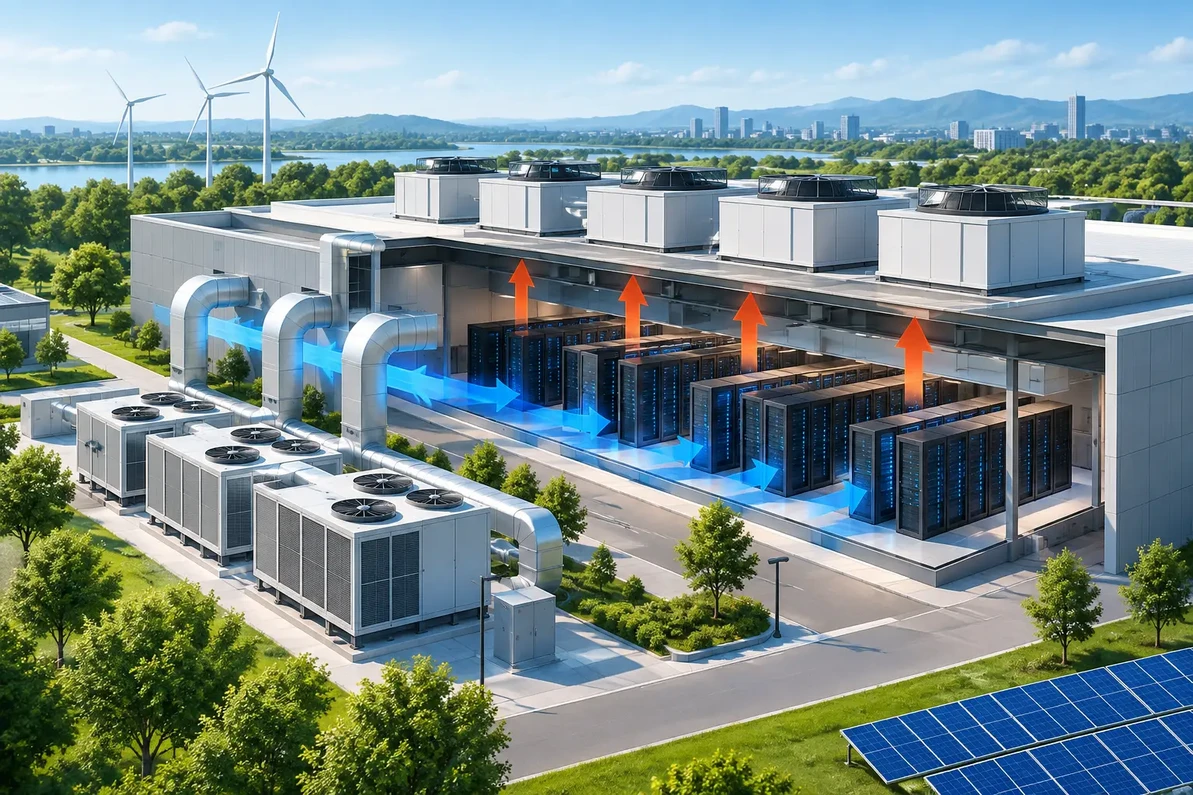
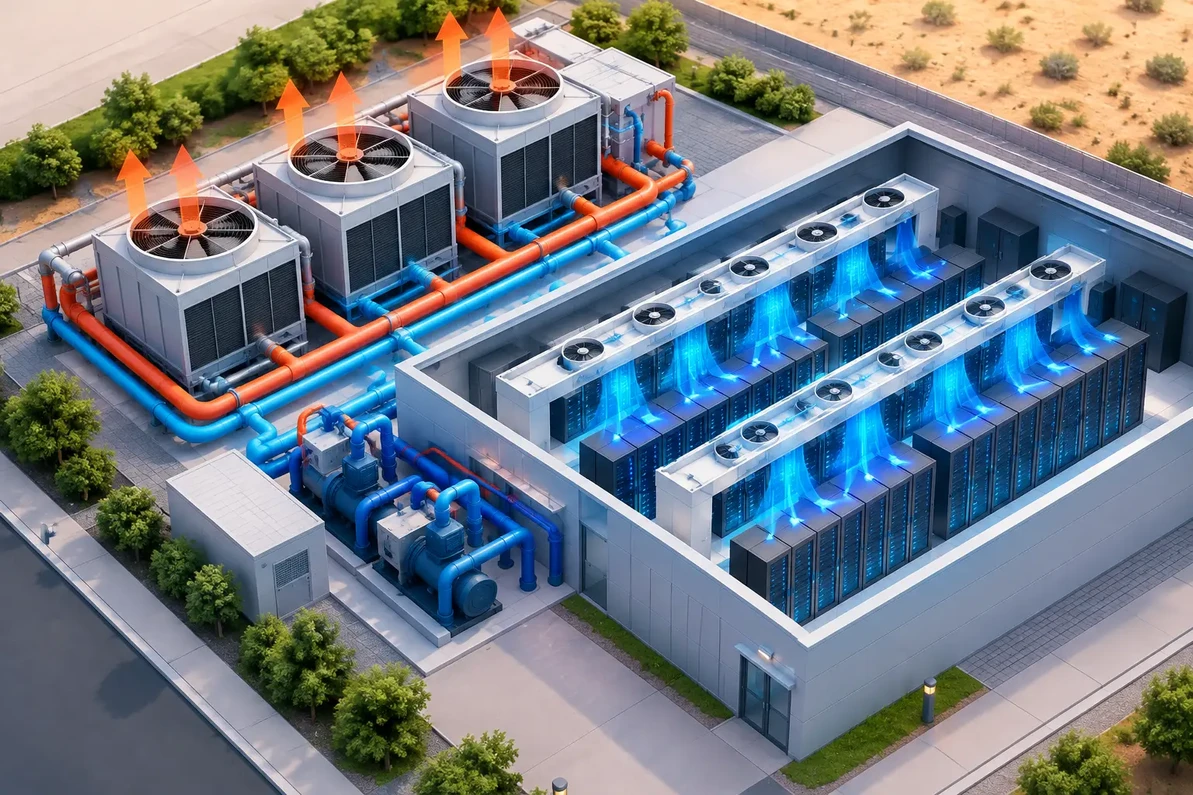
The approach can fit high-bay storage, light manufacturing, logistics operations, agricultural packing areas, sports facilities, and large maintenance buildings. It can also support warehouses adjacent to data center or crypto mining operations where heat loads may fluctuate significantly, although those high-density equipment environments often require a more detailed cooling and containment analysis than general warehouse ventilation alone.
There are trade-offs. A hybrid unit may not be the right answer where the project requires high static-pressure ducted exhaust, aggressive contaminant capture, corrosive process fumes, or tightly controlled pressurization. Those applications may call for dedicated centrifugal exhaust, make-up air equipment, filtration, corrosion-resistant materials, or a fully engineered mechanical ventilation system. The right product is determined by the duty, not by a label.
Installation Details That Affect Real Performance
Roof placement is a performance decision, not just a roofing decision. Exhaust units should be arranged to serve heat-producing zones and allow replacement air to travel through the occupied area before exiting at the roof. Installing all exhaust units on one end of a long warehouse can leave distant areas hot and stagnant, particularly if wall openings are poorly located.
The roof curb, flashing, structural support, electrical feed, disconnecting means, and weather exposure all need review before installation. Contractors should verify the roof opening and curb dimensions against the product cut sheet rather than assume a standard turbine curb will match every hybrid model. Controls wiring, sensor placement, and access for service should be planned before the roof work is closed out.
Commissioning is equally important. Once installed, confirm rotation and motor operation, control setpoints, sensor readings, roof damper function where applicable, and actual airflow direction at make-up air openings. A short seasonal review can reveal whether settings need adjustment after summer solar gain, winter stack effect, or changes in warehouse operations.
Design the System Before Buying the Fan
A hybrid rooftop ventilator can reduce dependence on powered exhaust, but it is most effective when the system is sized around the building's actual conditions. The best projects evaluate CFM requirements, heat gain, wind exposure, pressure relationships, make-up air, roof layout, and control requirements together. That engineering step prevents the common mistake of adding more fans to a problem caused by poor air replacement or an uneven layout.
Factory Fans Direct provides commercial and industrial ventilation and cooling project evaluation for warehouses, manufacturing facilities, and high-heat operations. Contact Mike Miller, VP Engineering, for a FREE Project Evaluation at 888-849-1233 or Mike@FactoryFansDirect.com. A clear heat-load and airflow review before equipment selection can turn roof ventilation from a recurring complaint into a measurable operating improvement.
Factory Fans Direct/Edmonds US - Hybrid Commercial & Industrial Ventilation & Cooling Experts | Contact Mike Miller VP Engineering at Factory Fans Direct for a FREE Project Evaluation 888-849-1233 | Mike@FactoryFansDirect.com
Recent Posts
-

AI Mega Factories Use Edmonds ecoPOWER Hybrid Ventilation
AI Mega Factories use Edmonds ecoPOWER Hybrid Turbine Ventilation because heat rejection cannot be t …4th Oct 2026 -
AI Cooling for High-Heat Facilities
A server aisle running 12°F hotter than its neighboring aisle, a crypto container recirculating exha …4th Oct 2026 -
AI Ventilation: Better Control Starts With Data
A warehouse can look adequately ventilated on paper and still have a 15-degree temperature differenc …4th Oct 2026