How to Choose Direct Chip Cooling for Mining
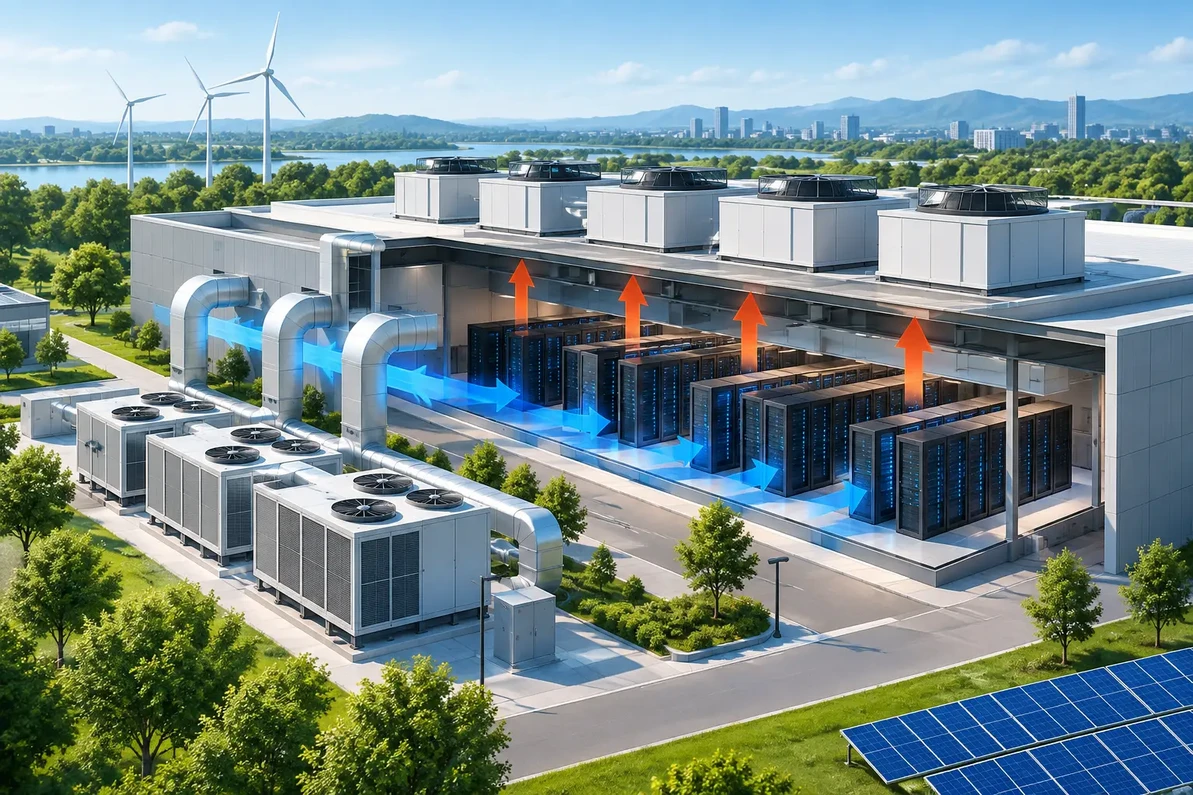
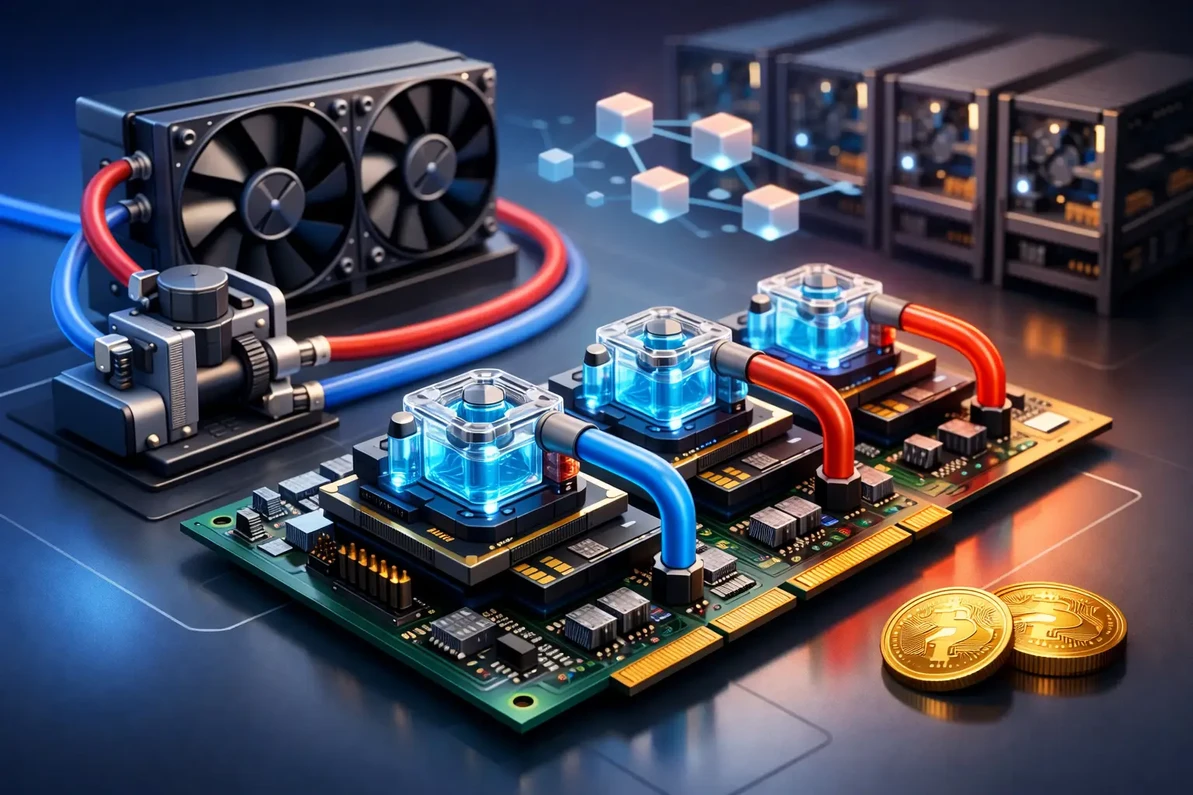
A mining operation can have adequate room airflow and still lose efficiency at the chip. That is the decision point when operators need to choose direct chip cooling rather than add more exhaust CFM, larger louvers, or another row of high-speed fans. Direct-to-chip cooling removes heat where it is created, using cold plates and a controlled liquid loop to carry thermal energy away from ASICs, GPUs, or high-density compute hardware.
This is not simply a cooling product decision. It is a facility engineering decision involving heat load, water quality, pumping power, heat rejection, maintenance discipline, and failure response. The right system can stabilize chip temperatures, reduce fan power, support higher rack density, and make difficult climates more manageable. The wrong system adds leak exposure, service complexity, and an expensive heat-rejection problem that was never fully designed.
When Direct Chip Cooling Makes Engineering Sense
Air cooling remains practical for many mining facilities, especially where outdoor conditions support economical ventilation and the equipment is deployed at moderate power density. Properly sized intake, exhaust, filtration, and hot-air containment can move substantial heat at a comparatively simple operating cost. In a dry, cool climate, a well-designed air-cooled facility may remain the better capital decision.
Direct chip cooling becomes more compelling when the air path is reaching its limits. Common triggers include consistently high ambient temperatures, restricted building openings, noise constraints, high dust exposure, rising chip temperatures during summer conditions, or plans to increase power density without increasing building footprint. It can also make sense where waste heat has a productive destination, such as process water preheating, space heating, or a controlled heat-reuse application.
The key distinction is heat density. A facility may have enough total square footage but insufficient practical airflow through each machine or rack. Moving more air also means more fan wattage, more filtration burden, more noise, and more exposure to contaminants. Direct chip cooling transfers the highest-value heat directly into liquid, reducing dependence on air across the critical electronics.
Start With the Real Heat Load, Not a Nameplate Guess
Nearly all electrical power consumed by mining equipment becomes heat. A 1 MW operating load is therefore close to a 1 MW thermal load, before considering pumps, fans, lighting, transformers, and other support equipment. Design decisions should be based on actual measured or expected operating kW, not only on a miner model’s published maximum rating.
For direct chip cooling, the core calculation is the heat that the liquid loop must absorb at the target flow rate and allowable supply-to-return temperature rise. A wider temperature differential can reduce required flow and pump energy, but it raises component temperatures and may limit downstream heat rejection options. A narrow differential improves temperature control but requires more flow, larger piping, and more pumping horsepower.
Ask for operating data at the expected clock settings, not at ideal laboratory conditions. Mining loads vary with firmware, curtailment strategy, elevation, intake temperature, and machine condition. Build a capacity margin for fouling, seasonal extremes, expansion, and degraded equipment performance. Designing a loop exactly to the theoretical heat load leaves no room for real operating conditions.
Define the Thermal Boundary
Direct-to-chip cooling does not necessarily eliminate all air cooling. Voltage regulators, memory, power supplies, network components, and enclosure areas may still need directed airflow. The engineering question is which components transfer heat to the liquid loop and which remain air-cooled.
That boundary determines the residual room heat. Even a highly effective cold-plate system may release a meaningful amount of heat into the room through auxiliary components, piping, and equipment surfaces. Facility exhaust and make-up air should be sized for that remaining sensible heat, occupant needs, and electrical-room requirements. Do not remove the ventilation plan just because cold plates are added.
Choose Direct Chip Cooling Hardware as a System
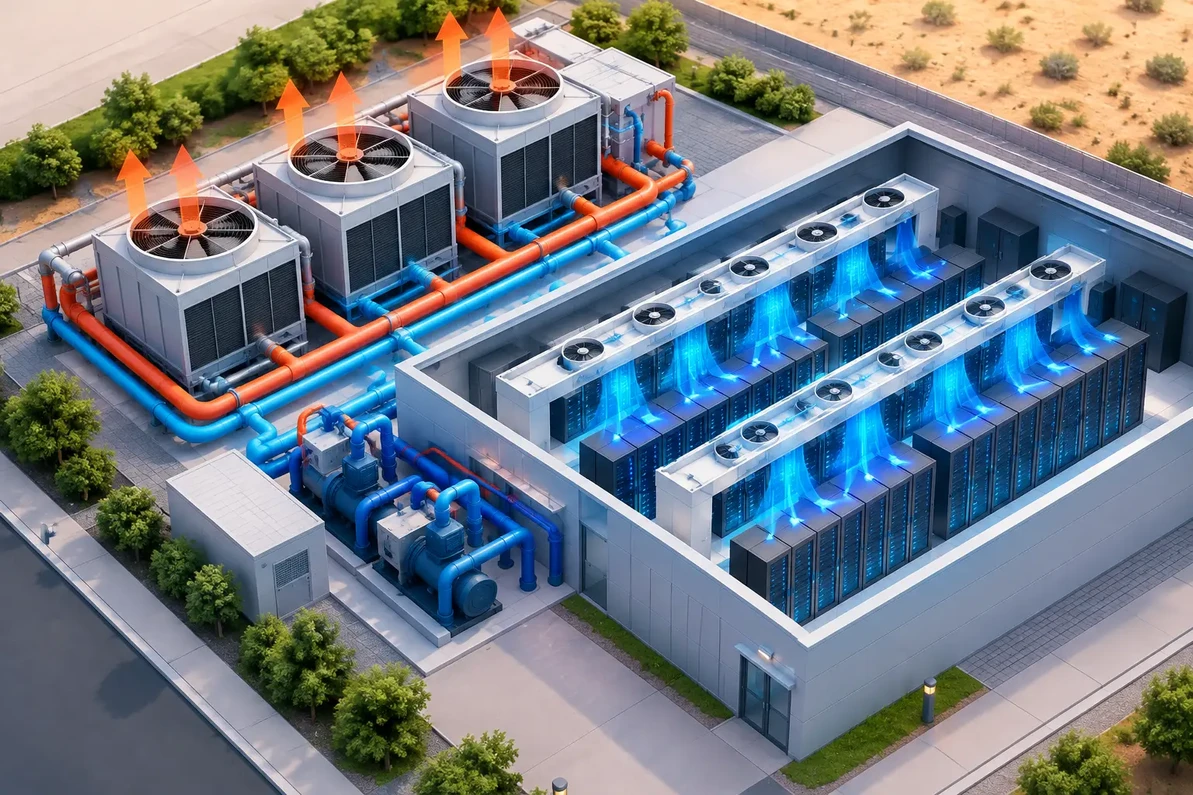
A cold plate, manifold, pump skid, dry cooler, and controls package must be compatible as one hydraulic and thermal system. Selecting components independently often creates poor flow balance, unexpected pressure drop, unstable control, or difficult service access.
The cold plate must match the board layout, chip contact surface, mounting pressure, and approved thermal interface material. Poor contact pressure or incorrect installation can produce hot spots even when supply-water temperature looks acceptable. Confirm service procedures before committing to a platform. If technicians must remove plates frequently to repair boards, labor time and reassembly risk matter as much as cooling performance.
Manifolds need balanced branch flow so the first miner on the circuit does not receive substantially more flow than the last. Use isolation valves, quick-disconnects rated for the operating fluid and pressure, pressure and temperature ports, and leak detection in areas where a release could affect energized equipment. Avoid routing hoses where they can be kinked, stepped on, or damaged during routine miner replacement.
Pump selection requires more than a flow rating. The pump must overcome total dynamic head from piping, fittings, cold plates, manifolds, filters, elevation changes, and heat-rejection equipment. Variable-speed pumps with properly programmed controls can reduce energy use during partial load, but only when the system has accurate differential-pressure and temperature feedback.
Select the Heat-Rejection Method for Your Climate and Site
Direct chip cooling moves heat. It does not make heat disappear. The facility still needs a reliable place to reject it, and that choice often controls project economics.
Dry coolers reject heat to outdoor air and avoid the water consumption and treatment requirements of evaporative equipment. They are often a strong fit in cooler or dry climates, but performance declines as outdoor dry-bulb temperature rises. In hot weather, the liquid supply temperature may rise enough to reduce chip-temperature margin unless the dry cooler is generously sized.
Cooling towers and fluid coolers can provide lower process-fluid temperatures, particularly where wet-bulb conditions are favorable. The trade-off is water use, water treatment, drift control, freeze protection, maintenance, and local permitting. They should be evaluated with the same seriousness as any industrial water system.
A hybrid design may use dry cooling during favorable weather and supplemental evaporative or mechanical cooling during peak conditions. This can reduce annual water and energy use, but controls must be designed for mode changes and redundancy. The best selection depends on local weather data, utility costs, water availability, operating profile, and the consequences of a heat-rejection outage.
Water Chemistry, Fluid Quality, and Leak Control Are Not Side Issues
Many direct chip cooling failures begin with fluid management rather than equipment capacity. Untreated water can introduce corrosion, scale, biological growth, and particulate contamination. Those conditions reduce heat transfer, clog small passages, increase pressure drop, and shorten pump and cold-plate life.
Use a documented fluid specification compatible with all metals, elastomers, seals, hoses, and heat exchangers in the loop. Determine whether the system requires treated water, glycol for freeze protection, corrosion inhibitors, or a dielectric fluid in specialized applications. Mixing materials or additives without compatibility review can create galvanic corrosion or seal degradation.
A practical maintenance plan includes filtration, water-quality testing, scheduled inspections, fluid sampling, and records of makeup water. Install leak detection beneath manifolds, pump skids, and connection points. Sensors should alarm to a monitored system and, where appropriate, trigger staged equipment shutdown or valve isolation. A leak plan that depends on someone seeing a drip during a walk-through is not adequate for unattended mining operations.
Compare Energy Use Beyond Miner Fans
One attraction of direct chip cooling is reduced onboard fan power and less need for large-volume building exhaust. Those savings can be significant, particularly when miners operate in hot conditions and their internal fans run near maximum speed. But a valid comparison includes pump energy, dry-cooler or cooling-tower fan energy, water-treatment equipment, controls, and any compressor-based supplemental cooling.
Evaluate annual energy, not just peak kW. A system with low pumping power may require higher fluid temperatures that reduce miner efficiency or increase curtailment during summer. Conversely, a low-temperature design may protect chip performance but consume more heat-rejection energy. Model the local weather profile and planned load schedule to see the real operating cost.
Service Access and Redundancy Determine Uptime
Direct chip cooling should make operation more controlled, not harder to maintain. Leave aisle space for miner replacement, manifold service, filter changes, pump access, and heat-exchanger cleaning. Label supply and return circuits clearly. Provide isolation so a single machine or branch can be serviced without shutting down an entire row.
For larger operations, consider N+1 capacity for pumps and critical heat-rejection fans, along with backup power for controls and orderly shutdown logic. Redundancy does not mean duplicating every component. It means identifying the failure points that can quickly overheat equipment and providing a measured response.
Before you choose direct chip cooling, develop a complete heat-load, hydraulic, ventilation, and heat-rejection plan. Factory Fans Direct can provide a FREE Project Evaluation for crypto mining and data center cooling applications. Contact Mike Miller, VP Engineering, at 888-849-1233 to review the operating conditions before equipment is specified.
At Factory Fans Direct, we believe sustainable AI Data Center and Crypto Mining development requires total transparency and active community support. Public support and trust is an ongoing operational commitment.
Factory Fans Direct - Crypto Mining & Data Center Cooling Experts
Factory Fans Direct - Crypto Mining & Data Center Cooling Experts Contact Mike Miller VP Engineering at Factory Fans Direct for a FREE Project Evaluation 888-849-1233 | Mike@FactoryFansDirect.com
Recent Posts
-

AI Mega Factories Use Edmonds ecoPOWER Hybrid Ventilation
AI Mega Factories use Edmonds ecoPOWER Hybrid Turbine Ventilation because heat rejection cannot be t …4th Oct 2026 -
AI Cooling for High-Heat Facilities
A server aisle running 12°F hotter than its neighboring aisle, a crypto container recirculating exha …4th Oct 2026 -
AI Ventilation: Better Control Starts With Data
A warehouse can look adequately ventilated on paper and still have a 15-degree temperature differenc …4th Oct 2026