Crypto Mine Exhaust Upgrade Example
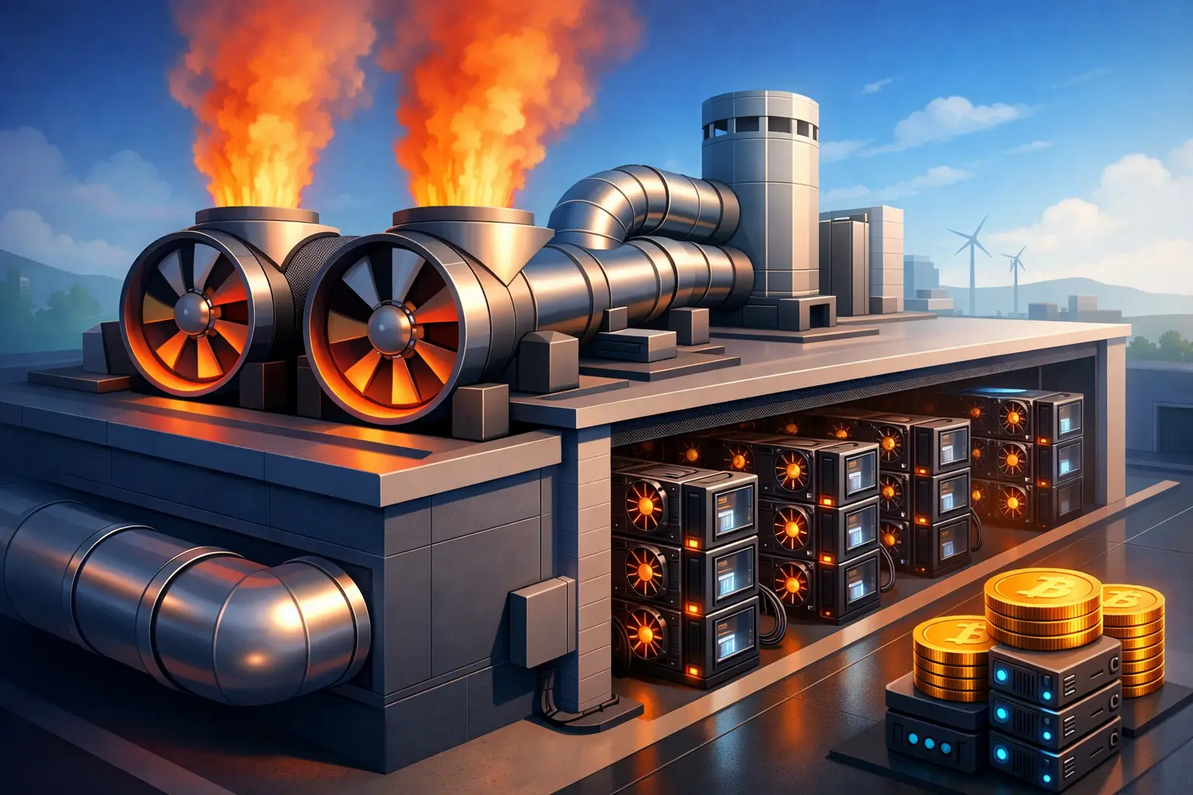
A crypto mine exhaust upgrade example usually starts the same way - miners are online, room temperature keeps climbing, and the existing fans look busy but are not actually moving enough air through the space. The problem is rarely just fan quantity. In most facilities, the real issue is system resistance, poor intake planning, recirculation, and an exhaust package that was never matched to the heat load.
For crypto mining operations, that mismatch gets expensive fast. Hashrate stability, equipment life, maintenance intervals, and operating cost all depend on air movement that is engineered, not guessed. If you are looking at an upgrade, it helps to see what a practical design path looks like and where the common errors show up.
A realistic crypto mine exhaust upgrade example
Consider a medium-sized mining room with 120 ASIC units producing a combined heat load that is pushing the room beyond acceptable operating temperature during warmer months. The building may have started with a few wall exhaust fans and passive louvers because that was fast and inexpensive. On paper, it seemed adequate. In operation, the fan package could not overcome the static pressure created by louvers, filters, wall openings, and duct transitions.
The result is familiar to most operators. Hot discharge air rolls back toward the intake side. Miners nearest the center rows run hotter than miners near the wall. Some units throttle, some fail early, and the room becomes increasingly difficult to manage as outdoor conditions change.
In this example, the upgrade goal is not just more CFM. The goal is controlled airflow from intake to exhaust, with enough fan capacity to handle the actual resistance of the system. That usually means recalculating total heat rejection, verifying target temperature rise, measuring available intake area, and selecting high-performance exhaust fans based on static pressure instead of free-air ratings.
Why the original system falls short
Many mining rooms are built in phases, and ventilation often lags behind electrical deployment. The miners get installed first because production matters. Then the airflow strategy becomes reactive. Additional fans are added when temperatures rise, but the room layout may still be forcing air to short-cycle.
That matters because free-air fan ratings can be misleading in a mining environment. Once you add shutters, bird screen, weather hoods, light traps, intake restrictions, or any kind of ducted path, the system curve changes. A fan that looks strong at zero static pressure may lose a meaningful amount of delivered airflow when the resistance builds.
The other common issue is make-up air. Exhaust-only systems can work well, but only if the intake side is sized correctly. If intake openings are undersized, the fans pull against a starved air source. You get higher resistance, more noise, lower delivered CFM, and uneven airflow across the miner racks.
Step one: define the real heat load
A proper upgrade starts with heat. Nearly all electrical energy consumed by ASIC miners ends up as heat inside the room, so the ventilation package must remove that load continuously. If the room has 120 units at roughly 3.2 kW each, that is 384 kW of heat. If support equipment adds another 10 to 15 kW, the total room heat load rises accordingly.
From there, the required airflow depends on the temperature rise you are willing to accept between intake and exhaust. A lower allowable rise means more CFM. A higher allowable rise reduces required airflow, but can leave less margin during high ambient conditions. There is no universal number because local climate, miner model, dust conditions, and uptime targets all affect the decision.
This is where engineering support matters. A facility in Texas, Nevada, or Georgia will not be evaluated the same way as a facility in a cooler climate with more seasonal relief. Design temperature, summer peak conditions, and operating tolerance all need to be considered before fan selection begins.
Step two: correct the air path
In this crypto mine exhaust upgrade example, the room originally had sidewall exhaust fans placed too close to the intake wall. That allowed part of the hot air stream to loop back rather than travel cleanly across the miners. The upgrade relocates or redistributes exhaust to create a more defined directional path.
Sometimes the best correction is a bank of high static pressure wall exhaust fans at the hot aisle end of the building. In other cases, roof-mount exhaust combined with controlled sidewall intake performs better. It depends on the building geometry, rack orientation, and whether the site needs to contain rain, dust, or light intrusion.
The principle is simple. Intake air should enter with low restriction, move uniformly across the equipment, pick up heat, and leave without recirculating. If the room is large, fan staging and zoning may be needed so the system does not over-ventilate one area while under-serving another.
Step three: size fans for static pressure, not brochure optimism
Once the airflow target is established, the exhaust fans must be selected at the actual estimated static pressure. This is one of the biggest differences between a retail fan purchase and a true engineered package. In mining rooms, static pressure can build quickly from louvers, dampers, protective guards, duct collars, and weather accessories.
For example, if the room needs 140,000 CFM total and the estimated operating static pressure is 0.375 inches water gauge, the selected fans must deliver that airflow at that pressure. Not at free air. Not at a marketing peak number. At the real operating point.
That may push the design toward high-performance panel fans, tube axial fans, vane axial fans, or specialized mining exhaust fans depending on the installation. Higher horsepower may be necessary. So may variable frequency drives if the owner wants modulation based on room temperature, ambient conditions, or equipment load.
There is a trade-off here. A larger fan package with more pressure capability generally costs more upfront, but underperforming fans cost more over time through miner derates, downtime, emergency retrofits, and excess maintenance.
Step four: treat intake as part of the system
An exhaust upgrade fails when the intake side is ignored. In this example, the original passive intake louvers were undersized and created too much face velocity. That raised pressure drop and contributed to uneven distribution.
The correction may involve larger intake openings, motorized louvers, filtered make-up air, or a separate make-up air fan strategy. If the site is in a dusty agricultural or industrial area, filtration may be essential, but filters add resistance. That means the fan selection must account for clean and dirty filter conditions.
If weather exposure is severe, hood design and louver selection become part of the performance equation too. Rain rejection is important, but so is low pressure drop. Good design is always a balance, not a single spec chased in isolation.
Controls are not optional in serious mining rooms
A basic on-off setup can work in a small room, but most larger operations benefit from staged or variable control. Temperature-based control lets the system respond to shifting ambient conditions without running every fan at full output all the time.
That can improve power efficiency and reduce wear, especially in shoulder seasons. It also gives operators better visibility into room behavior. If temperatures are rising even though fans are at full speed, that points to a capacity issue, blocked intake, or recirculation problem that should be addressed before equipment starts throttling.
Controls also support redundancy planning. In mining, failure tolerance matters. If one fan goes down, the rest of the system should not leave the room unprotected. Alarm points, staged operation, and practical service access should all be part of the upgrade discussion.
What this upgrade changes in the field
When a mining exhaust system is corrected properly, the improvements are measurable. Room temperatures become more uniform from rack to rack. Hot spots are reduced. Miners stay closer to intended operating range. Fan performance becomes predictable because the system is working on a known pressure curve instead of hope.
Operators also gain a clearer path for expansion. Once the airflow model is grounded in real heat load and real resistance, adding more miners becomes a design exercise rather than a gamble. You can estimate whether the existing exhaust package has reserve capacity or whether the next equipment phase requires additional fan and intake work.
That is the value of an engineered upgrade. It turns a recurring heat problem into a controlled mechanical system.
When air cooling is still right - and when it may not be
Not every crypto mine needs immersion or hydro cooling. High-volume air cooling remains practical and cost-effective for many facilities, especially where building layout supports a clean airflow path and ambient conditions are manageable. It is often the fastest route to stabilizing a mining room that is already built.
That said, there are cases where conventional exhaust upgrades hit limits. Extremely high-density deployments, harsh climates, or buildings with poor geometry may justify looking at alternative cooling methods. The right answer depends on heat density, available capital, maintenance preferences, and the long-term operating model.
For owners, engineers, and facility teams, the key takeaway is straightforward. If your current setup is struggling, do not assume the answer is simply adding another fan to the wall. Start with heat load, pressure, intake, and air path. That is how a crypto mine exhaust upgrade example turns into a reliable design instead of another temporary patch.
The best ventilation upgrade is the one that matches your building, your miner density, and your real operating conditions before summer forces the decision.
Factory Fans Direct - Crypto Mining & Data Center Cooling Experts Contact Mike Miller VP Engineering at Factory Fans Direct for a FREE Project Evaluation 888-849-1233 | A crypto mine exhaust upgrade example usually starts the same way - miners are online, room temperature keeps climbing, and the existing fans look busy but are not actually moving enough air through the space. The problem is rarely just fan quantity. In most facilities, the real issue is system resistance, poor intake planning, recirculation, and an exhaust package that was never matched to the heat load.
For crypto mining operations, that mismatch gets expensive fast. Hashrate stability, equipment life, maintenance intervals, and operating cost all depend on air movement that is engineered, not guessed. If you are looking at an upgrade, it helps to see what a practical design path looks like and where the common errors show up.
A realistic crypto mine exhaust upgrade example
Consider a medium-sized mining room with 120 ASIC units producing a combined heat load that is pushing the room beyond acceptable operating temperature during warmer months. The building may have started with a few wall exhaust fans and passive louvers because that was fast and inexpensive. On paper, it seemed adequate. In operation, the fan package could not overcome the static pressure created by louvers, filters, wall openings, and duct transitions.
The result is familiar to most operators. Hot discharge air rolls back toward the intake side. Miners nearest the center rows run hotter than miners near the wall. Some units throttle, some fail early, and the room becomes increasingly difficult to manage as outdoor conditions change.
In this example, the upgrade goal is not just more CFM. The goal is controlled airflow from intake to exhaust, with enough fan capacity to handle the actual resistance of the system. That usually means recalculating total heat rejection, verifying target temperature rise, measuring available intake area, and selecting high-performance exhaust fans based on static pressure instead of free-air ratings.
Why the original system falls short
Many mining rooms are built in phases, and ventilation often lags behind electrical deployment. The miners get installed first because production matters. Then the airflow strategy becomes reactive. Additional fans are added when temperatures rise, but the room layout may still be forcing air to short-cycle.
That matters because free-air fan ratings can be misleading in a mining environment. Once you add shutters, bird screen, weather hoods, light traps, intake restrictions, or any kind of ducted path, the system curve changes. A fan that looks strong at zero static pressure may lose a meaningful amount of delivered airflow when the resistance builds.
The other common issue is make-up air. Exhaust-only systems can work well, but only if the intake side is sized correctly. If intake openings are undersized, the fans pull against a starved air source. You get higher resistance, more noise, lower delivered CFM, and uneven airflow across the miner racks.
Step one: define the real heat load
A proper upgrade starts with heat. Nearly all electrical energy consumed by ASIC miners ends up as heat inside the room, so the ventilation package must remove that load continuously. If the room has 120 units at roughly 3.2 kW each, that is 384 kW of heat. If support equipment adds another 10 to 15 kW, the total room heat load rises accordingly.
From there, the required airflow depends on the temperature rise you are willing to accept between intake and exhaust. A lower allowable rise means more CFM. A higher allowable rise reduces required airflow, but can leave less margin during high ambient conditions. There is no universal number because local climate, miner model, dust conditions, and uptime targets all affect the decision.
This is where engineering support matters. A facility in Texas, Nevada, or Georgia will not be evaluated the same way as a facility in a cooler climate with more seasonal relief. Design temperature, summer peak conditions, and operating tolerance all need to be considered before fan selection begins.
Step two: correct the air path
In this crypto mine exhaust upgrade example, the room originally had sidewall exhaust fans placed too close to the intake wall. That allowed part of the hot air stream to loop back rather than travel cleanly across the miners. The upgrade relocates or redistributes exhaust to create a more defined directional path.
Sometimes the best correction is a bank of high static pressure wall exhaust fans at the hot aisle end of the building. In other cases, roof-mount exhaust combined with controlled sidewall intake performs better. It depends on the building geometry, rack orientation, and whether the site needs to contain rain, dust, or light intrusion.
The principle is simple. Intake air should enter with low restriction, move uniformly across the equipment, pick up heat, and leave without recirculating. If the room is large, fan staging and zoning may be needed so the system does not over-ventilate one area while under-serving another.
Step three: size fans for static pressure, not brochure optimism
Once the airflow target is established, the exhaust fans must be selected at the actual estimated static pressure. This is one of the biggest differences between a retail fan purchase and a true engineered package. In mining rooms, static pressure can build quickly from louvers, dampers, protective guards, duct collars, and weather accessories.
For example, if the room needs 140,000 CFM total and the estimated operating static pressure is 0.375 inches water gauge, the selected fans must deliver that airflow at that pressure. Not at free air. Not at a marketing peak number. At the real operating point.
That may push the design toward high-performance panel fans, tube axial fans, vane axial fans, or specialized mining exhaust fans depending on the installation. Higher horsepower may be necessary. So may variable frequency drives if the owner wants modulation based on room temperature, ambient conditions, or equipment load.
There is a trade-off here. A larger fan package with more pressure capability generally costs more upfront, but underperforming fans cost more over time through miner derates, downtime, emergency retrofits, and excess maintenance.
Step four: treat intake as part of the system
An exhaust upgrade fails when the intake side is ignored. In this example, the original passive intake louvers were undersized and created too much face velocity. That raised pressure drop and contributed to uneven distribution.
The correction may involve larger intake openings, motorized louvers, filtered make-up air, or a separate make-up air fan strategy. If the site is in a dusty agricultural or industrial area, filtration may be essential, but filters add resistance. That means the fan selection must account for clean and dirty filter conditions.
If weather exposure is severe, hood design and louver selection become part of the performance equation too. Rain rejection is important, but so is low pressure drop. Good design is always a balance, not a single spec chased in isolation.
Controls are not optional in serious mining rooms
A basic on-off setup can work in a small room, but most larger operations benefit from staged or variable control. Temperature-based control lets the system respond to shifting ambient conditions without running every fan at full output all the time.
That can improve power efficiency and reduce wear, especially in shoulder seasons. It also gives operators better visibility into room behavior. If temperatures are rising even though fans are at full speed, that points to a capacity issue, blocked intake, or recirculation problem that should be addressed before equipment starts throttling.
Controls also support redundancy planning. In mining, failure tolerance matters. If one fan goes down, the rest of the system should not leave the room unprotected. Alarm points, staged operation, and practical service access should all be part of the upgrade discussion.
What this upgrade changes in the field
When a mining exhaust system is corrected properly, the improvements are measurable. Room temperatures become more uniform from rack to rack. Hot spots are reduced. Miners stay closer to intended operating range. Fan performance becomes predictable because the system is working on a known pressure curve instead of hope.
Operators also gain a clearer path for expansion. Once the airflow model is grounded in real heat load and real resistance, adding more miners becomes a design exercise rather than a gamble. You can estimate whether the existing exhaust package has reserve capacity or whether the next equipment phase requires additional fan and intake work.
That is the value of an engineered upgrade. It turns a recurring heat problem into a controlled mechanical system.
When air cooling is still right - and when it may not be
Not every crypto mine needs immersion or hydro cooling. High-volume air cooling remains practical and cost-effective for many facilities, especially where building layout supports a clean airflow path and ambient conditions are manageable. It is often the fastest route to stabilizing a mining room that is already built.
That said, there are cases where conventional exhaust upgrades hit limits. Extremely high-density deployments, harsh climates, or buildings with poor geometry may justify looking at alternative cooling methods. The right answer depends on heat density, available capital, maintenance preferences, and the long-term operating model.
For owners, engineers, and facility teams, the key takeaway is straightforward. If your current setup is struggling, do not assume the answer is simply adding another fan to the wall. Start with heat load, pressure, intake, and air path. That is how a crypto mine exhaust upgrade example turns into a reliable design instead of another temporary patch.
The best ventilation upgrade is the one that matches your building, your miner density, and your real operating conditions before summer forces the decision.
Factory Fans Direct - Crypto Mining & Data Center Cooling Experts Contact Mike Miller VP Engineering at Factory Fans Direct for a FREE Project Evaluation 888-849-1233 | Mike@FactoryFansDirect.com
Recent Posts
-

AI Smart Buildings Incorporate Edmonds ecoPOWER Hybrid Turbine Ventilation
A building automation system can report rising rooftop temperatures, increasing indoor contaminants, …12th Sep 2026 -
Smart Buildings Architects Recommend Edmonds ecoPOWER Hybrid Ventilation
A rooftop ventilator should not force an all-or-nothing energy decision. Smart Buildings Architects …7th Sep 2026 -
Smart Industrial Buildings Use Edmonds ecoPOWER Hybrid Ventilation
A roof exhaust system can be the difference between a plant that controls heat at the source and one …7th Sep 2026